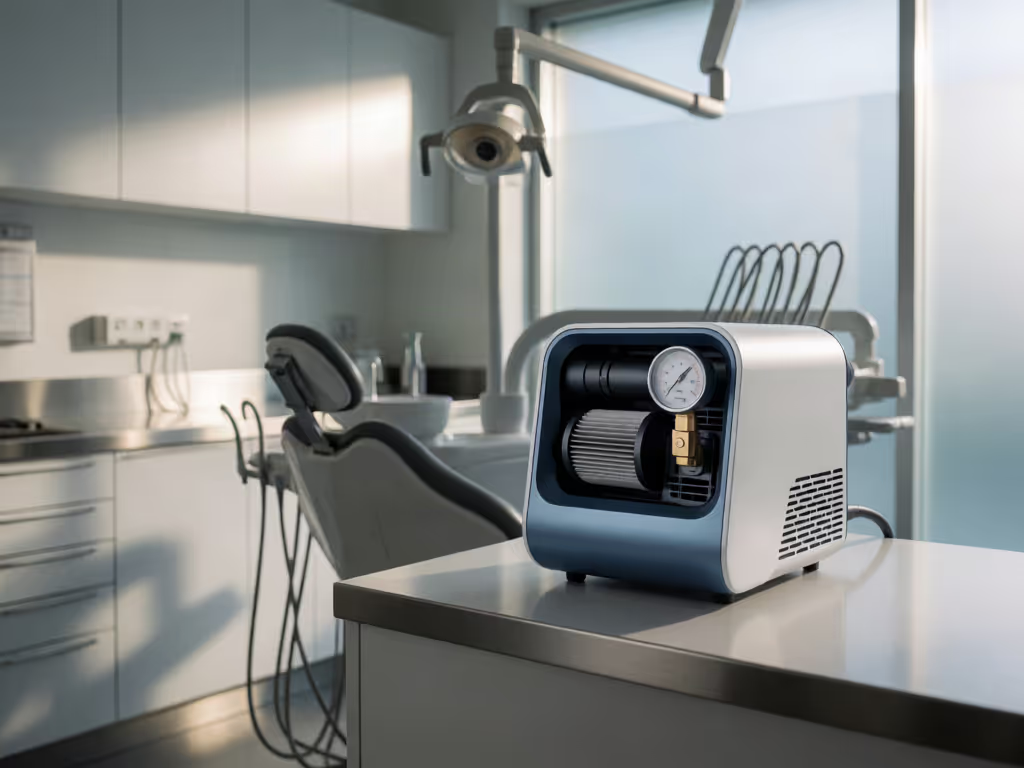
Best Portable Air Compressors for Quiet, Oil-Free Dental Clinics
25th Sep•13 min read
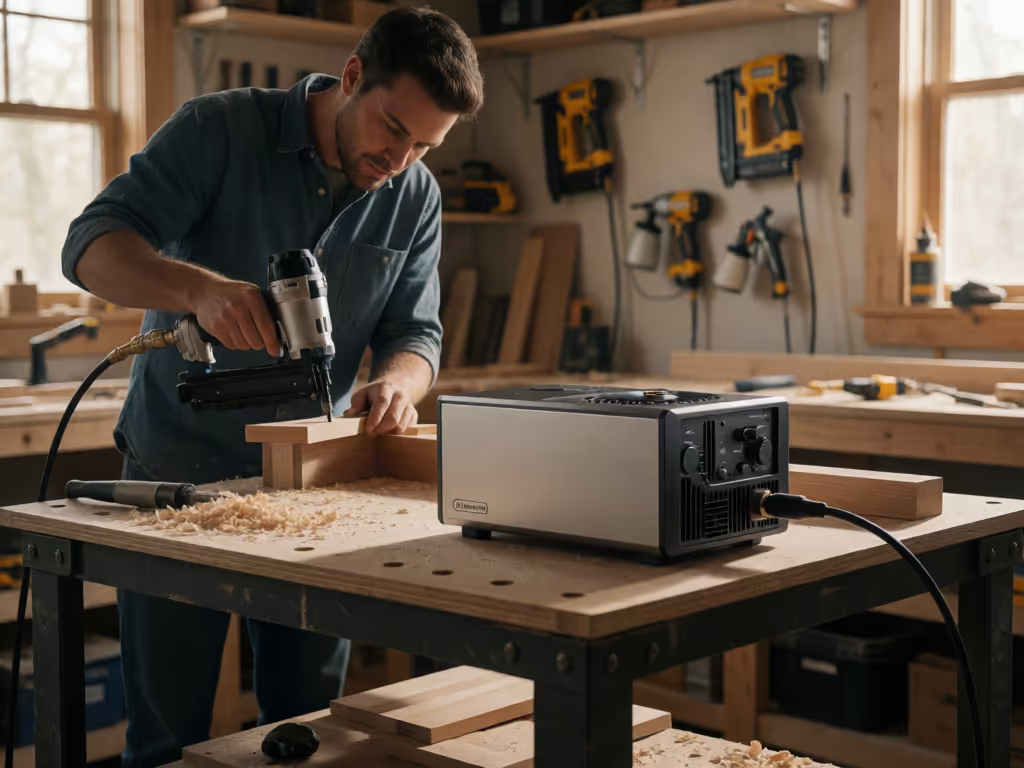
The California Air Tools CAT-1P1060S is the strongest overall choice of the two 1-gallon models here because it publishes 1.20 CFM at 90 PSI.
Important: Published sound ratings use unstated test conditions, and no collected evidence establishes any model for continuous spray-gun, sander, grinder, or dental-air use.
Oil free compressors and small portable electric air compressors solve a real shop problem only when their delivered airflow matches the tool at its actual working pressure. Quiet is valuable. Compact is valuable. But neither matters much when a nailer outruns recovery, a blow gun pulls the tank flat, or a supposedly convenient unit becomes another machine you have to wait on.
The three compressors here include two 1-gallon portable units and one enclosed 8-gallon cabinet compressor. The useful question is not "Which is best?" It is: Which one fits your air budget, work rhythm, available space, and tolerance for compressor cycling?
If it trips a breaker at noon, it failed at dawn.
That applies to air capacity, too. If the tool is starved during the job, the compressor was undersized when it was purchased.
A compact compressor is easy to justify: it stores under a bench, carries into a finished room, and does not turn every quick task into a hearing event. The trap is assuming tank pressure or a "quiet" label tells you whether it can feed a tool.
It does not. Start with the CFM sizing method for your tool's working pressure. The number at 90 PSI is especially useful for many pneumatic tools because it shows delivered airflow under a meaningful load, not just a high maximum pressure number.
The CAT-1P1060S and EC28M each have a 1-gallon tank, while the 8010SPC has an 8-gallon tank. Tank capacity is only one specification to consider alongside verified airflow, duty cycle, recovery behavior, and the tool's stated consumption.
That distinction matters when comparing the two small-footprint compressor options here:
For high-demand continuous-air tasks, do not purchase based on tank size, peak horsepower language, or the hope that a quiet motor will somehow make more air. Check the tool's stated consumption at its operating pressure, then account for the compressor's duty cycle and recovery behavior. None of the evidence available for these models establishes them for continuous spray-gun, sander, grinder, or similar high-demand work.
The frustrating part is that a compressor can look perfect in the aisle and disappoint the moment work becomes repetitive. A brad nailer may be fine; sustained blowing, repeated fastening, or an air-hungry accessory can change the experience fast.
The cost is more than waiting. You may start raising regulator pressure to compensate for pressure drop, listening for the motor instead of listening to the work, or blaming the tool when the restriction is in the air system.
I have seen a crew lose time chasing breaker trips at startup, only to find the real problem was ugly surge combined with voltage drop through a too-long cord. The answer was matching the supply and lead to the load, not babysitting breakers. Use the same thinking here: compressor, circuit, hose, coupler, regulator, moisture control, and tool consumption are one system.
A low maintenance compressor still needs basic ownership discipline. Oil-free compressor design refers to the pump design; it does not eliminate condensation in the tank or make filters, hoses, couplers, and drain routines irrelevant. If you need finish-quality air, build the filtration and drying plan around the application rather than assuming any oil-free pump alone completes it.
The California Air Tools CAT-1P1060S is a 1-gallon, oil-free single-piston portable compressor with published delivery of 1.60 CFM at 40 PSI and 1.20 CFM at 90 PSI. It is rated at 56 dB, weighs 29 lb, measures 12.5 × 14.7 × 14.75 inches, and has a 120 PSI maximum pressure. California Air Tools lists a 70/30 duty cycle and says continuous running time varies from 30 to 60 minutes depending on PSI and CFM.
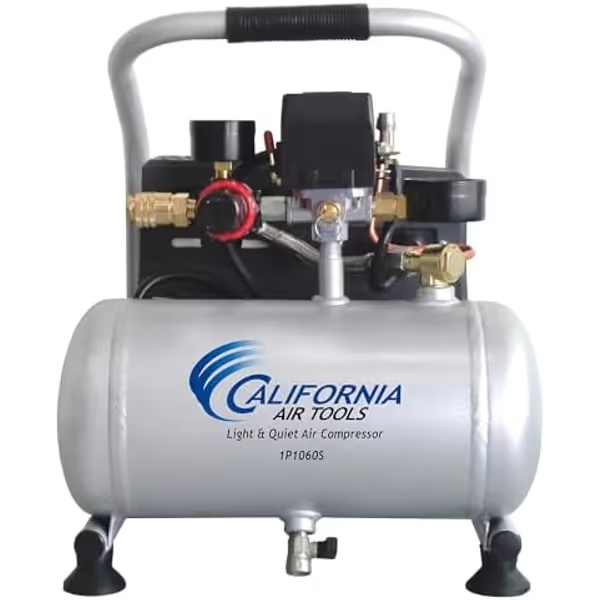
That 1.20-CFM-at-90-PSI figure is the key reason this is the more capable documented choice of the two 1-gallon models. It does not mean it will sustain every 1.20-CFM tool specification indefinitely; duty cycle and the tool's real consumption pattern still matter. It does mean you have more published 90-PSI airflow margin than with the EC28M.
California Air Tools lists staple guns, brad nailers, finish nailers, nail guns, airbrushes, and blow guns among the CAT-1P1060S applications. Those manufacturer-listed applications provide a useful starting point, but match the tool's stated air requirement to the compressor's published delivery before buying.
Where it fits well
Where to slow down before buying
California Air Tools describes the pump as designed for 3,000-plus hours before wear. Treat that as a manufacturer design claim, not a guaranteed service life result. Good setup and routine drainage matter more than brochure confidence.
The Metabo HPT EC28M is also a 1-gallon oil-free compressor, but it is configured around a very compact, protected hand-carry format. Metabo HPT publishes 1.3 CFM at 40 PSI and 0.8 CFM at 90 PSI, a 125 PSI maximum pressure, and 59 dB of published sound. It weighs 25.2 lb and measures 14 × 14 × 13.5 inches. Its induction motor is listed at 0.5 running HP, and the unit has one 1/4-inch coupling socket.
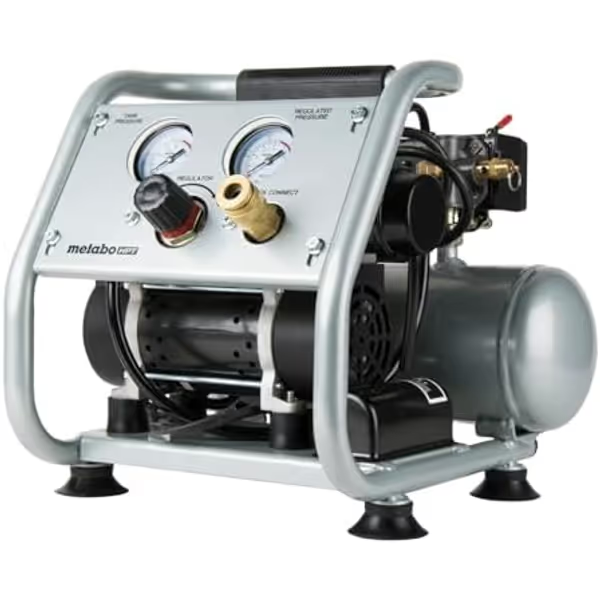
The EC28M earns its place when carrying convenience and small physical size outrank 90-PSI airflow. At 25.2 lb, it is 3.8 lb lighter than the CAT-1P1060S, and its nearly square shape works well for a shelf, service tote area, or one-tool punch-list kit. The steel roll-cage format, integrated control panel, and installed quick coupler are practical details for moving between small tasks.
But the air-budget comparison is plain: 0.8 CFM at 90 PSI versus 1.20 CFM for the CAT-1P1060S. If your current tool requirement sits close to that number, do not round up with optimism. Choose the unit with real margin or move to a compressor category with verified higher output.
Where it fits well
Where it is the wrong answer
Metabo HPT includes thermal overload protection. That is protection, not extra capacity. Let it do its job; never defeat safety devices to keep production moving.
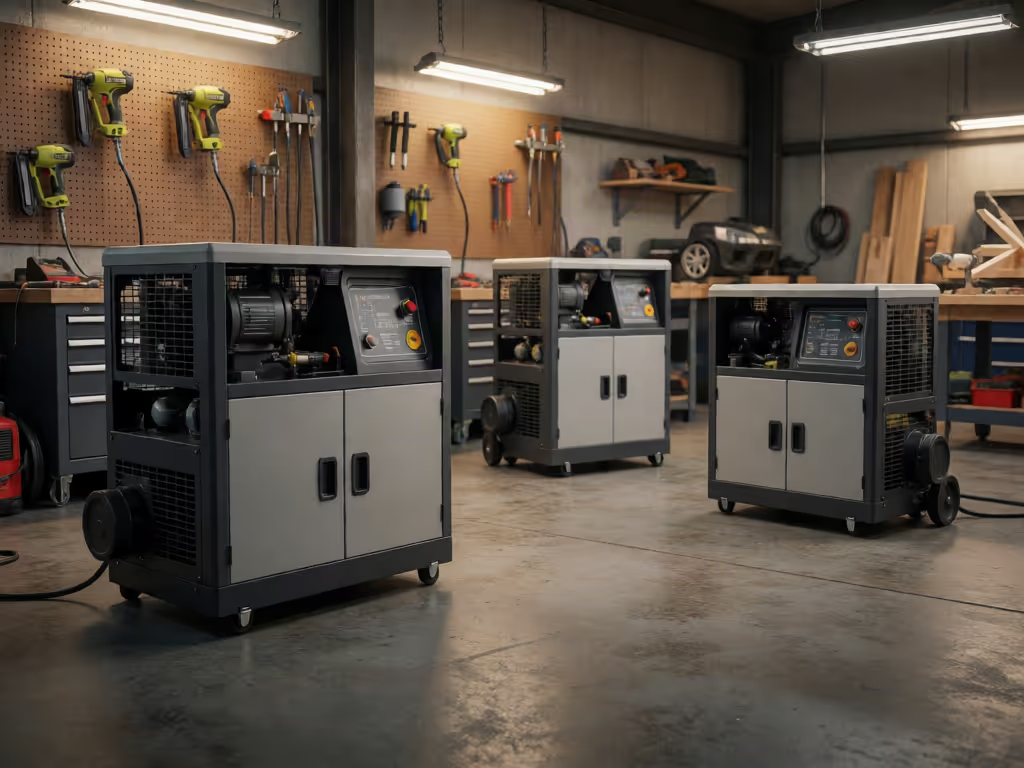
The California Air Tools 8010SPC changes the installation conversation. For more measured comparisons, see our real-world quietest air compressor test data, especially when sound-sensitive placement is the priority. It is an oil-free, 8-gallon steel-tank compressor in a sound-proof cabinet with two latching doors and four caster wheels. The published retailer listing gives a 40 dBA sound figure, lists a 1.0 HP motor, and states dimensions of 21 × 20 × 32 inches at 125 lb.
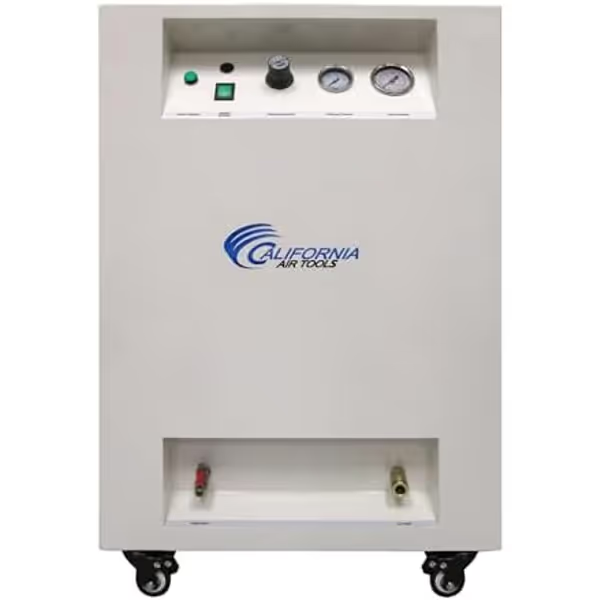
This is not a hand-carry replacement for either 1-gallon unit. Its cabinet, four casters, 8-gallon tank, and 125-lb listed weight set it apart from the smaller models.
There is one important buying limitation: the available retailer listing gives conflicting 90-PSI airflow figures for this exact model. One section says 2.20 CFM at 90 PSI; another says 3.00 CFM at 90 PSI. Do not use either number to rank the 8010SPC against other compressors or to size it for a continuous-air tool until you confirm the current manufacturer specification for the exact model.
That does not make the 8010SPC useless as a candidate. It means you should buy it for the features that are clear—cabinet format, 8-gallon tank, caster wheels, and published low sound figure—and hold the purchase until its confirmed CFM at your working pressure supports your tool.
Where it fits well
What it does not prove
| Model | Published airflow at 90 PSI | Tank | Published sound rating* | Weight | Best buying logic |
|---|---|---|---|---|---|
| California Air Tools CAT-1P1060S | 1.20 CFM | 1 gal | 56 dB | 29 lb | More documented airflow among the 1-gallon models |
| Metabo HPT EC28M | 0.8 CFM | 1 gal | 59 dB | 25.2 lb | Lighter, compact hand-carry setup |
| California Air Tools 8010SPC | Confirm before sizing | 8 gal | 40 dBA | 125 lb | Enclosed, caster-mounted cabinet format |
*Published sound ratings are not a laboratory-normalized comparison; the available information does not provide shared test conditions.
A properly selected compressor can still feel weak when the rest of the system is careless. Before calling any compact unit inadequate, run this field checklist.
For a van or trailer, protect the compressor from loose cargo, leave access to controls and drains, and do not bury a cabinet-style unit where its cooling path cannot breathe. A clean install is not cosmetic; it is what lets you identify a blocked drain, damaged hose, or loose fitting before it becomes a no-air call. Use a type- and interval-based compressor maintenance schedule to keep those inspections and drainage tasks from being overlooked.
Spare parts keep jobs moving. The goal is not to build a rolling parts store. It is to avoid losing an afternoon over a damaged coupler or a hose you knew was getting tired.
Choose the CAT-1P1060S when the deciding metric is the strongest documented 90-PSI airflow among the two portable 1-gallon units, and your tool requirement fits its published delivery.
Choose the Metabo HPT EC28M when you need the lighter, highly compact hand-carry format and your tool stays within its published 0.8 CFM at 90 PSI capability.
Consider the California Air Tools 8010SPC when its cabinet format, 8-gallon tank, caster wheels, and published sound figure fit your priorities, but verify the exact model's current manufacturer airflow specification before assigning it to a particular tool.
Avoid all three as an assumed solution for continuous, high-air-demand tools unless confirmed CFM at the tool pressure, duty cycle, and recovery behavior prove the fit. Tank size and quiet operation are useful; they are not substitutes for air delivery.
In these models, "oil-free" describes the pump arrangement: the CAT-1P1060S uses an oil-free single-piston pump, and the EC28M uses an industrial oil-free pump. That can reduce pump-oil maintenance, but you still need to manage tank condensation and keep the air path in good condition.
They are worth considering when their published airflow, noise rating, size, and portability match the job. For example, the two 1-gallon models here have published 56 dB and 59 dB sound figures; neither should be selected merely because it is oil-free. Buy on verified CFM at working pressure first.
Service life depends on workload, operating conditions, and maintenance. California Air Tools states that the CAT-1P1060S pump is designed for 3,000-plus hours before wear, but that is a manufacturer claim rather than an independently verified lifespan or a guarantee for every use pattern.
California Air Tools and Metabo HPT both offer the oil-free models compared here.
Write down the tool you will use most, its required CFM, and its operating PSI. Then mark whether the work is intermittent or sustained. If you are choosing between the two 1-gallon compressors, compare that requirement directly against 1.20 CFM at 90 PSI for the CAT-1P1060S and 0.8 CFM at 90 PSI for the EC28M. If you are considering the 8010SPC, get its current manufacturer airflow data for the exact model before calling it a match.
That one-page air budget will do more for uptime than chasing decals, peak numbers, or the cheapest of the cheap portable air compressors. Choose the compressor that fits the task, then give it a sound air path and a power source that starts it cleanly every morning.