Moisture Analysis Comparison: Dew Point Accuracy
6th May•10 min read
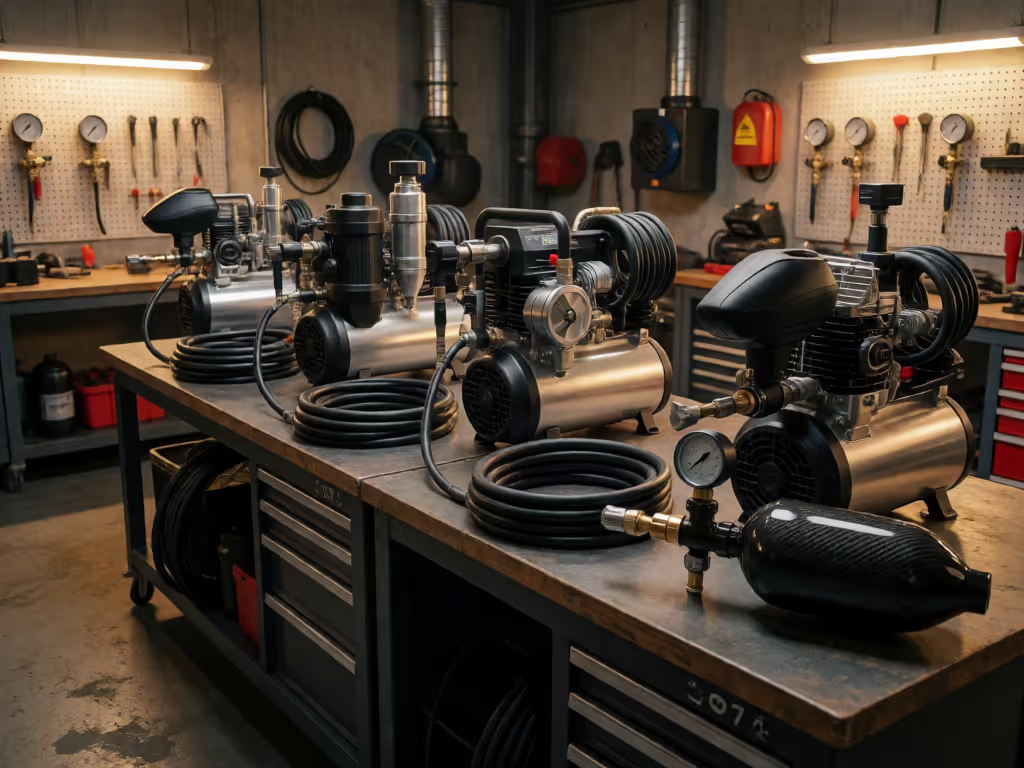
For this 4500 PSI paintball HPA comparison, the ALKIN W31 manual documents 310 bar (4500 PSI) as a basic series pressure, but it does not identify a W31 paintball configuration or establish compatibility with a paintball setup.
Important: For MCH-6 operation, use tested, certified bottles and do not exceed their marked working pressure.
A useful paintball air compressor comparison starts with one discipline: compare the documented configuration, not the badge on the frame. A 4500 PSI HPA fill is a high-pressure task with consequences for the compressor, filtration arrangement, fill controls, maintenance routine, and the certified bottle being filled. Maximum pressure alone does not tell you fill speed, delivered-air condition, or whether a machine is set up for a paintball workflow. For a clearer explanation of how to interpret pressure, CFM, duty cycle, and tank-size claims, see our CFM vs PSI guide.
For this comparison, we focus on the ALKIN W31 series, the Coltri MCH-6 family, and an Alkin regulated paintball HPA fill station. The W32 series exists, but its configuration is not established here, so it cannot be fairly ranked against the others.
Clean, dry, stable air makes finishes look inevitable. The same system-first thinking matters when you are moving air into high-pressure bottles: verify each stage instead of trusting a single headline number.
Before comparing compressors, separate three pressure numbers that are often blended together:
That last point is the hard stop for MCH-6 operation. Treat the bottle marking, the installed fill hardware, and the compressor nameplate as a matched set, not interchangeable 4500 PSI labels.
A 4500 PSI compressor for paintball also needs an intake plan. The ALKIN W31 documentation specifies operation in a well-ventilated, clean area and requires keeping smoke, toxic gases, fumes, and odor-generating vapors out of the inlet. Coltri similarly specifies unpolluted intake air. That is foundational. A high-pressure filter is not a license to locate the intake where it can ingest contamination.
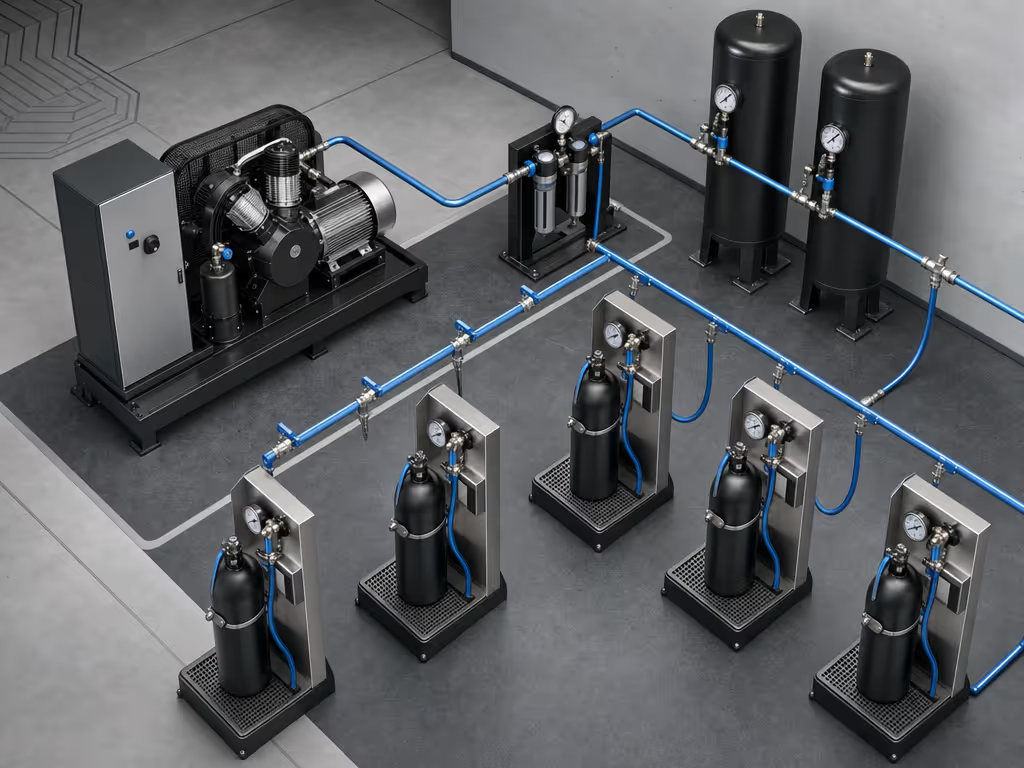
Here is the comparison that can be made from documented series and variant data.
| System or family | Documented pressure information | What it tells you | What it does not tell you |
|---|---|---|---|
| ALKIN W31 series | Three-stage high-pressure series documented from 100 to 330 bar; the manual identifies 225 bar (3260 PSI) and 310 bar (4500 PSI) as basic pressures. | The W31 series has documented 4500 PSI pressure capability at the series level. | It does not establish specifications for a separate product called "W31 Paintball", nor output rate, fill time, filtration layout, power requirement, or paintball compatibility for a particular unit. |
| Coltri MCH-6 family | Catalogued working-pressure options of 200 bar/3000 PSI, 225 bar/3200 PSI, 300 bar/4300 PSI, and 330 bar/4700 PSI, depending on configuration. | Some MCH-6 configurations are catalogued above 4500 PSI. | It does not mean every MCH-6 has the same pressure option, drive system, output, filtration, or automation. |
| ALKIN W32 series | Alkin lists W32 manuals and an air-quality certificate in its download center. | W32 is an established series. | No available technical data here establishes output, pressure options, power, filtration, or maintenance requirements. It is not ready for comparison. |
| Alkin 1 Man Regulated Paintball Fill Station | Manufacturer-stated working pressure of 3000-4500 PSI. | It is a dedicated paintball fill-station example in the target range. | It does not establish compatibility with every compressor, storage bank, or paintball tank. |
The practical result: W31 documentation establishes a 4500 PSI basic pressure at the series level, while MCH-6 is a configuration-dependent family with documented options up to 4700 PSI. The W31 pressure figure does not by itself establish compatibility with a paintball setup. W32 needs its actual configuration documentation before it belongs in a data-based purchase decision.
This is where expensive mistakes happen. "MCH-6" can refer to electric, engine-driven, compact, silent, filtered, and no-high-pressure-filter versions. Likewise, "W31 Paintball" is not a verified configuration name in the available material; the supported data applies to the W31 series.
Ask for these items for the exact machine in front of you:
If a seller cannot identify those points, you do not yet have enough information for an apples-to-apples comparison.
Output is where a paintball field air system either feels calm or turns into a queue. But it is also where broad family claims become misleading.
For the Coltri MCH-6/EM single-phase electric variant, the catalog lists a charging rate of 80 L/min (4.8 m³/h; 2.8 CFM) and a stated fill time of 25 minutes from 0 to 200 bar for a 10 L cylinder.
For the Coltri MCH-6/ET three-phase electric variant, the catalog lists 100 L/min (6 m³/h; 3.5 CFM) and 20 minutes from 0 to 200 bar for a 10 L cylinder.
Those are useful comparison anchors because the drive variants are named. They are not paintball-tank fill times, and they are not 4500 PSI fill times. You cannot safely convert them into an exact tank-fill number without the bottle volume, starting pressure, ending pressure, temperature, and system-loss information. Those variables are also central to proper compressor sizing, especially when estimating whether a system can keep up with repeated field fills.
Use the figures to understand variant separation, not to promise a specific customer wait time:
No comparable output-rate or fill-time data was established for the ALKIN W31 or W32 series in this comparison. That means a confident claim that one is faster than the other would be guesswork.
A body shop I worked around once blamed the coating for defects until pressure at the gun was measured and wet lines were found. The lesson carries over: measure the condition at the point of use. For HPA, that means documenting the actual compressor configuration and fill setup, rather than projecting performance from a family name or a maximum PSI sticker.
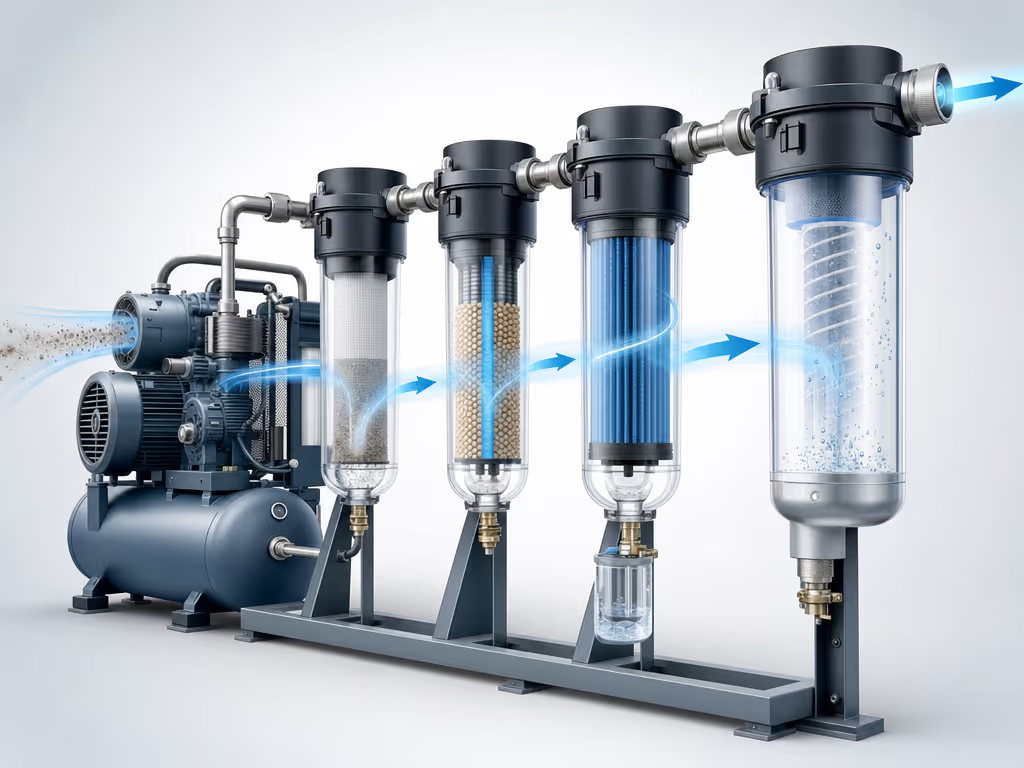
The phrase high-pressure breathing air filtration needs careful handling in paintball discussions. A compressor family may have filtered versions, but that does not mean every configuration carries the same filter package or that a machine in service is delivering a particular air-quality result. Because moisture control affects both air quality and operating cost, compare the available air dryer technologies alongside the compressor and filter package.
The MCH-6 catalog depicts activated carbon and molecular sieve filtration on filtered versions. But it separately identifies MCH-6/SR and MCH-6/EM paintball configurations as having no HP filter. That distinction is decisive: do not transfer filtered-version claims onto the paintball versions marked no high-pressure filter.
For a purchase review, write down the actual sequence from intake to fill connection:
That is a more useful process than treating "breathing-air compressor" as an automatic, permanent air-quality classification. Dry air, fewer defects is a familiar rule in finishing; in high-pressure filling, it becomes an equally practical maintenance and intake-air rule.
A small operation should not select a high-pressure compressor on pressure capability alone. The service routine determines whether the machine remains an asset or becomes deferred-maintenance risk. Use a documented air compressor maintenance schedule to turn these checks into repeatable intervals rather than relying on memory.
The MCH-6 manual provides a concrete example of the discipline involved:
This does not establish the maintenance requirements for every MCH-6 variant, W31, or W32. It does show why a paintball field air system needs an assigned operator, a log, and stocked service components. The evidence does not support a lifecycle-cost ranking among these systems; purchase price, consumable cost, energy use, rebuild intervals, and repair history were not established.
A usable log records:
Do not improvise unsafe modifications to a high-pressure installation. Use equipment rated for the system and follow the manual for the specific compressor and fill hardware.
A compressor does not fill a paintball tank by itself. The fill station is the operator-facing pressure-control stage, so treat it as a separate item in the comparison. The broader air compressor accessories guide can help you evaluate related components such as hoses, filters, dryers, and specialized nozzles as part of the complete filling system.
Alkin’s 1 Man Regulated Paintball Fill Station is manufacturer-stated for 3000-4500 PSI working pressure and includes a manufacturer-described self-bleed stainless-steel filler valve. Alkin also states that valve repair kits are available.
Alkin’s product page separately lists a 3000-4500 PSI working pressure and says the operator can adjust regulated pressure from 0 to 5000 PSI. The page does not explain how those figures relate, so do not interpret 5000 PSI as a settled outlet working-pressure rating. For a 4500 PSI operation, verify the applicable limits directly from the current fill-station documentation and the components installed.
The key comparison questions are straightforward:
Stable pressure at the fill point is the objective, but no measured regulator-droop or pressure-stability data was established for the systems discussed here. Do not manufacture certainty where the test data is missing.
The best-supported conclusion is not a universal winner. It is a selection path.
That is not indecision. It is proper comparison practice.
A high-pressure compressor and paintball-oriented fill equipment can be used for high-pressure bottle filling when the specific equipment and certified bottle are compatible. For MCH-6 operation, the manual requires tested, certified bottles and says not to exceed their marked working pressure.
The MCH-6 manual describes bottle-refill operation, and Alkin offers a regulated paintball fill station. For MCH-6 operation, use tested, certified bottles and observe their marked working pressure. Whether a particular HPA tank can be filled depends on that specific tank and the verified fill setup.
Follow the operating instructions for the exact compressor and fill station, and use only the applicable certified bottle. For MCH-6 operation, the manual says not to exceed the bottle’s marked working pressure. The MCH-6 manual also calls for unpolluted intake air, periodic condensate draining during refill operation, and a safety-valve check at every refill. A tank-specific procedure cannot be assumed from compressor-family information alone.
Before committing to a 4500 PSI HPA system, make one page for each candidate: exact model and variant, documented working pressure, output at the stated test condition, installed filtration, maintenance intervals, fill-station rating, and bottle-pressure controls. Any blank line is a question to resolve before money changes hands.
That process may feel slower than choosing the highest PSI number. In practice, it is how you end up with a fill setup that runs predictably, stays serviceable, and earns confidence one documented fill at a time.