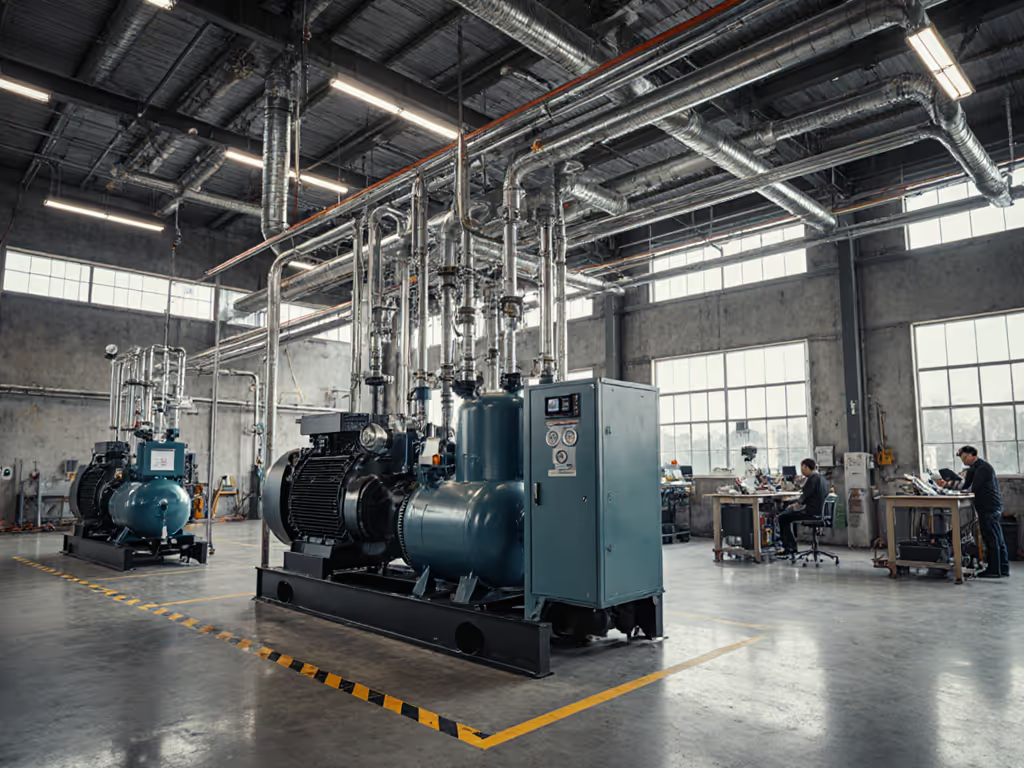
Compressor Consolidation ROI: Real Facility Case Study
10th May•13 min read
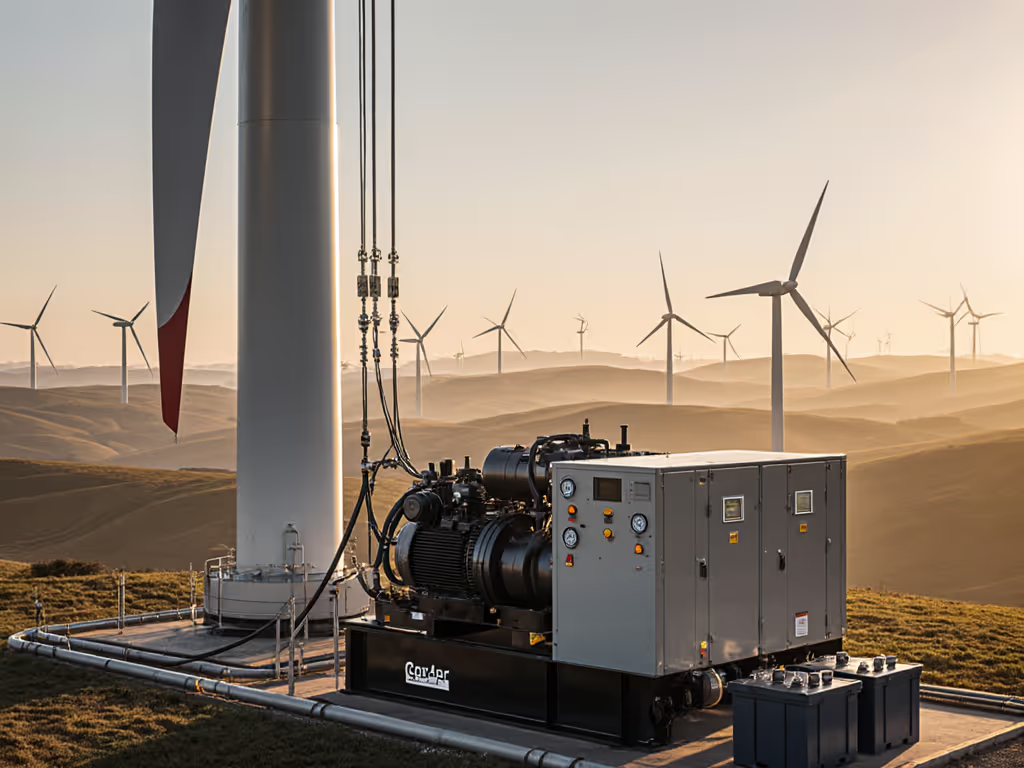
If it trips a breaker at noon, it failed at dawn. That lesson from my site lead days sticks because true reliability isn't about fancy gear, it's about matching your wind-powered air compressor system to actual job demands and power sources. For pros tired of generator noise, circuit trips, and waiting for tank recovery, renewable solutions offer real savings, but only if you nail the implementation. Today we'll cut through the marketing hype and calculate the genuine renewable energy compressor ROI that keeps tools fed and crews moving. Forget chasing peak specs; let's build systems that work when you need them, powered by the wind that's already blowing across your jobsite.
Before dreaming of free energy, you need cold, hard numbers. Most wind-powered compressor failures stem from mismatched capacity (not bad tech). Grab your tool air specs (not the manufacturer's inflated SCFM!), duty cycle requirements, and daily runtime hours. Then assess your site's wind reality.
Pro Tip: Most contractors overestimate site wind resources by 30-40%. The National Renewable Energy Laboratory (NREL) confirms that ground-level turbulence from buildings and equipment cuts effective wind speed by 15-25% versus open-field measurements.
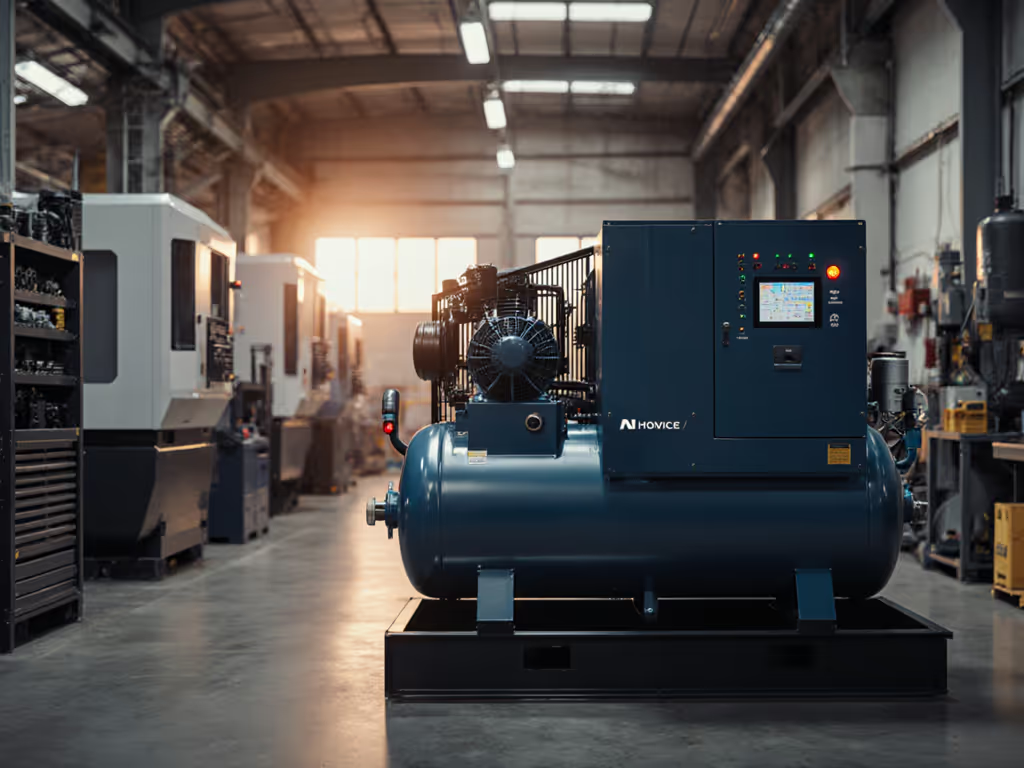
ROI isn't just about energy savings, it's uptime, reliability, and hidden incentives. For comparative benchmarks, review our 5-year energy-efficient upgrade ROI analysis. Let's break it down with real numbers from a roofing crew in Kansas who installed a 5kW turbine powering a 5HP rotary screw compressor.
| Cost Category | Amount | Notes |
|---|---|---|
| Wind turbine (5kW) | $12,500 | Grid-tied with battery backup |
| Rotary screw compressor | $8,200 | 24-gallon tank, 20 CFM @ 100 PSI |
| Installation & controls | $4,800 | Custom mounting, controller, wiring |
| Total Initial Investment | $25,500 |
The game-changer? Uptime. My Kansas crew calculated they lost $21,600 yearly to compressor downtime, mostly from generator refueling, circuit trips, and waiting for tank recovery. That single turbine paid for itself in saved schedule delays. Factor in green energy incentives from the Inflation Reduction Act, and the math gets even better for qualifying systems.
A wind turbine doesn't power a compressor directly. It powers a storage system that powers the compressor. Mess up this integration, and you'll face constant stalls when wind dips. Here's the field-tested approach I use for wind turbine integration that actually works. For stable pressure and lower surge on renewables, review our VSD vs fixed-speed comparison.
Battery Bank: Size for 2-3x compressor startup surge (typically 3-5x running load)
Example: 5HP compressor (3.7kW) needs 15kW surge capacity
Minimum: 125Ah lithium battery bank @ 48V
Inverter/Charger: Must handle 300% surge for 0.5 seconds
Required: 10kW continuous/30kW surge
Critical: Low-voltage startup (18-20V) for weak battery conditions
Compressor Control System: Must have soft-start capability
Standard units draw 6-8x running amps at startup
Solution: Variable frequency drive (VFD) reduces startup surge to 1.5x
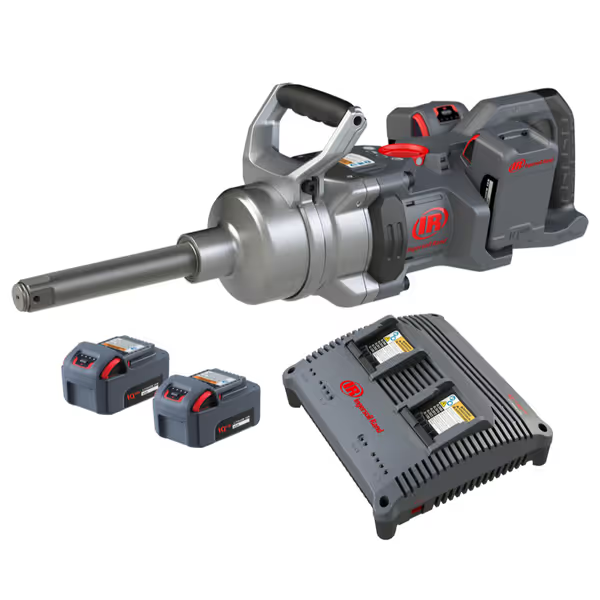
Here's where complementary tools become essential for jobsite reliability. When wind drops below 8 mph (common during afternoon lulls), you need backup power that doesn't mean waiting for generator warm-up. That's where cordless impact systems like the Ingersoll Rand W9000 Series shine as complementary solutions during low-wind periods.
I've seen crews waste 20-30 minutes per wind drop event resetting systems. With cordless impacts standing by, they maintain workflow even during 15-minute wind lulls. The W9000's 250-bolt-per-charge capability means it handles full tire rotations while the compressor system recovers, no downtime, no schedule slip.
Renewable systems require smarter redundancy than just a backup generator. My rule: Plan for simultaneous failures. When wind dies AND your battery dips, you need layered solutions that keep air flowing.
| Tier | Purpose | Critical Specs | Field Test |
|---|---|---|---|
| Primary | Wind-powered compressor | VFD-controlled compressor, 48V battery bank | Runs 70% of the time with steady wind |
| Secondary | Cordless power tools | Minimum 20V system, 5.0Ah batteries | Handles 25% of tool use during wind lulls |
| Tertiary | Inverter generator | 3,500W+, soft-start feature | 5% backup for extended low-wind periods |
Last month in Colorado, a roofing crew's wind system dropped during valley inversion (common October phenomenon). For ambient-related performance planning, see our hot and cold climate CFM guide. Their VFD compressor stalled as battery sank to 25%. But because they'd implemented this tiered approach:
This is exactly why I favor off-grid compressor operation designs with multiple fallbacks. The Ingersoll Rand W9000 proved its worth that day: no waiting for air recovery, no tripped breakers, just fasteners driven while the main system rebooted.
Daily Preflight:
Verify battery state of charge (>80% before dawn)
Check turbine rotation freely (no ice, debris)
Test inverter auto-start with compressor off
Weekly Maintenance:
Clean turbine blades (dust cuts output 20%)
Tighten electrical connections (vibration loosens terminals)
Verify VFD settings match compressor profile
Emergency Response:
If compressor stumbles, switch to secondary tools immediately
Never let battery drop below 20% (causes permanent damage)
Document wind speed when failures occur (reveals pattern)
Your wind-powered air compressor system isn't just about energy, it's about jobsite rhythm. When air tools run without hesitation, crews finish faster, paint jobs cure right, and nobody's babysitting breakers. The true ROI comes from consistent workflow.
For larger operations, I've seen the fastest ROI when integrating with existing solar setups. Many crews run solar during daytime peak and wind overnight, creating near-continuous renewable operation. The key is matching compressor capacity to actual tool demand, not theoretical maximums.
Remember my crew's compressor tripping GFCI at startup? We traced it to voltage drop through a 100-foot extension cord. Same principle applies here: if your wind system can't deliver clean, stable power at the moment of highest demand, you've failed before the job starts.
Don't wait for the perfect system, start with one turbine powering your most critical compressor station. Document your baseline costs for 30 days, then track the difference. I've seen crews gain 6-8 productive hours weekly simply by eliminating generator refueling stops and air recovery delays.
For your first wind-compressor project, test before the pour, literally. Run your full tool load for 4 hours under simulated wind conditions (use variable speed drive to mimic wind fluctuations). If it stumbles at 70% capacity, you've got work to do before trusting it on a live job.
Check with your state energy office for green energy incentives, many offer 25-50% rebates for commercial renewable installations that pair with energy-efficient equipment. And when wind inevitably drops, keep those cordless impacts charged and ready. Because in our business, downtime isn't just lost money, it's lost reputation.
Start your wind assessment today. Your crew's productivity (and your bottom line) will thank you before the season ends.