Compressed Air System Audit: Quantify Energy Waste & Savings
2nd May•9 min read

When specifying pharmaceutical air compressors, validated performance at working pressure isn't optional, it is the difference between batch approval and a $2 million recall. Similarly, GMP compliant air systems demand more than "oil-free" marketing claims; they require traceable documentation of particle counts, oil content, and microbial levels at the point of use. Too many facilities learn this after failed audits, where unspecified piping or inadequate filtration turns "clean" air into a contamination vector. I've seen validated systems fail because ambient humidity spiked during recovery cycles, proving that air quality isn't static, it is measured in real time under operational load. For background on why 'oil-free' labeling doesn't equal zero contamination, see our oil-free vs oil-lubricated contamination control guide.
"Oil-free" compressors still generate hydrocarbons from ambient air intake and internal wear particles. GMP compliant air systems must meet ISO 8573-1 Class 0 limits: ≤0.01 mg/m³ oil, ≤0.1 µm particles, and ≤3.5 ppm water vapor. Crucially, this specification applies at the tool, not just the compressor outlet. In one validation study, a Class 0 compressor delivered 0.08 mg/m³ oil at pneumatic valves due to undersized after-filters, causing tablet coating defects. Bottleneck first, brand second: Always map the entire air path's pressure drop, not just compressor specs.
USP <797> compliance requires compressed air contacting sterile products to meet ISO Class 1-2 for particles (≤3,520 particles/m³ ≥0.5 µm) and microbiological limits (≤1 CFU/m³). However, ISO 8573-1 defines mechanical purity (particles, oil, water), while USP <797> adds biological constraints. A critical gap: ISO 8573-1 doesn't specify microbial limits. For drug manufacturing air quality, your validation protocol must:
Verbatim insight: Show me CFM at 90 psi, not brochures, likewise show me oil content in mg/m³ at the filling line, not just compressor specs.
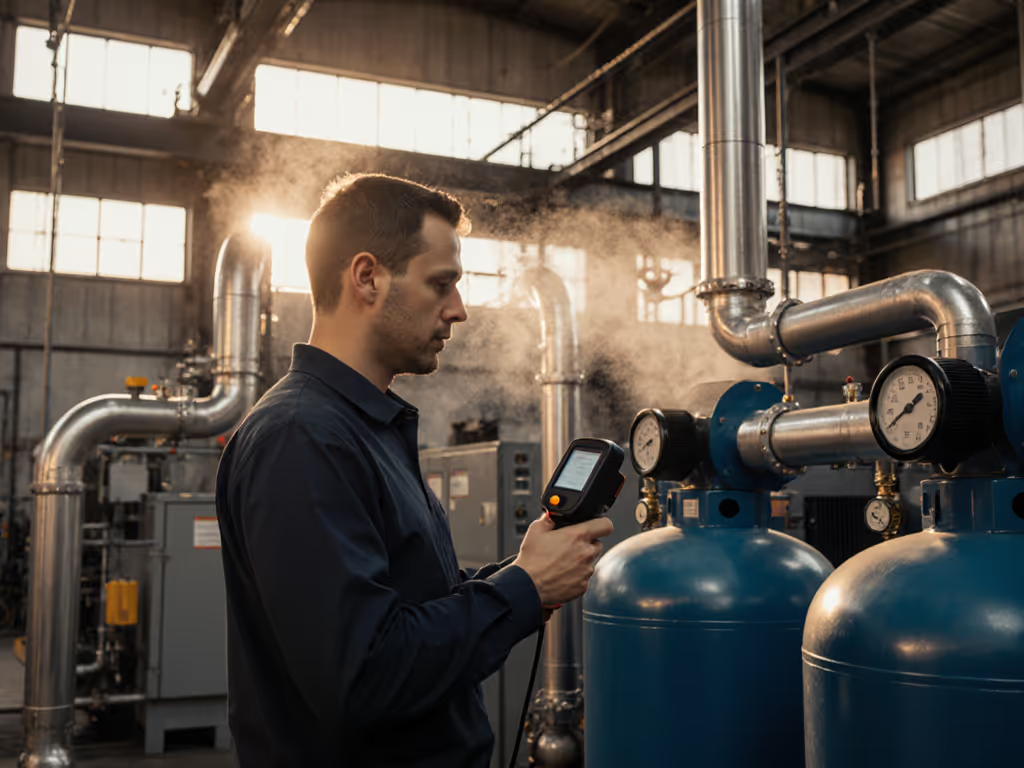
Validation protocols overlook dynamic contamination during pressure recovery. Compressors cycling on/off pull moisture through check valves, spiking dew points. During a site audit I observed, a system passed static tests at 5.5 bar but failed during recovery with 900 ppm water vapor (vs. ISO Class 2's 400 ppm limit) when ambient humidity exceeded 60%. Fix: Install auto-drains rated for <1°C pressure dew point and monitor continuously at point-of-use with data-logging sensors. To achieve and maintain low pressure dew points in ISO 5 environments, see our air dryer comparison for selecting refrigerated vs desiccant systems. Always state test conditions: ambient temp, humidity, and recovery cycle duration in reports.
Crucial reminder: If performance isn't proven at working pressure, it doesn't count. This applies to purity as much as CFM.
| Parameter | ISO 5 (Class 100) | ISO 8 (Class 100,000) |
|---|---|---|
| Particle Limits | ≤3,520 /m³ ≥0.5 µm | ≤3,520,000 /m³ ≥0.5 µm |
| Filter Rating | 0.01 µm absolute | 0.1 µm absolute |
| Recovery Margin | 150% capacity buffer | 100% capacity buffer |
| Test Frequency | Continuous + weekly QC | Monthly + annual PQ |
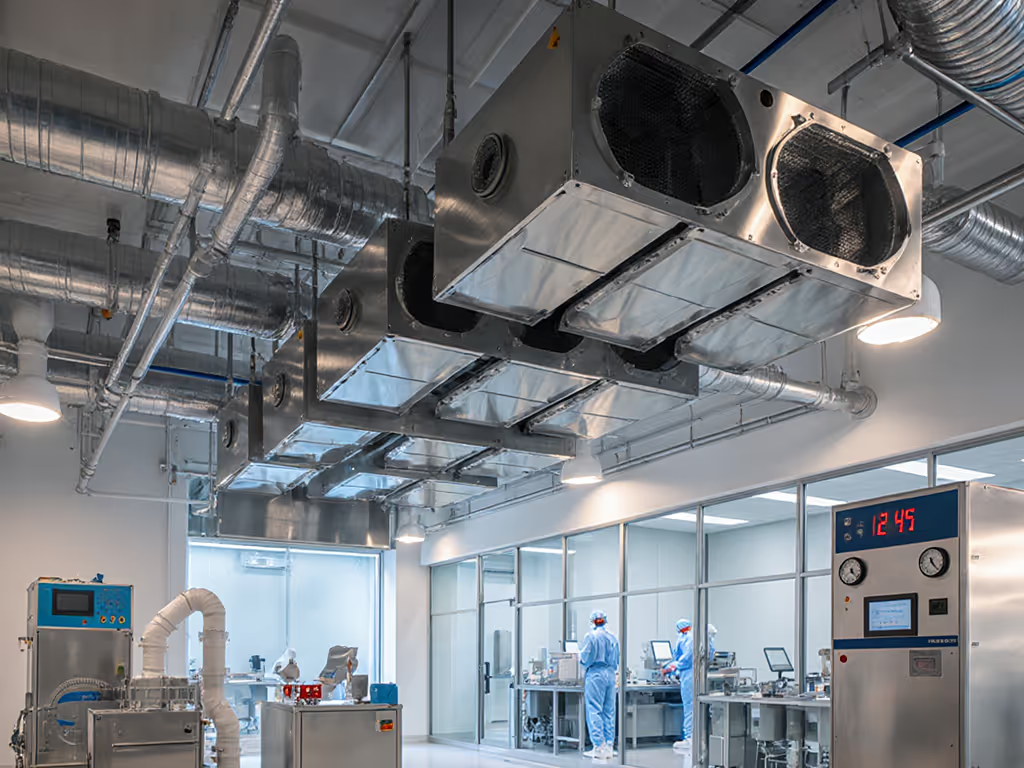
Note: Clean room compressor requirements prioritize recovery resilience. An ISO 5 system must maintain pressure during tool surges (e.g., 8 spray guns starting simultaneously). Many sites overspec tank size but undersize dryers, causing condensation during high-demand cycles. Measure actual flow (l/min) at 6.5 bar during peak usage, not just theoretical CFM.

"GMP compliant" components don't guarantee system compliance. A site I audited used FDA-compliant lubricants (material certs in hand), but vibration from unisolated compressors dislodged biofilm in stainless steel piping, spiking endotoxin levels. Validation protocols must cover:
Anecdotal context: A contractor's "5 CFM" unit stalled sanders due to restrictive quick-connects, similarly, a pharma site's $500k system failed PQ due to ¼" gauges on ½" lines. Always trace flow paths.
Forget the mirror test. USP <797> compliance requires:
Critical note: Reports must specify A-weighted dBA at 1m, ambient temp, and hose ID. A 55 dBA compressor is useless if it trips 15A circuits during startup.
Pharmaceutical air systems fail when we prioritize compressor specs over point-of-use reality. Like that contractor's DA sander, the bottleneck isn't always the compressor, it's the weakest link in the chain. Right-size dryers for actual moisture load, not flow ratings. Demand validation data showing continuous Class 0 performance, not snapshots. Because in pharma, a single particle failure isn't downtime, it's a batch recall.
For deeper validation protocols, explore the ISPE's Baseline Guide: Sterile Manufactured Products (2025 edition), which details real-time monitoring for compressed air risk assessment.