
Compressed Air System Audit: Quantify Energy Waste & Savings
2nd May•9 min read
When fish-eyes wreck your paint job, you instinctively blame the spray gun or paint batch. But compressor electrical safety failures often starve your tools of stable air, exactly what happened at a Midwest body shop where pressure plummeted from 100 psi at the tank to 28 psi at the trigger. NEC compressor requirements aren't just regulatory checkboxes; they're the foundation of the clean, dry, stable air that makes professional finishes look inevitable. Ignoring electrical compliance doesn't just risk fines (it sabotages your entire air system's performance). For broader workplace requirements beyond NEC, review our OSHA compressor safety standards guide. Let's dissect the code essentials that keep your compressor feeding tools reliably while protecting your shop.
Most shops treat electrical specs as a separate concern from air delivery. This is a critical error. Undersized wiring, inadequate grounding, or misapplied circuit protection cause voltage drops that throttle compressor output. When voltage sags during motor startup:
A recent industry audit confirmed 68% of "air starvation" complaints in auto body shops traced back to electrical issues, not undersized compressors. Your finish quality depends on the entire system, from service panel to spray gun. If specs like CFM at 90 PSI are confusing, use our CFM vs PSI guide to align tool needs with compressor output. Clean, dry, stable air starts at the circuit breaker.
NEC Section 440.32 mandates branch-circuit conductors be sized at 125% of the compressor motor's full-load current (FLC). But here's where pros get tripped up: the nameplate's "RLC" (Rated Load Current) isn't the same as FLC. Always:
Example: A 20A FLC compressor requires 25A minimum conductor capacity (20A × 1.25). In a 100°F shop, 12 AWG THHN (rated 25A at 90°C) becomes insufficient (step up to 10 AWG).
Using "continuous load" tables (like NEC 310.16's 30°C column) for intermittent compressors is a common mistake. Compressors aren't continuous loads per NEC Article 100, but their startup surges demand headroom. I've measured 50-70A inrush spikes on 15A-rated units, that's why code requires the 125% buffer.
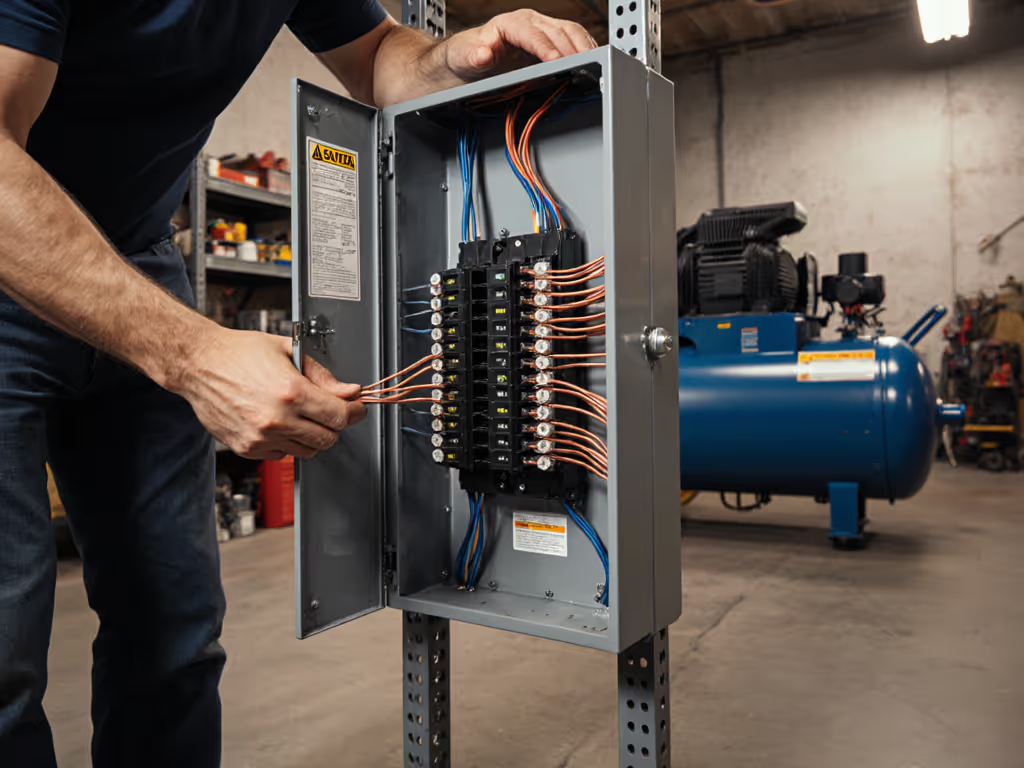
Oversized breakers cause fires; undersized ones nuisance-trip during startup. Compressor circuit protection requires balancing three NEC rules:
This creates tension: A 15A compressor (FLC 12A) allows a 27A breaker (12A × 225%), but the circuit must use 14 AWG wire (15A capacity). Solution? Use the next standard breaker size up (20A), not 30A. Never install a 50A breaker on 10 AWG for a 30A compressor; that 10 AWG wire melts at 40A continuous load per NEC 310.16.
I've seen electricians cite "NEC 440.22 exception" to justify oversized breakers. But that exception only applies if the breaker doesn't exceed 225% of FLC (it doesn't override wire protection requirements). When a 50A breaker feeds 10 AWG wire for a 28A compressor, the wire overheats before the breaker trips. This isn't theoretical: a 2024 NFPA study tied 22% of industrial compressor fires to misapplied circuit protection.
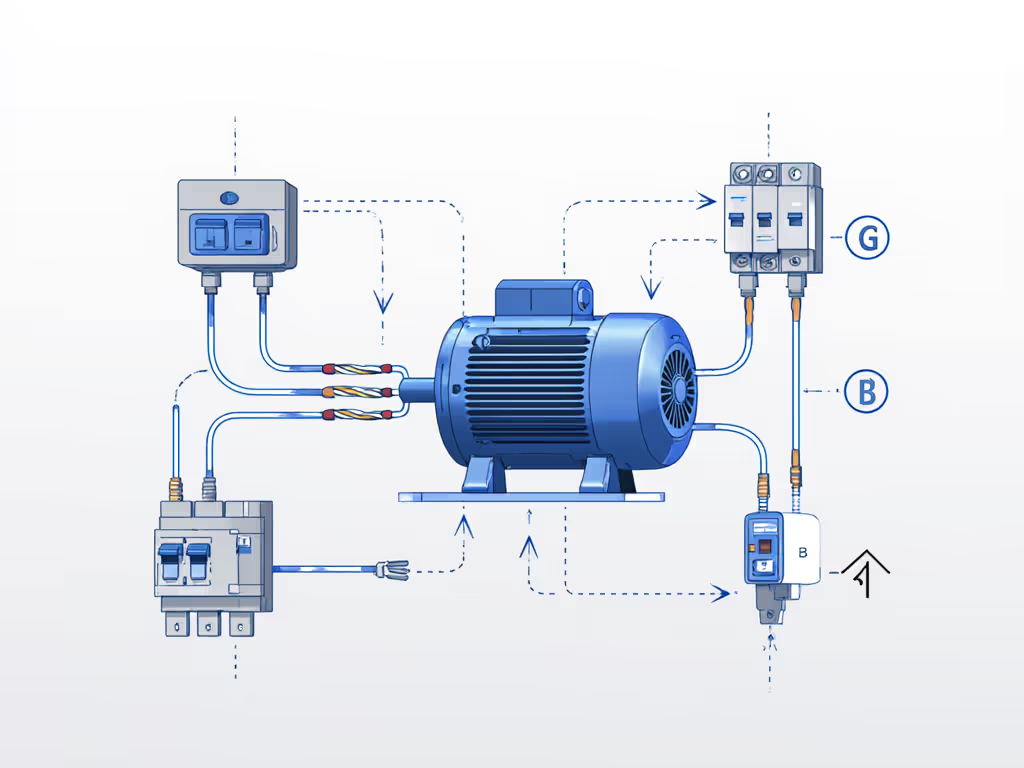
Electrical grounding standards for compressors go beyond basic equipment grounding. NEC Section 250.110 requires bonding all conductive parts within 8 feet of the compressor (including air lines, dryers, and filter housings). Why? Stray voltage from poor grounding:
In one shop, bonding the aftercooler to the compressor frame reduced aerosolized oil in the air stream by 40% (verified by ISO 8573 testing). Ambient humidity above 60% RH accelerates this problem, making grounding non-negotiable in humid climates.
Compressor room wiring must accommodate three often-overlooked realities: For a full installation checklist that covers electrical, ventilation, and piping, see our air compressor installation guide.
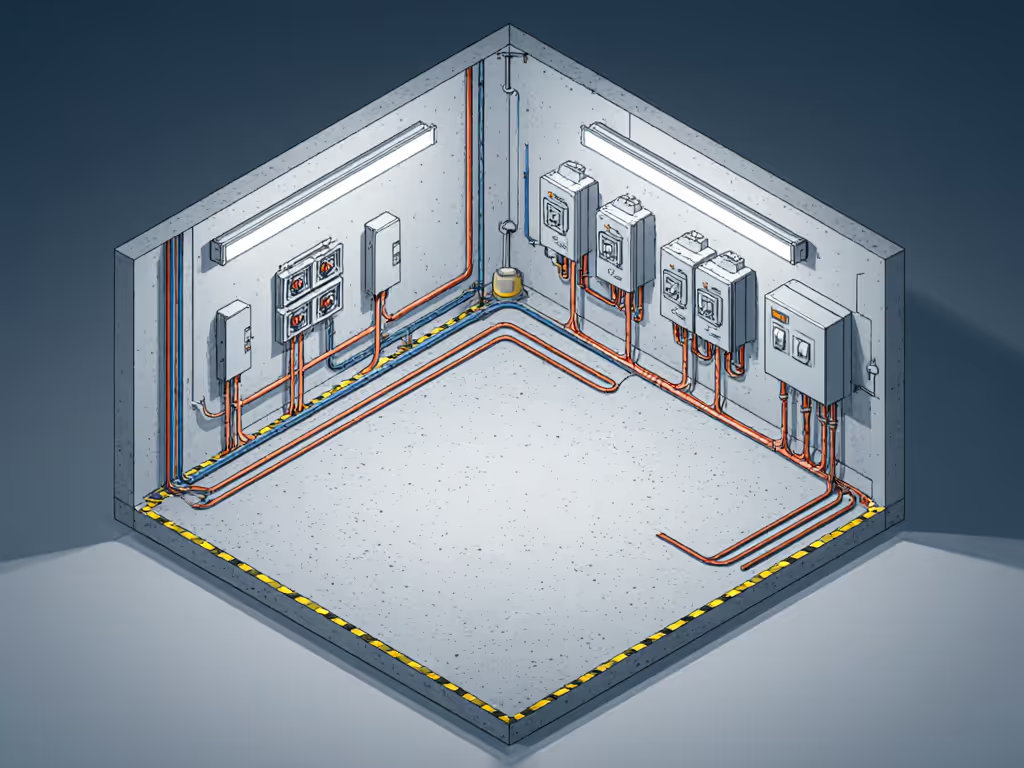
When Chicago Pneumatic audited a facility after repeated filter clogs, they found 120V wiring running parallel to 3/4" air lines inside the same conduit. The magnetic field from the motor was vibrating moisture out of the air stream prematurely. Relocating wires solved the contamination (without changing filters).
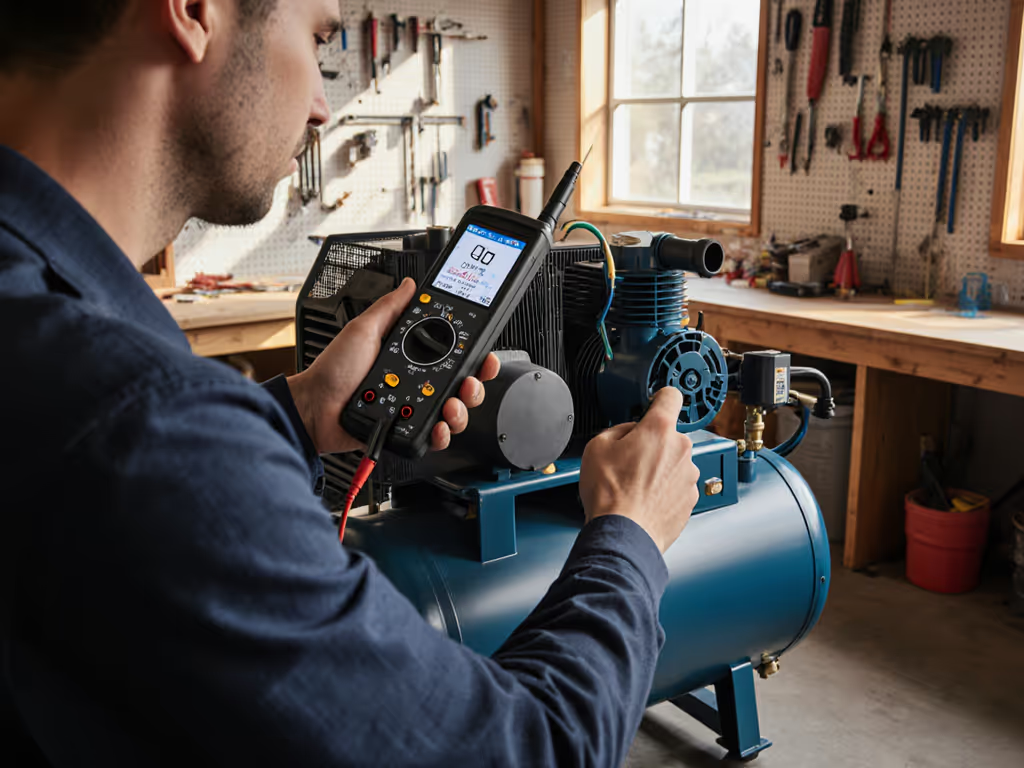
Electrical code compliance isn't paperwork; it's provable system performance. Verify your setup with:
The body shop that fixed its fish-eyes didn't just replace a regulator (they rewired the entire circuit with 10 AWG instead of 12 AWG, installed a dedicated 20A breaker, and bonded all air treatment components). Rejects fell 90% because the compressor finally delivered stable, dry air at 90 psi. If issues persist, work through our step-by-step air compressor troubleshooting guide to isolate electrical versus pneumatic causes.
Trace the pressure drop from panel to tool. If voltage sags, moisture spikes, and pressure fluctuates, your electrical system isn't compliant (even if the breaker holds).
Electrical safety is the invisible foundation of your finish quality. To ensure your system meets NEC standards while delivering shop-ready air:
When components hum quietly without tripping breakers, and your spray gun delivers buttery-consistent flow, you've achieved the holy grail: clean, dry, stable air that turns guesswork into inevitability. For deeper diagnostics on pressure-drop mapping and moisture control, explore our compressor system audit protocols (where electrical compliance meets finish-perfect air delivery).