Compressed Air System Audit: Quantify Energy Waste & Savings
2nd May•9 min read
Clean air is not a luxury in cell therapy production, it is the foundation of viability. When biomanufacturing air systems fail to meet specification, therapeutic cells degrade, batches fail, and months of work evaporate. This is not a margin-of-error industry. Yet manufacturers often treat air infrastructure as an afterthought, scrambling when contamination occurs rather than designing it in from day one.
The critical gap: most production teams know what cleanroom classification they need (ISO 7, ISO 6, even ISO 5 in critical zones) but cannot articulate how air systems deliver and sustain that environment under real operating conditions. Specification documents list target particle counts, but they do not tell you how often filters must rotate, how microbes creep past improperly gapped enclosures, or why a perfectly classified room can still harbor cross-contamination risk. This article cuts past the regulatory checklist and shows you how to align air handling, filtration, and containment with the actual biology of cell expansion and gene therapy manufacturing. For baseline standards and how to right-size purity for GMP, see our ISO 8573 air purity guide.
Cell therapy manufacturing demands unprecedented air purity because cells are living products. A batch of tumor-infiltrating lymphocytes (TILs), chimeric antigen receptor T cells (CAR-T), or regulatory T cells (Tregs) will die or mutate if exposed to particulates, microbial endotoxins, or chemical volatiles that would barely register in a traditional pharmaceutical filling line. Unlike molecules, cells respond to their environment in real time, they sense oxygen tension, osmotic stress, and chemical composition the moment culture media flows through contaminated tubing.
HEPA filtration systems are the workhorse, removing 99.97% of particles 0.3 micrometers and larger, but HEPA alone is not enough. To minimize contamination risk at the source, choose the right compressor technology—our oil-free vs oil-lubricated comparison explains trade-offs for sterile environments. The air must be conditioned before it reaches the filter: moisture must be stripped to prevent mold and microbial growth, and pressure must be controlled to maintain positive-pressure differentials that push contaminants out rather than drawing them in. When a cell therapy facility operates without this cascade, condensation pools in plenums, microbes colonize pre-filter stages, and viable cell counts plummet.
Plan the power, then the air. In cell therapy manufacturing, plan the air first, because it drives everything downstream.
Once cleanroom classification is set, the next layer of precision lives inside the bioreactor. These vessels are where cells expand from a patient sample into therapeutic doses, often requiring 10-billion-cell batches or higher. The bioreactor must continuously deliver dissolved oxygen (DO), carbon dioxide (CO2), and nitrogen, while monitoring temperature, pH, and osmolarity with millisecond accuracy.
Stirred-tank bioreactors, commonly used for suspension cultures like T cells, require constant aeration through spargers (diffusers submerged in media). The air stream must be sterile, moisture-free, and calibrated to avoid shear stress that damages cell membranes. Even a 1-2% drop in DO can trigger metabolic shift and reduce final cell yield by 10-20%, a silent drain on manufacturing margin.
Wave or rocking bioreactors used for adherent cell expansion (such as mesenchymal stem cells [MSCs]) require gentler air handling: sufficient gas exchange without turbulent agitation. These systems introduce lower shear stress, preserving cell function, but demand precisely metered oxygen supply to avoid hyperoxia-induced apoptosis.
Hollow-fiber bioreactors, which model in-vivo-like nutrient and gas gradients, are highly sensitive to air-supply interruption. Any loss of pressure or sterility cascade in the air line can cause cell death across thousands of fibers simultaneously. One Terumo BCT Quantum system can expand 1 x 10^8 MSCs in 2 weeks, but only if air stays clean and uninterrupted.
The common failure mode: facilities size air compressors based on peak demand during startup, then fail to account for continuous draw during 12-to-21-day expansion cycles. Use our air compressor sizing guide to calculate continuous CFM and storage needed for uninterrupted bioreactor aeration. Surge-dominated air systems cannot maintain steady DO; cells experience oxygen starvation during high-density phases, and recovery lag causes batch loss.
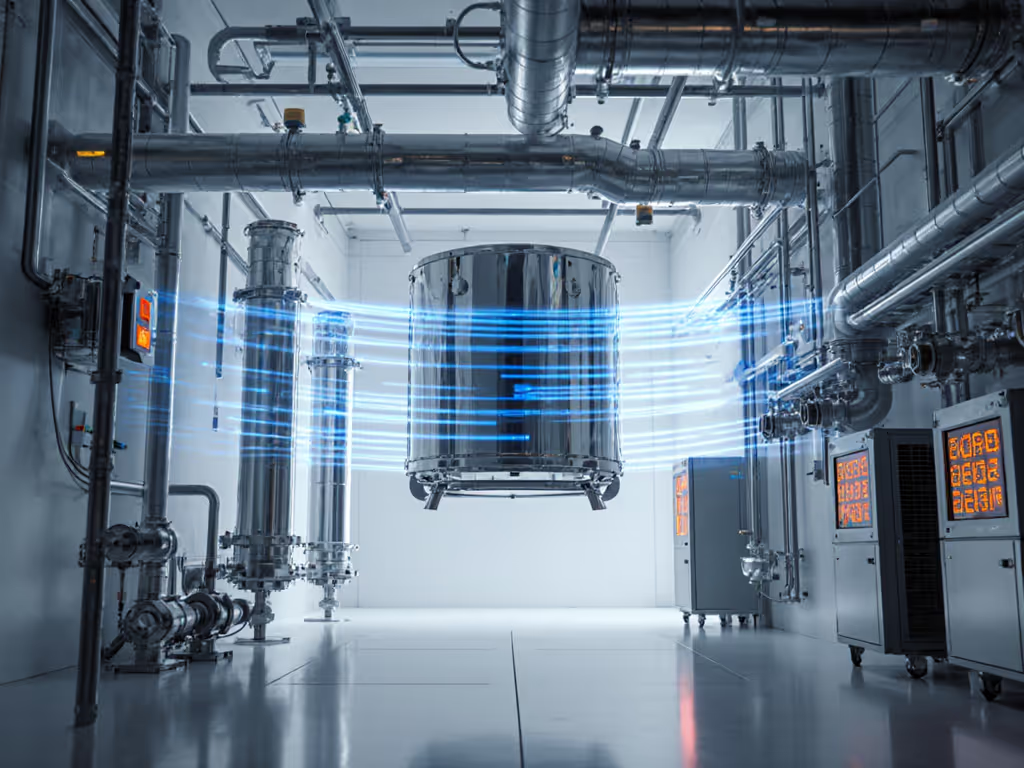
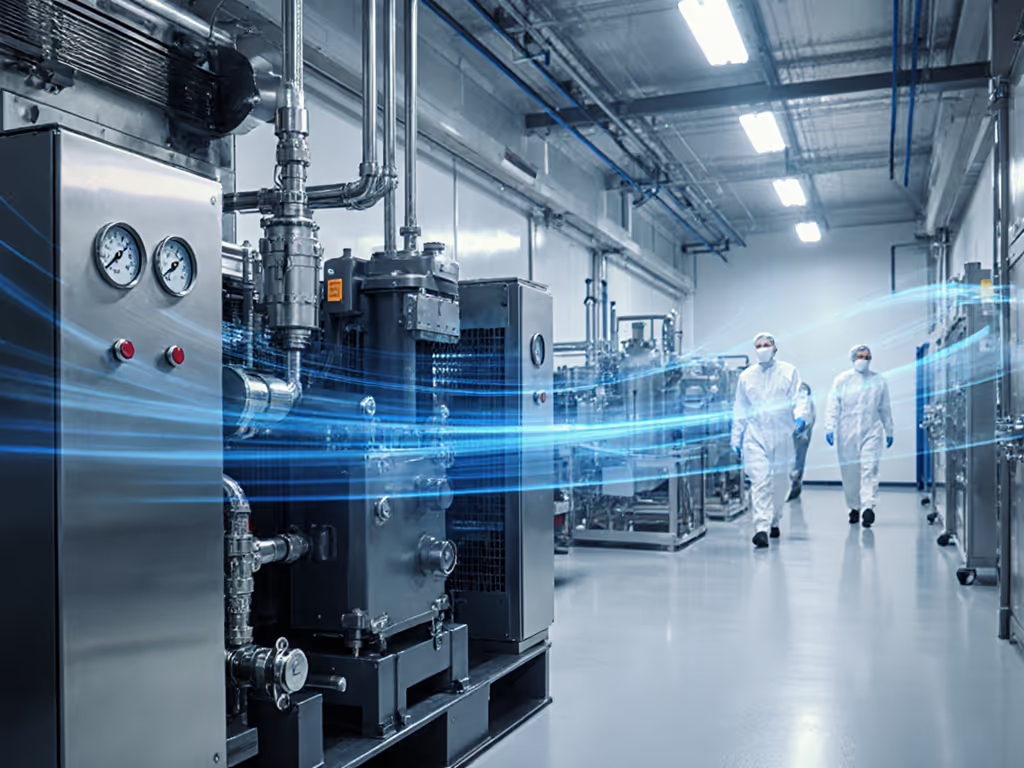
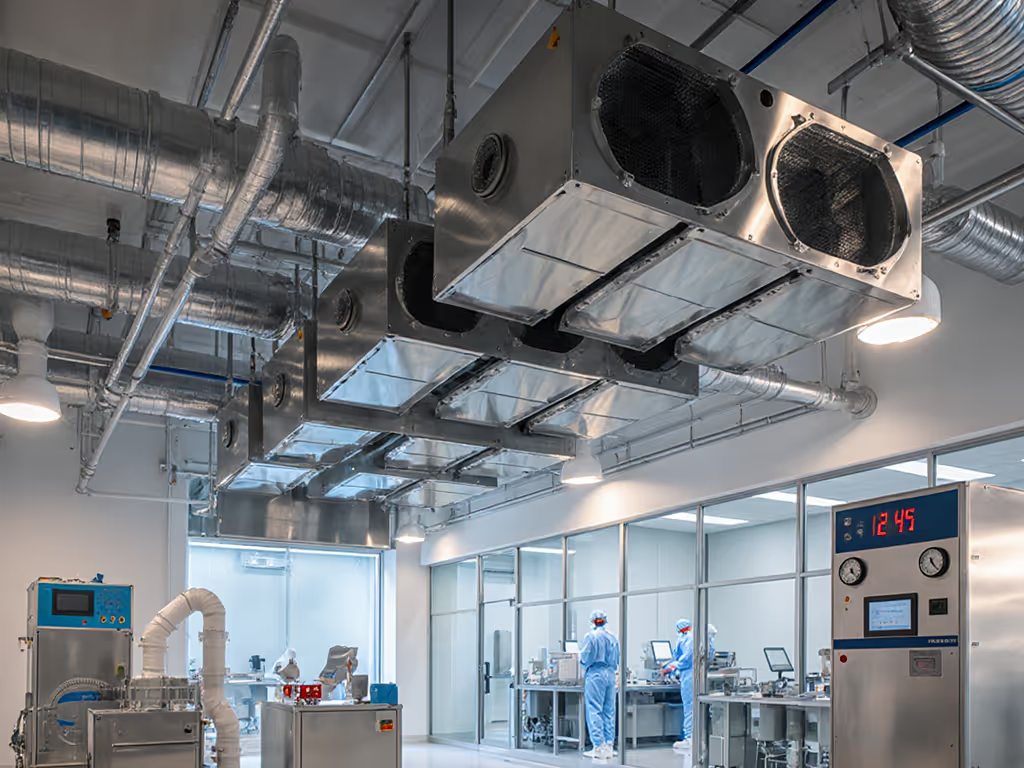
A Grade A or Grade B cleanroom (ISO 5 or ISO 6) inside a cell therapy facility is not sealed in isolation; it draws from a larger HVAC system that must filter, condition, and distribute air at specific volumes and pressure differentials.
Industry benchmark: Cleanrooms for cell processing operate at a minimum of 30 air changes per hour (ACH), with dedicated air-handling units supplying single-pass HEPA-filtered air to prevent recirculation of shed particles or microbial spores. Some facilities mandate 50+ ACH in critical zones where closed systems are opened (e.g., during product transfer or manual sampling).
The pressure differential is often overlooked but critical: 0.02 to 0.05 inches of water column (inwc) positive pressure relative to adjacent spaces creates a pressure "ramp" that bleeds air outward, blocking contamination creep from corridors or equipment rooms. Without active pressure monitoring and balancing, hot-spots emerge where negative pressure draws unfiltered air through unsealed cable penetrations or door frames.
Moisture control is equally silent but equally lethal. Condensation in HEPA plenums or ductwork promotes mycobacterial growth; mycobacterial endotoxins are potent T-cell suppressors and will go undetected in routine microbial testing until culture failure occurs during GMP manufacturing. Desiccant or chilled-water dehumidification systems must reduce inlet dew point to -40 C or lower, and drain-trap condensate must be sampled or sterile-filtered to prevent pooling. Compare dew point performance, energy cost, and maintenance across technologies in our air dryer comparison.
When cell therapy incorporates viral vector manufacturing, such as lentiviral or adeno-associated viral (AAV) delivery systems, air systems face an additional biohazard layer. Viral particles are submicron (20-100 nm for AAV); HEPA filtration is sufficient for containment, but any compromise in filter integrity, seal quality, or air velocity can lead to fugitive viral release.
Viral manufacturing suites typically require unidirectional (laminar) airflow, segregated negative-pressure zones to contain aerosol, and automatic air-balance verification. If air supply falters, backup negative pressure collapses, and viral aerosol can drift into adjacent cell-processing areas. Real-time differential-pressure monitoring and mass-balance logging are non-negotiable.
Pre-Startup Verification:
During Operation:
Redundancy Checklist:
Not all cell therapies demand identical air infrastructure. Treg therapy using engineered, thymically derived cells may require tighter oxygen control (to preserve epigenetic stability) than NK cell manufacturing using cord-blood progenitors. A 50-liter platform pilot process scales differently than a 200-liter commercial expansion; air residence time, filter loading, and humidity recovery all shift.
When GSK and Miltenyi Biotec developed an automated T-cell therapy process, they transferred the robust protocol to three geographically separate manufacturing sites. Each facility required air-system validation from first principles: pressure profiles, particle decay rates, and viable-count performance had to match the qualification standard. Assumption-based transfer ("our cleanroom is the same class, so air should be the same") caused batch failures. Empirical testing under load caught pressure leaks and filter-media inconsistency between vendors.
Reliability comes from matching the air system to the task and the biology, not from brand decals or regulatory check-boxes. A single-pass air handler, HEPA filter, and desiccant dryer can deliver therapeutic-grade air at scale, but only if you size for continuous duty, measure what you install, and replace consumables before failure modes emerge.
The cleanest bioreactors in the industry trace their uptime to relentless attention to air: daily pressure logs, monthly viable sampling, and a ruthless culture of filter replacement on a fixed schedule, not a reactive one. If a pressure gauge climbs or a humidity trend drifts, a team member investigates within hours, because eight weeks into a cell expansion, you cannot afford to troubleshoot air purity.