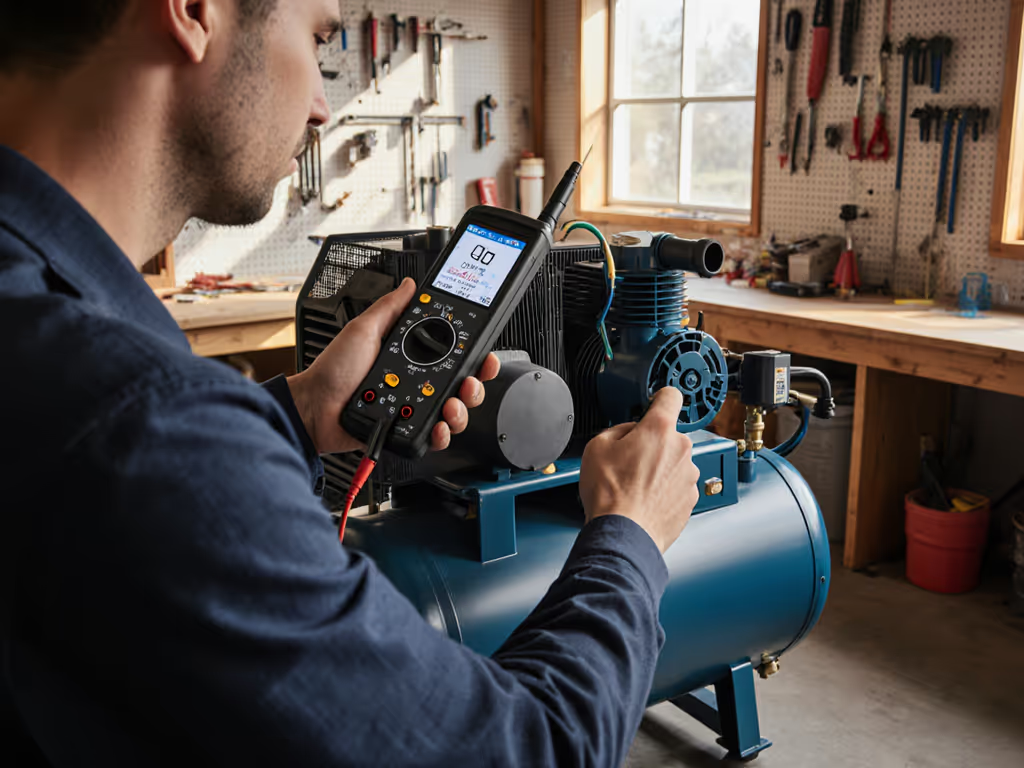

Compressed Air System Audit: Quantify Energy Waste & Savings
2nd May•9 min read
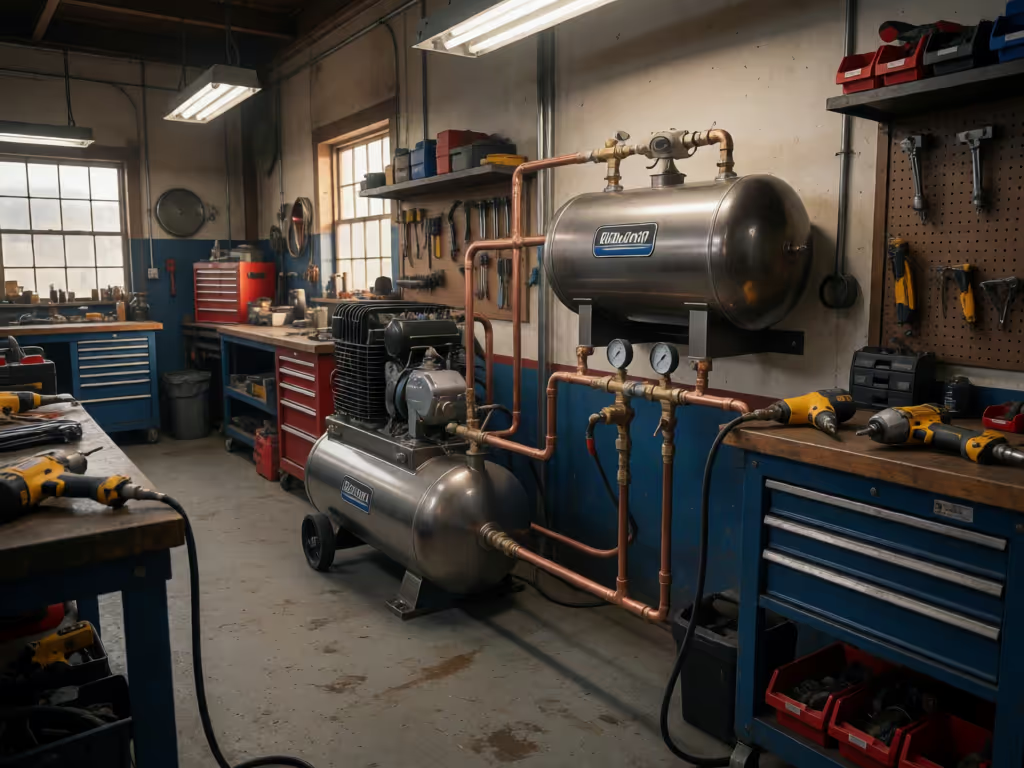
An auxiliary air tank, properly called an air receiver, can store air for short, intermittent demand. It does not increase continuous compressor output.
Important: Sizing guidance varies by compressor and application, and no universal plumbing layout is established here. For sustained demand exceeding compressor production, additional storage only delays recovery.
The usual term for an auxiliary air tank is an air receiver; it is also called an air compressor tank or compressed-air storage tank. It stores compressed air after it leaves the compressor. Its practical role is finite, temporary storage for a short, high-demand event and pressure stabilization. In properly sized portable reciprocating-compressor applications, it can help reduce refill interruptions. It does not increase continuous compressor output. If your objective is to extend compressor duty cycle in the sense of working longer between disruptive recovery periods, begin with demand data and pressure limits rather than gallons alone.
For finishing work, I treat this as an air-system decision, not a tank-shopping decision. Clean, dry, stable air makes finishes look inevitable. I have seen a shop chase a coating problem until a check of wet lines and pressure at the gun redirected the entire diagnosis.
An add-on air tank is most useful when demand arrives in short peaks. Receiver guidance describes stored air as support for short, high-demand events; secondary storage is also used for high-volume intermittent demand and pressure stabilization.
Start by writing down what happens during the task:
Account for simultaneous users and each tool's utilization factor. A catalog CFM figure alone does not necessarily describe one full minute of actual demand.
An auxiliary receiver can be a sensible option when a brief peak exceeds compressor production but the task concludes before stored air is depleted. Properly sized receiver capacity can reduce interruptions and waiting for refill in portable reciprocating-compressor applications.
It is a poor substitute for more air production when the tool demand remains above compressor output for long periods. Storage eventually reaches the bottom of its usable pressure band. At that point, the system is again limited by compressor production and the task may still require recovery time.
Specify the event, the usable pressure band, and the required flow before specifying the receiver volume.
Use a simple worksheet before selecting a receiver:
| Record | Why it matters |
|---|---|
| Compressor type and size | Sizing guidance varies by compressor type, and exact stationary sizing depends on compressor size |
| Tool demand at required pressure | Defines the consumption side of the calculation |
| Simultaneous tools and utilization | Captures peak rather than single-tool demand |
| Upper and lower pressure limits | These are pressure terms used in stationary receiver sizing |
| Hose and piping length and size | These are inputs in stationary-system sizing |
| Intended air treatment | Receiver placement before or after the dryer has application-dependent tradeoffs |
For spray equipment, record the upper and lower pressure limits the process can accept. Also document hose inside diameter, hose length, regulator location, and filter stages. Those records make the next adjustment repeatable instead of speculative.
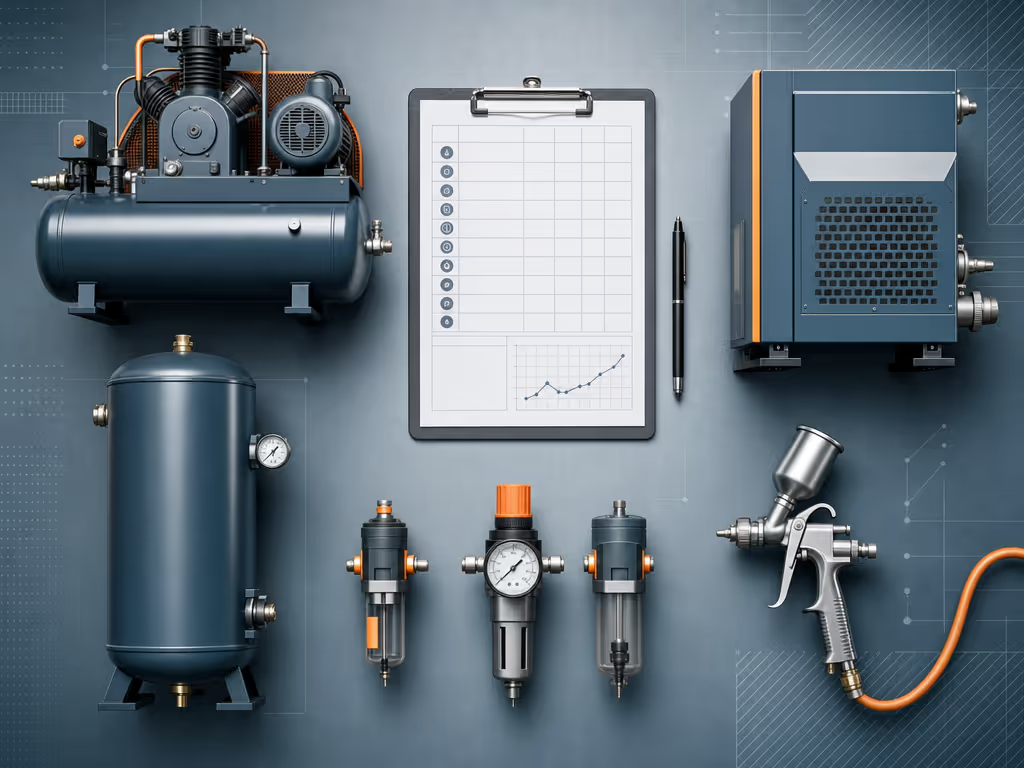
Sizing rules vary with compressor type, control method, and demand pattern, so use an air compressor sizing guide rather than a universal ratio. Do not apply one gallons-per-CFM number to every system.
For a portable reciprocating compressor, VMAC publishes a narrow rule of thumb: multiply the highest tool CFM requirement at the required PSI by 1.25 for a minimum receiver size or 1.5 for a recommended receiver size, then round up to the nearest gallon size. Treat that only as a starting point for that application class (not as a universal tank rule).
For stationary systems, VMAC publishes this receiver-volume formula:
V = t × C × pa / (p1 - p2)
Where:
The formula requires disciplined unit handling; VMAC identifies atmospheric pressure as 14.7 PSIA and labels the pressure terms as PSIA. Exact stationary sizing also depends on compressor size, control strategy, and pipe or hose dimensions and length. Have a qualified engineer validate a custom stationary calculation.
Remember that discharge piping and hoses also contribute storage volume. Count that volume in the system assessment, but do not treat it as a reason to neglect a properly selected receiver.
Receiver placement relative to an air dryer is a treatment-system choice. Neither position is categorically correct for every setup.
A receiver located after the dryer stores treated, dry air that is ready for fluctuating or peak demand. This arrangement deserves close consideration when the receiver's job is to buffer air for moisture-sensitive work such as finishing.
A receiver ahead of the dryer can separate a substantial portion of condensate before the dryer. The tradeoff is that condensate forming inside the receiver can contribute to internal corrosion over time.
Document the complete sequence (compressor, receiver, dryer, filters, regulator, hose, and tool) before changing anything. For a spray line, specify each filter stage and micron rating from the equipment manufacturer's data and verify the dryer's intended use. I prefer a regulator-at-tool layout for finish-critical work because it makes pressure verification part of the setup.
Do not build a DIY receiver or convert an old propane tank, steel drum, or another improvised vessel into compressed-air storage. Pressure-vessel failure is not a tolerable experiment.
Before any compressor installation, verify the receiver nameplate, maximum allowable working pressure, component ratings, manufacturer instructions, and applicable local requirements. The available guidance does not establish a universal home-shop plumbing diagram, hose material, fitting specification, check-valve arrangement, or relief-valve selection.
Use these auxiliary tank safety tips as a pre-installation review:
After a qualified, documentation-based installation, run the actual work cycle and record results rather than relying on an impression of improvement.
Track:
According to Fluid-Aire Dynamics, receiver storage can provide a steadier pressure signal for compressor controls, and rapid cycling can contribute to wear in motor and control components. Record the observed cycle behavior; do not assume a tank changes the compressor's rated duty classification.
For finish work, confirm the applicable pressure limits and that the receiver and dryer arrangement suits the intended air treatment. A tank that buffers a brief demand event stores a finite amount of air; placement before or after the dryer involves application-dependent tradeoffs.
Additional receiver storage can support short deficits, intermittent high-volume demand, and pressure stabilization. The guidance here does not establish compatibility with every compressor or a universal connection design. Use the receiver and compressor documentation and verify local requirements rather than copying a generic layout.
This article does not establish a safe connection scheme for two tanks. Treat the total volume, pressure-vessel ratings, accessible drains, visible gauges, and safety-valve arrangements as a qualified design review.
A service-life duration is not established here. Internal corrosion from condensed water is a central concern for steel receivers. Drain the vessel as specified, inspect its condition, and follow the manufacturer's instructions for inspection or testing. For broader equipment-care intervals, compare the recommended air compressor maintenance schedule for your compressor type.
An auxiliary receiver is worth considering when measured, intermittent demand is creating brief pressure deficits or refill interruptions. It is not the answer to a sustained flow mismatch, and it should never be separated from moisture control and pressure verification.
Your next useful exercise is to log one real job: tool demand, event duration, acceptable pressure limits, recovery time, hose dimensions, and drain condition. If those measurements reveal persistent pressure or recovery problems, use an air compressor troubleshooting guide before adding more storage. That one page of data will show whether secondary storage, improved air treatment, or a higher-output compressor is the more defensible next step. Finish to spec, repeatably.