Moisture Analysis Comparison: Dew Point Accuracy
6th May•10 min read
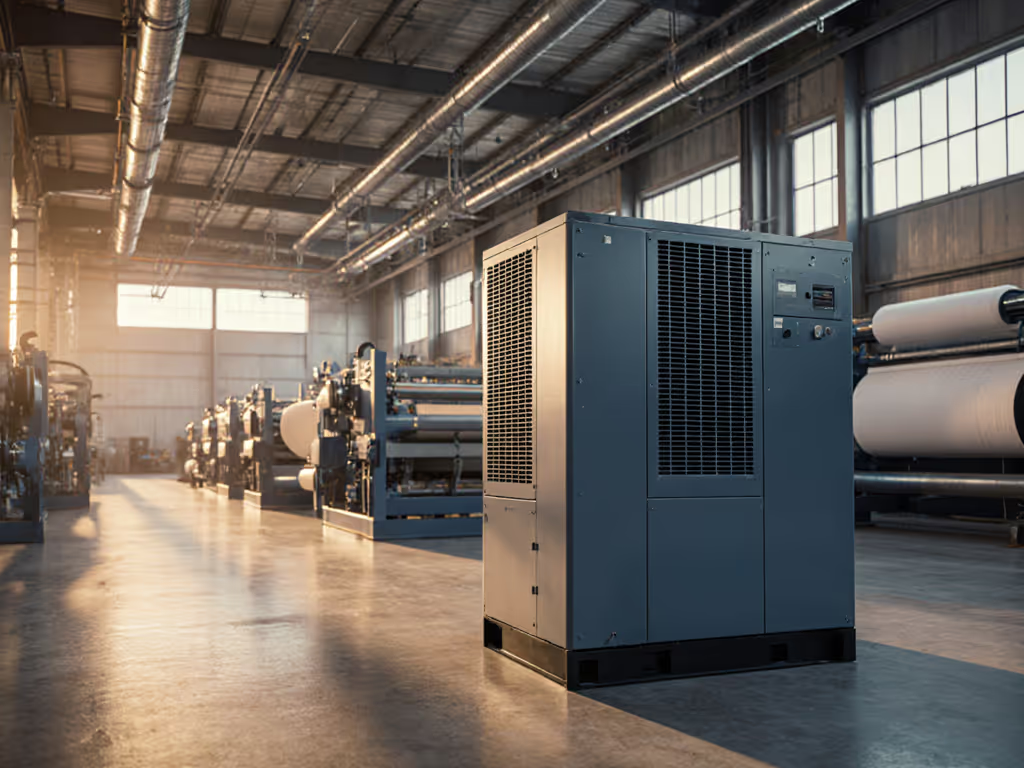
When designing textile manufacturing air compressors into your facility, you're balancing precision with productivity. Unlike general industrial applications, textile industry compressed air demands both quiet operation and meticulous sizing to prevent disruptions to delicate processes. The cost of noise fatigue in textile environments isn't just measured in decibels, it shows in missed thread counts, inconsistent dyeing, and higher scrap rates. Let's explore how to size your system not just for airflow, but for sustainable peace that keeps operations humming.
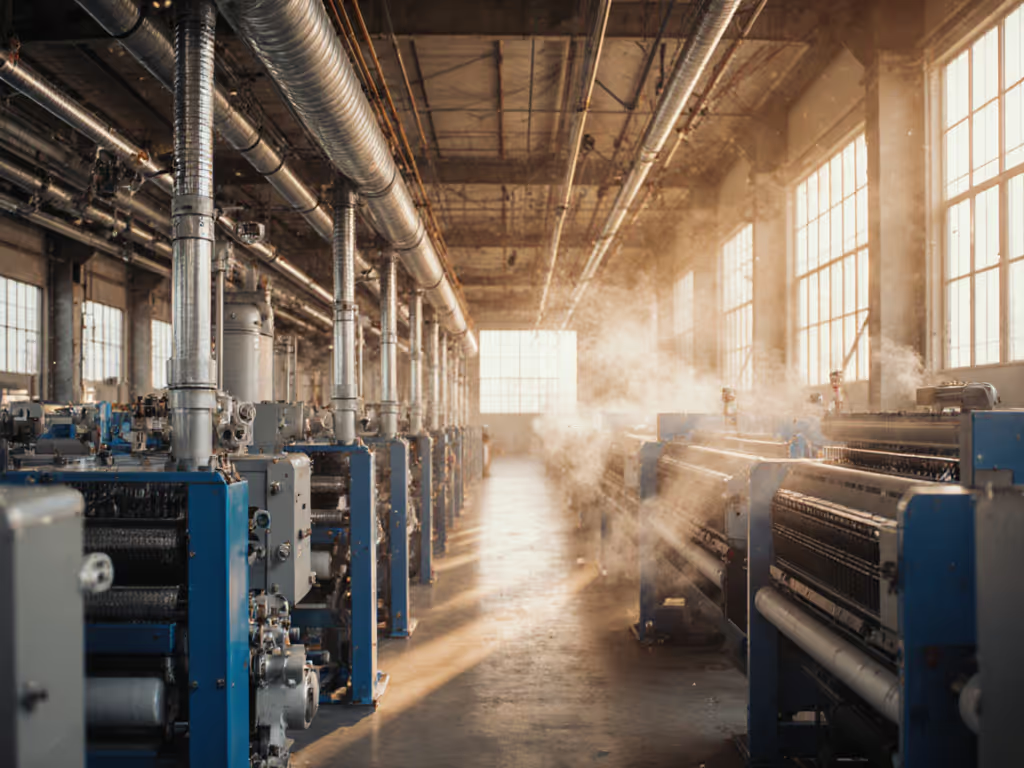
Textile manufacturing presents unique challenges that require specialized compressor strategies. Unlike general industrial settings where intermittent high-CFM demands dominate, fabric processing air systems run continuously but with lower, steadier airflow requirements (typically 4-12 CFM per workstation depending on equipment). The critical difference lies in air quality: textile production requires near-zero oil contamination (ISO 1:2010 Class 1-2) to prevent fiber degradation during spinning and weaving. While standard workshops tolerate 120 dBA, textile environments operate best below 75 dBA to maintain communication and reduce operator fatigue during 8-hour shifts.
I recently measured a weaving facility where continuous air blasts for shuttle replacement created 85 dBA at operator stations. After optimizing compressor placement and sizing, we dropped readings to 68 dBA (a 17 dBA improvement that brought immediate reductions in reported fatigue). Remember: when sizing textile industry compressed air systems, always add 20-30% capacity for future expansion, but never oversize to the point of excessive cycling that creates pressure spikes damaging to delicate air jets in looms.
In textile environments, we report A-weighted and unweighted dB at 1 m across the full spectrum, not just peak readings. Standard workshops often tolerate 8000+ Hz spikes from reciprocating compressors, but these high frequencies are particularly fatiguing in textile settings where operators already contend with loom noise at 2-4 kHz. To understand the engineering behind quieter compressors, see our advanced noise reduction technologies comparison. The psychoacoustic harshness of poorly isolated compressors compounds with weaving machinery to create an additive noise burden that exceeds safe thresholds even when individual machines appear compliant.
When specifying for yarn manufacturing compressors, always note floor type, wall materials, and mounting. Concrete slab floors transmit vibration differently than suspended wood structures in smaller textile facilities. I specify airflow path and cooling clearance requirements based on the specific fabric processing air systems in play: blow rooms need higher CFM at lower pressure (60-70 PSI), while air-jet looms require consistent pressure at 80-90 PSI with minimal fluctuations.
Quiet isn't luxury; it's throughput and focus you can hear.
Start by auditing actual tool requirements rather than relying on manufacturer specs. Use our air compressor sizing guide for step-by-step CFM calculation and common pitfalls. Spray guns for fabric treatment typically need 6-10 CFM at 30-50 PSI, while textile production requirements include continuous applications like:
Rather than a single oversized unit, consider a multi-compressor approach. We've found that a base load compressor meeting 70% of continuous demand, plus a trim unit for peak loads, reduces total noise by 8-12 dBA compared to a single oversized machine cycling frequently. For weaving air quality standards, include a refrigerated dryer and coalescing filter rated for 0.01 micron particles. This prevents moisture-related fiber damage while maintaining consistent airflow that reduces compressor strain and noise.
Retrofitting existing systems requires addressing both the source and transmission paths. First, isolate vibration by floating the compressor on 1-2" thick rubber isolation pads (not the thin mats many facilities use). Then create a ventilated enclosure (never sealed) with 2" acoustic lining and ducted intake/exhaust. For enclosure layout, ventilation, and vibration control, follow our compressor room design guide. Critical airflow path considerations:
A mid-sized textile facility implemented this approach on their yarn manufacturing compressors. They relocated the compressor into a ventilated closet with lined ductwork, added a check valve to prevent backflow noise, and floated everything on isolation mounts. The measured dBA dropped by 12 across the production floor, enough that operators could hear quality issues in real time rather than discovering them later.
Ventilate the quiet.
Most guides emphasize CFM and PSI while ignoring the acoustic consequences of poor sizing. An undersized compressor constantly runs at 100% load, creating continuous high-frequency noise that fatigues operators. An oversized unit cycles frequently, generating pressure surges that accelerate wear while creating intermittent noise spikes that disrupt concentration. Textile production requires stable pressure within +/- 2 PSI. Learn how VSD vs fixed speed compressors maintain stable pressure and cut noise from cycling. Fluctuations that might be acceptable in auto shops cause tension variations in yarn that lead to breakage.
The key is measuring duty cycle at actual operating pressure. Many facilities size based on tank capacity rather than continuous flow capability. For textile applications where operations run 16-24 hours daily, verify the compressor can deliver 100% of required CFM at working pressure indefinitely, not just "peak" CFM during initial tank fill. This often means selecting a larger HP motor on a rotary screw unit rather than an oversized piston compressor that creates damaging vibration in textile environments.
Ignoring the cumulative noise impact of multiple small compressors. Many textile plants install separate 1-5 HP units at each production island to avoid long air lines. This creates multiple noise sources that interact, often creating higher combined noise levels than a single centralized system. Worse, these small units typically lack proper isolation and ventilation, cooking their own components while radiating noise directly into production areas.
In one facility, we replaced six 3HP piston compressors (totaling 88 dBA) with a single 15HP rotary screw unit in a ventilated enclosure (72 dBA). The centralized system reduced maintenance costs by 40% while creating a more consistent air supply, proof that sustainable noise control pays back in throughput and safety. When addressing textile manufacturing air compressors, always consider the total system rather than isolated components.
Properly sized textile industry compressed air systems deliver more than just airflow: they return focus, reduce errors, and create measurable productivity gains. The quiet shop isn't just pleasant; it's where quality improves and rework decreases. When designing your next system, remember that noise control isn't an add-on cost but a strategic investment with daily returns in operator well-being and product quality.
For those ready to explore how noise-optimized sizing could transform your textile facility, I've compiled detailed measurement protocols and case studies showing dBA reductions alongside productivity metrics. Understanding your specific fabric processing air systems' requirements is the first step toward a quieter, more efficient operation.