Moisture Analysis Comparison: Dew Point Accuracy
6th May•10 min read
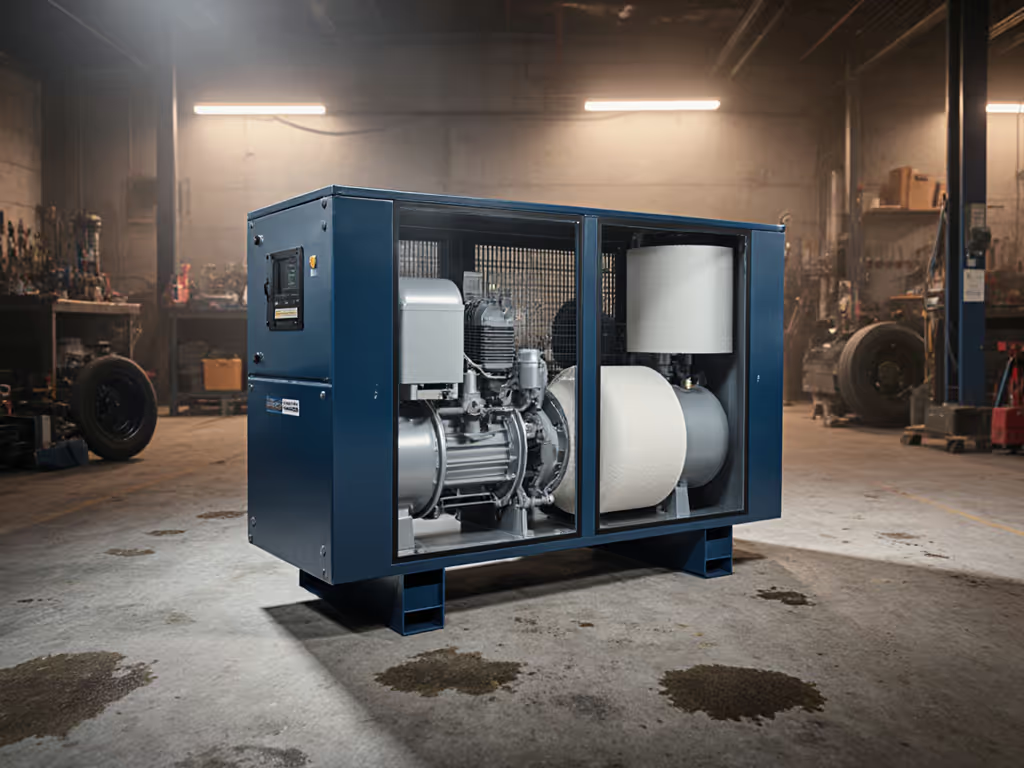
As a spray finishing specialist who's measured pressure drops at the trigger for two decades, I know compressor noise reduction technology isn't just about comfort, it's mission critical for workflow continuity and finish integrity. When a shop's quiet compressor comparison leads to selecting units that starve tools of stable pressure, fisheyes and orange peel follow inevitably. I've seen body shops blame paint when the real culprit was vibration-induced pressure spikes collapsing to 28 psi at the gun. Clean, dry, stable air makes finishes look inevitable. Today, we dissect noise solutions through the lens of system performance (not decibel ratings alone).
Noise fatigue directly impacts air stability and tool performance. In HVAC compressor applications, sound pressure levels between 65 to 75 dBA at 1 meter (common in reciprocating units) coincide with vibration transfer that disrupts pressure regulation. This manifests as:
Unlike finishers who tolerate noise for CFM, pros optimizing for spec-grade results demand both. Your hearing protection rating (NRR) should never compensate for poor system design. The solution requires matching noise reduction strategies to your workflow's pressure stability requirements (starting at the compressor's core).

Clean, dry, stable air makes finishes look inevitable.
The compressor type dictates baseline noise characteristics. For a deeper dive, see how scroll compressors work and why they run quieter by design. Data from field tests reveals critical distinctions:
| Compressor Type | Avg. dBA @ 3 ft | Vibration Severity (mm/s) | Pressure Stability (± psi) |
|---|---|---|---|
| Reciprocating (Piston) | 78 to 85 | 4.2 to 7.1 | 8 to 12 |
| Rotary Screw | 65 to 72 | 1.8 to 2.4 | 2 to 4 |
| Scroll | 62 to 68 | 0.9 to 1.3 | 1 to 3 |
Key technical insights:
Pro Tip: Verify "quiet" claims by requesting ISO 3744 test reports. Many manufacturers cite dBA at 1 meter, which is useless when your spray booth requires measurements at the tool location.
Vibration isolation isn't optional: it's pressure regulation. For placement, electrical, and piping best practices that curb transmitted vibration, review our air compressor installation guide. Unchecked vibrations transfer energy through:
Effective vibration isolation methods:
Anecdotal insight: That body shop battling fish-eyes? Wet lines vibrated at 11 Hz, synchronizing with pressure pulses. Installing mounts under the compressor and a 1/4" flex section at the dryer outlet stabilized pressure within 3 psi. Rejects fell 90%.
Enclosures often worsen problems by trapping heat, which kills duty cycles. Effective acoustic enclosures require:
Sound dampening systems must address frequency ranges:
Critical note: Never enclose oil-lubricated compressors without oil mist filters. Oil aerosol degrades acoustic foam efficiency by 60% in < 6 months.
Modern tech moves beyond passive absorption. Top-tier solutions integrate: See our comparison of smart compressor control systems for proven strategies to stabilize header pressure and cut noise cycling.
Data point: Heat pump water heaters with dual inlet/outlet mufflers (per Rheem patent US20250184171A1) show 22 dBA system reduction, directly applicable to rotary screw compressors.
Don't chase lowest dBA. Match technology to your critical path: If moisture control is critical, compare air dryer technologies to hit dew point targets without adding pressure drop or noise.
Never compromise on these specs:
Compressor noise reduction technology ultimately serves one purpose: delivering air that's clean, dry, and stable at the tool. The quietest compressor on paper fails if vibration degrades pressure stability. My decades measuring fish-eye-causing pressure drops prove that sound mitigation must be integrated with filtration, drying, and regulation.
Choose solutions that document performance under your working conditions (not brochure claims). Verify dBA measurements include wet lines and standard hose runs. Most importantly, measure pressure at the tool after noise treatments. When ambient RH hits 65% and your HVLP gun coughs, that's not moisture, it's uncontrolled vibration collapsing your air system.
Finish to spec, repeatably. That's the only metric that matters when your reputation's on the line.