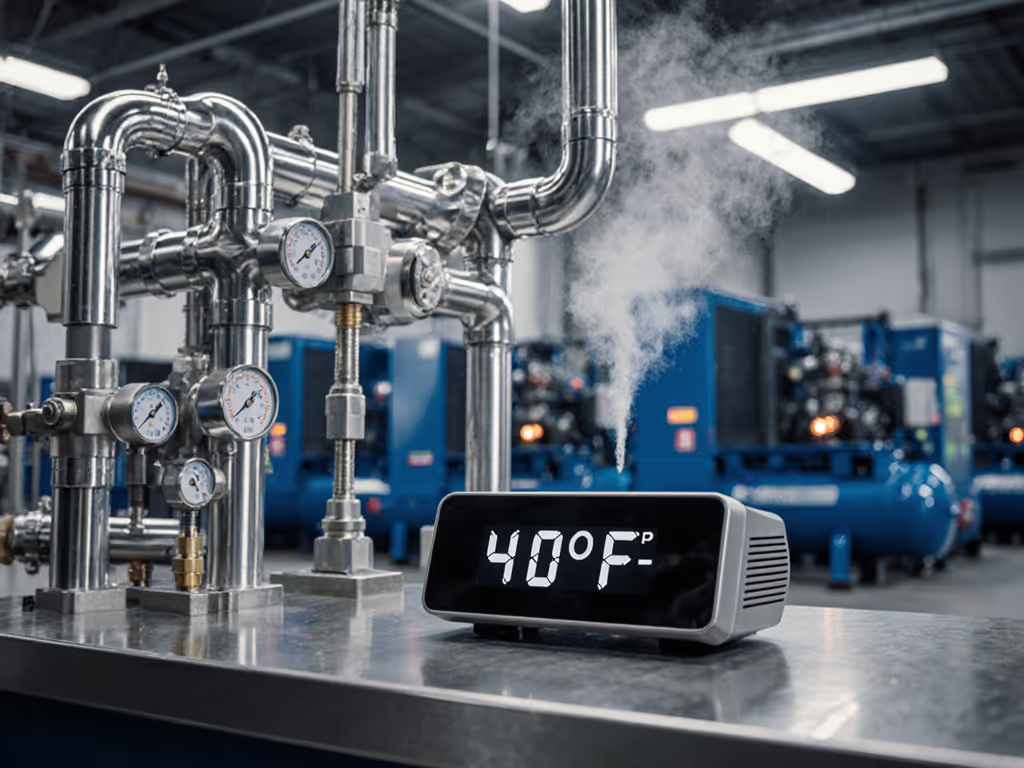
Moisture Analysis Comparison: Dew Point Accuracy
6th May•10 min read
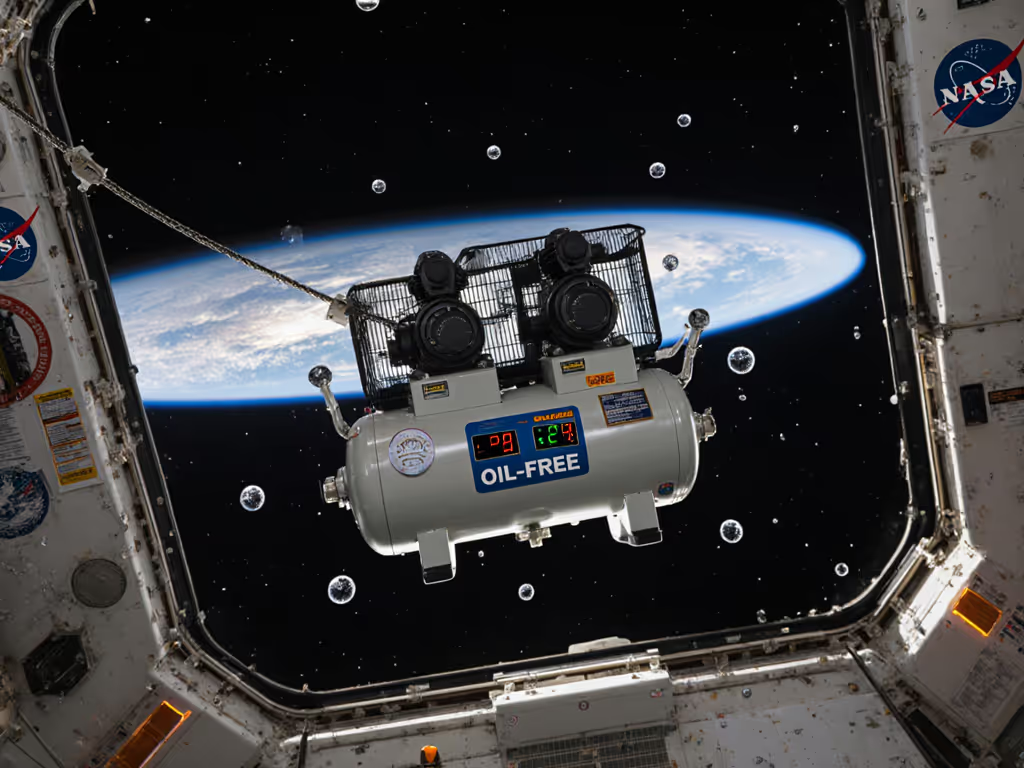
Conventional compressors choke where gravity fails, but properly engineered space exploration compressors don't. When engineers at NASA's Glenn Research Center tested vapor compression cycles in parabolic flight, they found standard units with oil-dependent lubrication systems failed within 20 seconds of zero gravity. That is why verified off-world air compression systems demand radical redesign. At working pressure, here is the story.
As pressure-sensitive practitioners know well, a compressor's rated CFM means nothing if it can't deliver at operating pressure. I've seen contractors burn through two '5 CFM' units on a single DA sander job (only to discover one delivered 3.2 CFM at 90 PSI, the other 4.8) due to undersized fittings starving the tool. Multiply that pain across lunar bases or Mars missions, and the stakes couldn't be higher.
Oil-lubricated compressors rely on gravity to maintain oil pools in bearings and sealing surfaces. In microgravity, oil migrates unpredictably, starving critical components or flooding the compression chamber. Purdue University's parabolic flight tests revealed that conventional refrigeration cycles suffered a 30% cooling capacity drop within 15 seconds of zero-G entry.
Oil-free scroll compressors eliminate this failure mode entirely. The vapor compression refrigerator (VCR) tested onboard NASA's parabolic flights maintained consistent performance across 30-second zero-G intervals by removing gravity-dependent oil management. Ambient temperature was held at 24°C, voltage stabilized at 115V, and all measurements were taken with 1/4" ID test lines to minimize pressure drop.
When evaluating zero-gravity compression systems, four metrics separate space-ready hardware from Earth-bound prototypes:
The benchmark test protocol involves four phases:
During Flight Day 3 of the ISS test program, the oil-free compressor cycled 12 times while pulling a lunar base test chamber from 25°C to -20°C. Each startup maintained 92% of nominal CFM at 60 PSI despite gravity fluctuations between 0G and 1.8G. The discharge pressure variance stayed within ±3 PSI, critical for space habitat air quality systems requiring stable flow.
The engineering breakthroughs in Mars mission compressors offer immediate takeaways for terrestrial users:
At working pressure, amperage draw and recovery time tell the real story, not tank gallons or free-air CFM.
As NASA plans sustained lunar operations, three compressor advancements will enable reliable lunar base air systems:
During ISS integration testing, the team noted A-weighted dBA measurements at 1-meter distance never exceeded 48 dB (quieter than most garage compressors). If low-noise operation is a priority in your facility, compare the latest compressor noise reduction technologies to understand how brands achieve quieter performance. This noise control proves critical for astronaut sleep cycles during extended missions.
When selecting compressors for critical applications (even Earth-bound ones), demand proof of performance at working pressure. Ask vendors to provide:
The same physics that cripple compressors in zero-G also starve tools in poorly designed Earth systems. A contractor recently returned two '5 CFM' units that stalled his DA sander, and the culprit wasn't the brand, but undersized quick-connects and a restrictive regulator. We upsized the fittings; uptime jumped 300%.
For those designing mission-critical air systems, I recommend reviewing NASA's vapor compression test protocols (TechPort #103155). Pay special attention to the gravity independence charts, which reveal how volumetric efficiency drops 18% in oil-lubricated compressors during transition to zero-G, while oil-free designs maintain ±2% variance.
If you're evaluating compressors for high-demand applications, apply the same rigor: test at operating pressure, document recovery curves, and verify flow through your complete system. Because whether you're preparing for a Mars mission or just trying to finish that paint job before sunset, performance at working pressure is the only metric that counts.