Moisture Analysis Comparison: Dew Point Accuracy
6th May•10 min read
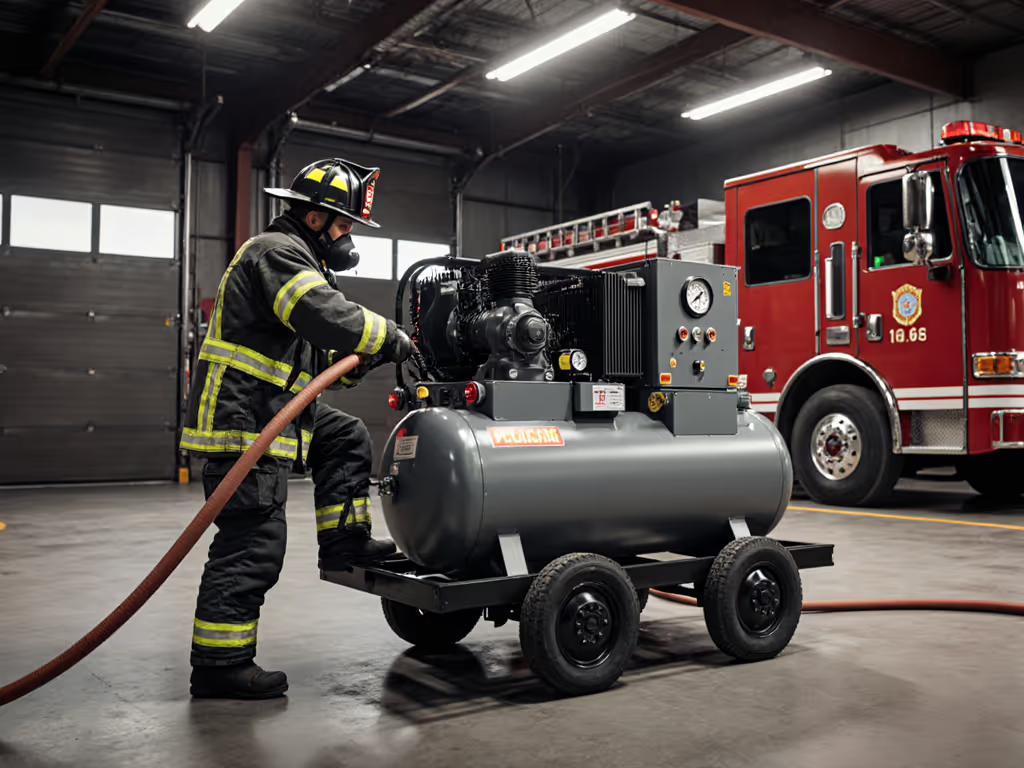
Firefighting air compressors and emergency response compressor comparisons require more than spec sheets, they demand measurement, field validation, and a clear-eyed grasp of the gap between rated flow and real deployment conditions. Mobile breathing air systems that refill SCBA and SCUBA cylinders at 4500-6000 PSI sit at the intersection of extreme duty and unforgiving logistics. This guide cuts through marketing claims to show how tested performance translates to readiness, safety, and operational confidence.
A mobile breathing air system is a self-contained, high-pressure compressor setup mounted on a trailer or truck that produces CGA Grade D or higher air purity for emergency cylinders. Fire Apparatus Manufacturers' Association (FAMA) standards define these units as integrating two or more major components (compressor, fill station, and filtration) capable of rapid on-scene cylinder refilling. The typical operating window spans 4500-6000 PSI, though the real metric that matters is not peak pressure, but sustained charge rate, measured in standard cubic feet per minute (SCFM). For a quick refresher on interpreting specs, read our CFM vs PSI guide. A system rated 25 SCFM at 4500 PSI is fundamentally different from one delivering only 12 SCFM at the same pressure under thermal load after 30 minutes of continuous duty.
A compressor's nameplate horsepower and maximum PSI are starting points, not performance guarantees. Firefighting scenarios demand predictability. If your mobile unit is calibrated for a 45-minute fill sequence and thermally throttles at minute 38, you have a problem that affects crew safety and incident response.
Key performance metrics to test and verify:
Quiet isn't luxury; it's throughput and focus you can hear.
A unit running at 80 dBA allows crew coordination and reduces strain during tense setup and fill operations. One roaring at 95 dBA forces shouting, masks warning alarms, and leaves technicians fatigued, increasing error risk in a high-stakes environment. For deeper engineering context on lowering harshness without throttling airflow, see our compressor noise reduction technologies comparison.
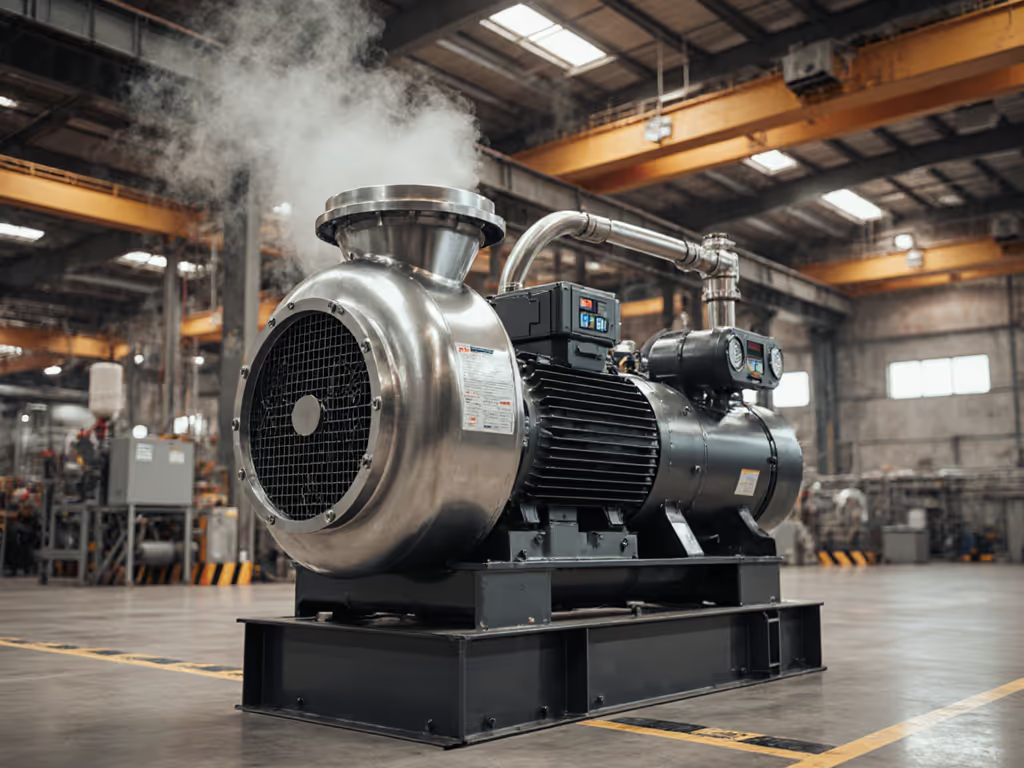
The compressor market is currently split: positive displacement designs (including reciprocating and rotary screw) hold about 61.4% of revenue but are growing more slowly. Dynamic units (centrifugal and axial compressors) account for 38.6% of market share yet are advancing at 5.8% CAGR, driven partly by LNG and petrochemical projects that demand large continuous flows.[1]
For mobile firefighting systems:
Positive Displacement (Piston and Rotary Screw)
Centrifugal / Dynamic
For most volunteer and small-to-mid career departments, a screw-based system in the 25-45 SCFM range offers the best balance of cost, portability, and proven uptime.
Mobile units operate in variable ambient conditions: full sun on pavement, humid coastal stations, desert heat at 105°F. If you regularly operate in arid, high-heat environments, follow our desert air system optimization checklist. A compressor rated for continuous duty at 68°F may derate significantly when ambient exceeds 90°F.
I once consulted on a cabinet shop's noise problem. The compressor sat against a wall in a sealed closet, recycling hot discharge air back into the intake. We relocated it into a ventilated closet, floated it on isolation pads, and routed ducted intake and exhaust with a check valve through the exterior wall. Measured dBA dropped 12 points, recovery improved, and the motor temperature stabilized 15°C lower. Same unit, different context.
Mobile systems must apply the same discipline:
Ventilate the quiet. The same principle applies to thermal control: open pathways for inlet air and exhaust heat prevent throttling and maintain reliability.
When evaluating mobile emergency response compressor options, demand test reports that specify:
Manufacturers evasive on test data, or quoting only "maximum" flow at atmospheric discharge, are signaling that real performance is lower. Reputable vendors provide conservative, field-validated specs.
Mobile systems are stored outdoors or in damp bays. Water-resistant compressor systems must address corrosion protection at three levels:
Rapid Deployment Capabilities hinge on pre-connectivity. Professional mobile units arrive with:
Systems that require manual adjustments, component swaps, or extended priming sequences lose seconds, and seconds matter in emergency deployment. For a broader look at rapid-deploy air systems built for crisis response, review our disaster recovery compressor guide.
Mobile firefighting compressors operate in a regulatory environment. The Occupational Safety and Health Administration (OSHA), National Fire Protection Association (NFPA), and CGA all mandate specific air quality, pressure safety, and maintenance protocols. For a practical compliance overview, see our OSHA compressed air safety standards guide. Yet marketing claims often blur lines between peak flow (unloaded, at 0 PSI) and continuous duty flow (loaded, at 4500 PSI), a factor-of-2 gap in many cases.
Third-party test laboratories (such as those certifying CGA Grade D) provide independent verification. When a vendor says "our unit delivers 40 SCFM at 4500 PSI," ask for the test report. Verify ambient conditions, duration, and whether the flow includes or excludes cooler bypass.
A fact confirmed by a recent industry report: centrifugal and high-performance screw compressors are driving market share gains precisely because manufacturers of these technologies are more transparent about duty-cycle data, thermal limits, and noise profiles.[1] Buyers are rewarding honesty with purchase orders.
A compressor is not a standalone machine; it is part of a thermal and pneumatic system. Thermal management for emergency equipment extends beyond the air end to:
Systems designed with this discipline run cooler, quieter, and more reliably, and crews arrive at incidents confident in their equipment.
| Dimension | Small Trailer (5-15 SCFM @ 4500 PSI) | Medium Mobile Unit (25-45 SCFM @ 4500 PSI) | Large Truck System (60-100+ SCFM @ 4500 PSI) |
|---|---|---|---|
| Motor | 2-5 HP | 7.5-15 HP | 20-40 HP |
| Footprint | 4×6 ft | 5×8 ft | 8×12 ft |
| Refill Time per 100 cu. ft. bottle | 8-12 min | 4-6 min | 2-3 min |
| Ambient Temp. Derating | 10% loss per 10°F over 68°F | 8% loss per 10°F | 5% loss per 10°F |
| Noise (idle/full load) | 70/82 dBA | 75/88 dBA | 78/92 dBA |
| Typical Use Case | Small volunteer squads, rural fill stations | City/County systems, multi-fill operations | Metropolitan departments, cascade refills |
Choice depends on incident frequency, crew size, and infrastructure. A volunteer squad with 6 SCBA sets and a refill every 2-3 weeks can manage with a small portable unit. An urban department averaging 20+ incidents weekly and 40 deployed cylinders per shift needs a medium or large system.
CGA Grade D is non-negotiable. The standard specifies:
Third-party labs perform quarterly or semi-annual audits on mobile systems. Inline water traps, high-efficiency particulate (HEPA) filters, and desiccant dryers are non-negotiable. Some modern systems add catalytic converters to scrub CO and CO₂ if the compressor air end is exposed to engine exhaust (diesel-driven units are more prone to this risk).
Request test reports directly from the manufacturer or your purchasing authority. A system cannot be compliant without verified documentation.
As mobile firefighting compressors continue to evolve, driven by demand for higher flow densities, better thermal control, and lower operating noise, the gap between marketing claims and measured field performance will only widen in importance.
When you evaluate a system:
Quiet, predictable, thermally stable: these are hallmarks of systems designed for both mission readiness and crew wellness. The next generation of mobile firefighting equipment will reward departments that insist on transparent, measured performance over inflated marketing specs.
Continue exploring thermal dynamics, vibration isolation best practices, and vendor certification databases within your department's procurement framework. Your next purchase decision will be better informed, your equipment more reliable, and your crews better protected.