Moisture Analysis Comparison: Dew Point Accuracy
6th May•10 min read
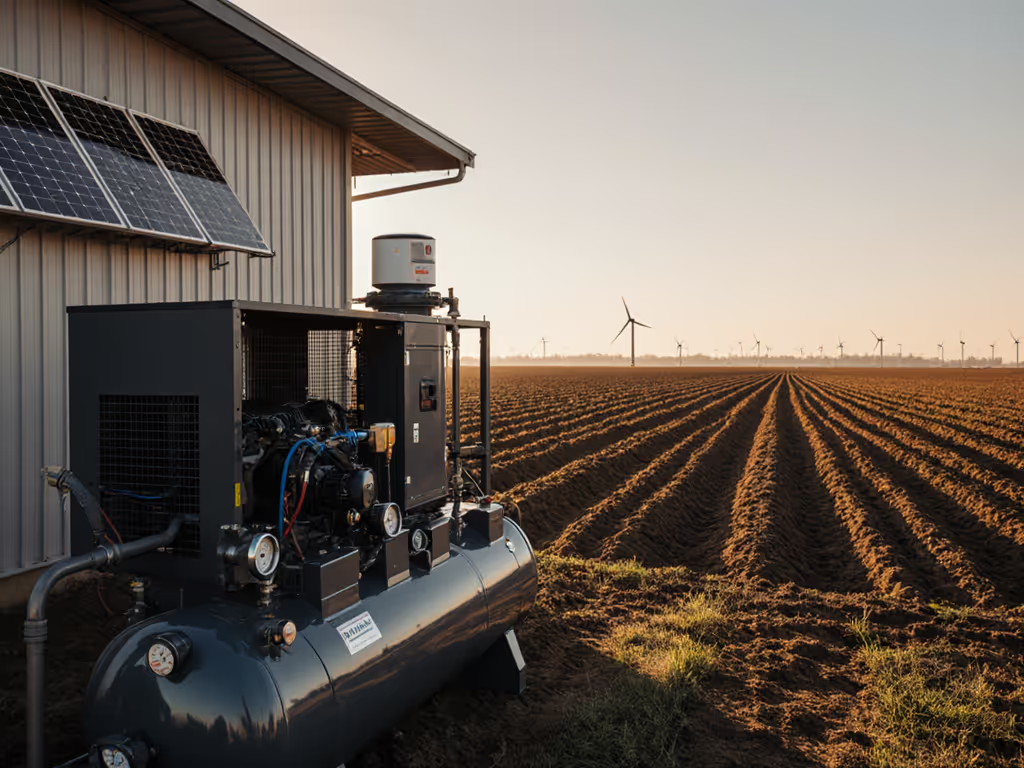
When properly engineered, sustainable agriculture compressors deliver the clean, dry air required for consistent performance across modern precision farming air systems. Too many growers overlook air quality and pressure stability while focusing solely on tank size and horsepower, a mistake that manifests as erratic equipment performance, moisture damage, and energy waste. In precision agriculture, where every cubic foot of air impacts yield and sustainability metrics, system design trumps component selection. Clean, dry, stable air makes finishes look inevitable, whether you're spraying paint or conditioning crops.
Precision farming equipment requires specific airflow at working pressure, not just theoretical tank capacity. The most common error I see? Farmers spec compressors based on pump output while ignoring pressure drop between compressor and tool. Your greenhouse ventilation system might require 45 CFM at 90 PSI, but if your 100-foot, 3/8-inch hose drops pressure to 72 PSI at the regulator, your fans won't reach designed throughput.
Document these critical measurements for each application:
A Midwestern aquaponics facility once struggled with inconsistent oxygenation despite "adequate" compressor specs. On-site measurement revealed 35 PSI drop between compressor and aerators due to undersized 1/4-inch lines. Switching to 3/8-inch hose with regulator at the aerator turned erratic bubbles into consistent dissolved oxygen levels.
Agricultural environments demand robust filtration rarely included with standard compressors. Dust, humidity, and chemical residues compromise equipment longevity and crop safety. Your filter sequence must address these specific threats:
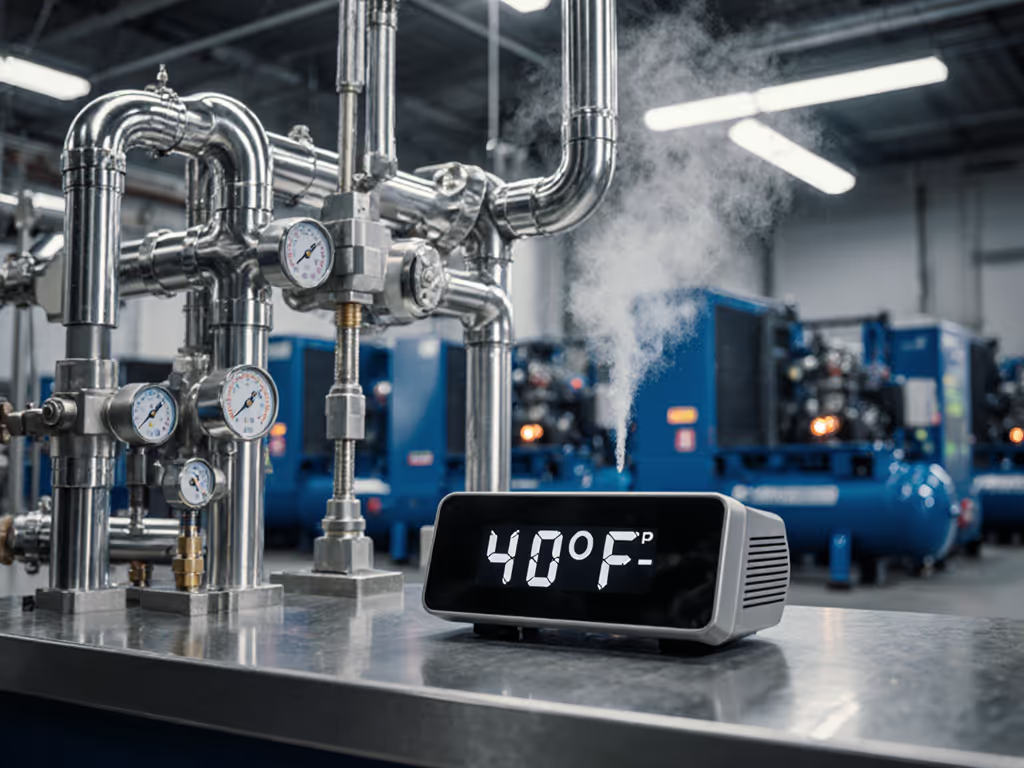
Measure ambient relative humidity at your compressor location, which determines your required dew point. For most crop environments, maintain -20°F pressure dew point or lower. Standard refrigerated dryers rarely suffice in humid climates; consider desiccant systems for critical applications. Always verify dew point with a calibrated hygrometer, not just rely on dryer specifications.
Oversized compressors with inadequate regulation waste 20-30% more energy according to USDA Sustainable Agriculture Research data. The solution? Regulator placement at each tool station. This approach:
For example, a crop drying solution might require 85 PSI while greenhouse ventilation systems operate optimally at 65 PSI. Install regulators with: For layout, electrical, and piping best practices, see our air compressor installation guide.
Document pressure drop during operation. Acceptable loss should never exceed 5 PSI from regulator to tool. I've seen dairy operations reduce compressor runtime by 35% simply by installing regulators at robotic milking stations instead of relying on central pressure control.
True sustainability requires quantifying beyond "green marketing" claims. Evaluate compressors using these metrics:
| Metric | Measurement Method | Target for Sustainable Operations |
|---|---|---|
| Specific Power (kW/CFM) | Full load power ÷ measured CFM at 100 PSI | < 0.22 kW/CFM |
| Part-Load Efficiency | Power consumption at 40% demand | < 65% of full-load watts |
| Pressure Band Stability | Differential between cut-in/cut-out | ≤ 15 PSI |
| Heat Recovery Potential | Measurable BTU output from aftercooler | ≥ 70% of electrical input |
Prioritize variable-speed drives (VSD) for applications with fluctuating demand like soil aeration technology. These systems reduce energy consumption by 30-50% compared to fixed-speed units during partial-load operation. Always verify VSD claims with manufacturer-curated performance curves, not marketing summaries.
The hallmark of professional installations is documented verification. After system implementation:
This data provides your baseline for sustainability reporting and identifies optimization opportunities. A California vineyard reduced water usage in crop drying solutions by 18% after discovering their compressor was maintaining 110 PSI when 85 PSI sufficed for their air knives.
Sustainable agriculture compressors require the same rigorous approach as industrial finishing systems (just applied to different tools). Every component from compressor to end-use point affects system efficiency, reliability, and environmental impact. By documenting pressure at the tool, specifying appropriate filtration stages, and implementing regulator at point strategies, you transform guesswork into repeatable precision. The most successful operations don't just buy compressors; they engineer air systems calibrated to their specific sustainable agriculture goals. Finish to spec, repeatably.
To align your purchases with verified programs and reporting needs, review our sustainability certifications guide. Continue your precision air education by reviewing ASABE Standard S622 for agricultural pneumatic system design and EPA's ENERGY STAR guidelines for commercial air compressors.