
Compressed Air System Audit: Quantify Energy Waste & Savings
2nd May•9 min read
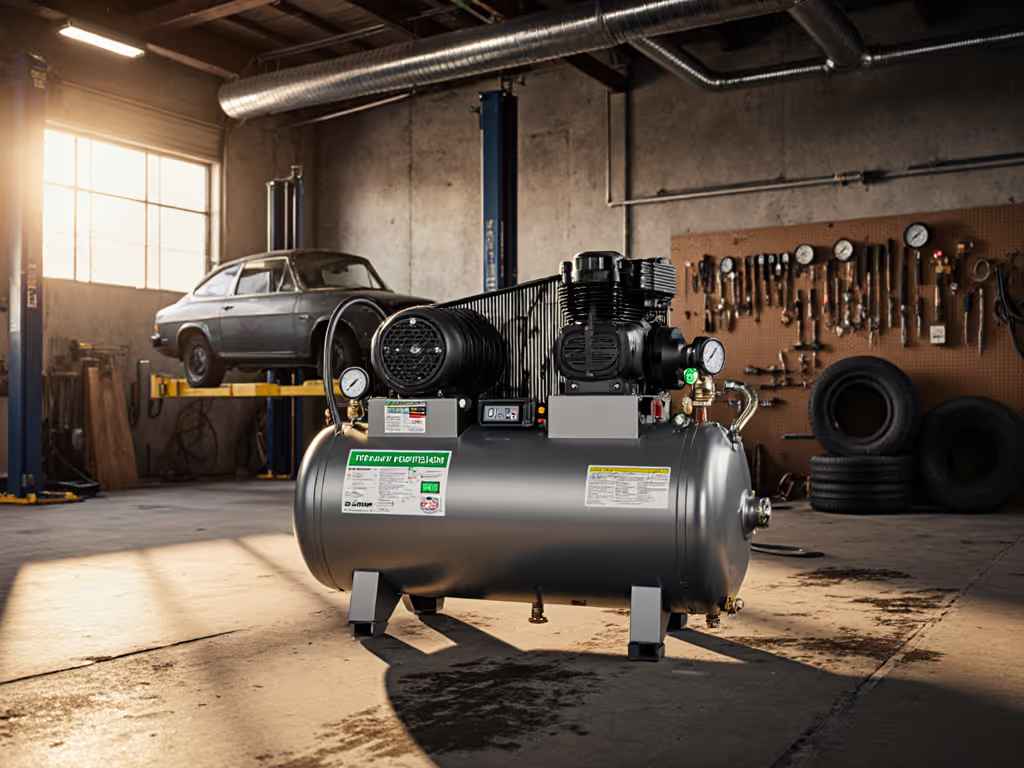
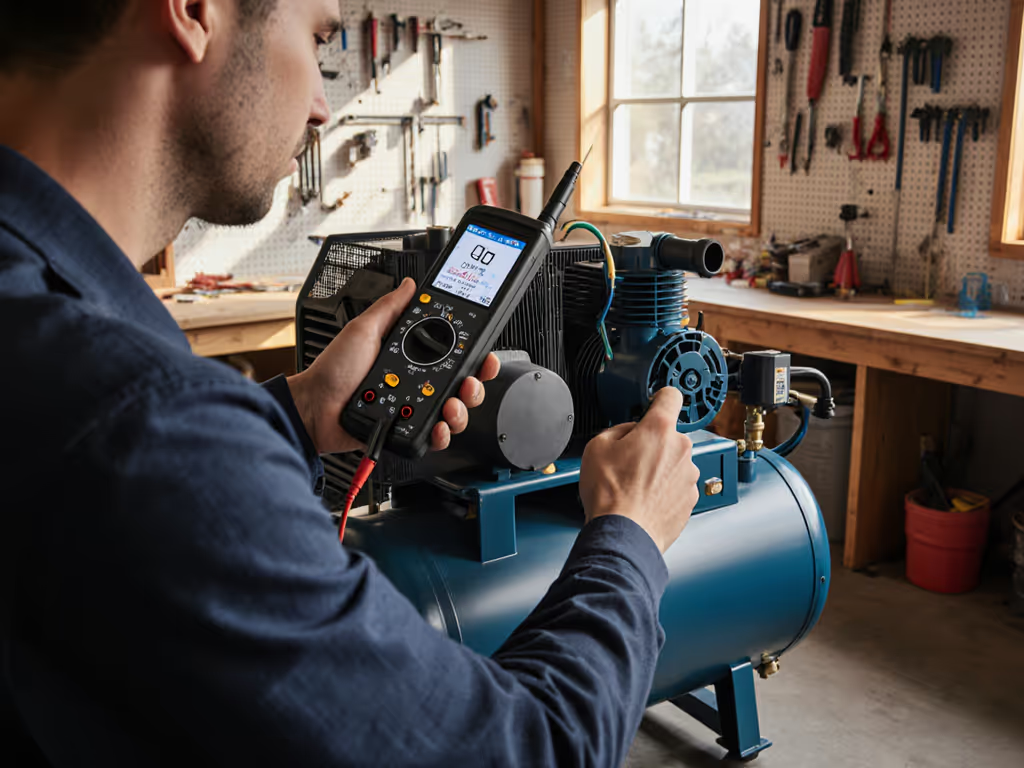
New federal energy conservation standards for air compressors, effective January 10, 2025, mandate minimum isentropic efficiency for oil-flooded rotary screw compressors between 35-1,250 cfm operating at 75-200 psi. These sustainable compressor certifications require manufacturers to validate performance through Department of Energy (DOE) testing protocols, shifting focus from marketing claims to measurable energy conversion during compression[1][4][5]. At working pressure, here's the story: compressors must now prove real-world efficiency through third-party verified data, with California, Colorado, Washington, and Vermont already enforcing these green compressor standards ahead of federal deadlines[1][9].
These protocols replace tolerance-based reporting with empirical validation, eliminating inflated claims about flow rates or energy use that previously plagued spec sheets[4]. If specs still feel confusing, use our CFM vs PSI guide to interpret ratings at your required working pressure.
Isentropic efficiency directly measures how effectively electrical energy converts to compressed air rather than waste heat. Higher values mean:
Ignoring this metric risks undersized setups where tools starve mid-task, an issue I resolved by swapping restrictive regulators after two '5 CFM' units stalled a contractor's sander at actual 3.2 and 4.8 CFM outputs[4]. For step-by-step sizing that prevents starvation, follow our air compressor sizing guide.
| Pain Point | Certified Solution | Measured Outcome |
|---|---|---|
| Tools starving at 90 PSI | DOE-represented CFM at pressure | Verified airflow for specific tool loads |
| Mid-task recovery delays | Published recovery curves | Predictable tank replenishment times |
| Circuit trips | Certified amp draw at start/load | Compatible with 15A circuits |
| Moisture contamination | ISO 8573-1 Class 0 oil-free options | 100% oil-free air for painting |
Third-party verification prevents the 4-8% tolerance loopholes of legacy specs, exposing bottlenecks before purchase[4]. To match air purity to your process without overspending, see our ISO 8573 air purity guide.
For carbon footprint reduction:
ENERGY STAR compressor benefits include 15-40% lower lifecycle costs, but only when paired with right-sized plumbing (oversized quick-connects can bleed 2-4 CFM at working pressure)[1][4]. If you're deciding between technologies, our VSD vs fixed speed comparison quantifies energy savings and ideal applications.
Post-2025 sustainable compressor certifications shift accountability from marketing claims to audited performance. Prioritize models with:
Savings manifest only when certified efficiency translates to task-matched airflow, proven through measured CFM at pressure, not brochures[1][4][9].