
Best Portable Air Compressors for RV and Van Tires
15th Aug•12 min read
For quiet off-grid use in a tiny home, choose by documented air delivery, installation space, vibration control, and motor-start capability—not peak horsepower or tank size alone.
A tiny home air compressor has to fit a tighter system than a garage unit: limited floor area, lightweight construction that carries vibration, neighbors close by, and an inverter or generator that may object to a motor restart. The practical aim is not simply to buy the smallest machine or chase a peak-horsepower label. It is to document the air requirement of the intended tool, then verify the compressor's published output, electrical nameplate, installation needs, and the off-grid power system's starting capability.
Quiet isn't luxury; it's throughput and focus you can hear. In a compact home, a compressor that starts frequently or excites the floor can interrupt conversation and concentration long before its physical footprint becomes the problem.
A good quiet compressor for small spaces begins with four checks:
Tank capacity is still a useful specification to record, but it should sit beside (not replace) the published CFM, duty-cycle information where available, and your own tool and power inventory. A larger tank does not by itself prove that a particular tool or workflow will be supported.
For this narrow use case, start with numbers stated at 90 PSI, because all three examples below publish a value there. Do not treat them as universal task recommendations; the intended tool's documentation and duty-cycle needs still need checking.
| Model | Published air delivery at 90 PSI | Tank | Published noise figure | Other documented distinction |
|---|---|---|---|---|
| California Air Tools 2010A | 2.20 CFM | 2.0 gal aluminum | Not specified in manual | 1.0 HP, oil-free |
| California Air Tools 8010 | 2.20 CFM | 8.0 gal steel | 60 dB, manufacturer-stated | 1.0 HP running; 70/30 stated duty cycle |
| Makita MAC2400 | 4.2 CFM | 4.2 gal twin stack | 79 dB, manufacturer-stated | Oil-lubricated; 77 lb; 130 PSI stated operating pressure |
The California Air Tools 2010A is an oil-free 1.0 HP example with a 2-gallon aluminum tank and manufacturer-manual-listed delivery of 3.10 CFM at 40 PSI and 2.20 CFM at 90 PSI. Its manual calls for at least 2 feet of unobstructed space around and above the unit, a detail that matters more than people expect in a tiny-house closet.
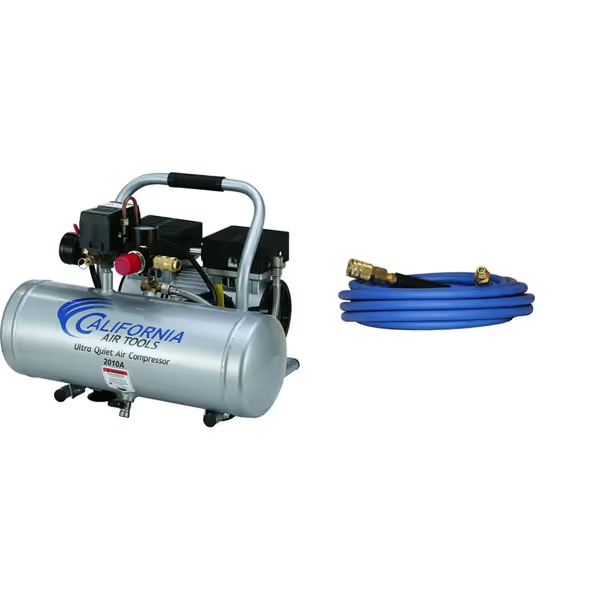
The 8010 publishes the same 2.20 CFM at 90 PSI but pairs it with an 8-gallon steel tank. California Air Tools states a 60 dB noise level, 8.5 A draw, 110 V/60 Hz input, and a 70/30 duty cycle. That is a more complete electrical and operating snapshot than what is readily published for the 2010A.
For higher documented air delivery, Makita's oil-lubricated MAC2400 is specified at 4.2 CFM at 90 PSI and 4.8 CFM at 40 PSI. The trade includes a 77 lb weight and a manufacturer-stated 79 dB noise level. It also has built-in thermal overload protection. This is not a ranking: it is a reminder that higher published flow, oil lubrication, weight, and stated noise can travel together in a small-shop decision.
Use it as a starting point, not a prediction of what you will hear at the pillow, desk, or neighboring site. The available 60 dB figure for the 8010 and 79 dB figure for the MAC2400 are manufacturer-stated values, with no independent acoustic measurement provided. For measured comparisons of quiet models in residential and indoor settings, see our real-world quiet compressor test data. The collected documentation does not include independent acoustic measurements for either model, so the stated figures should not be treated as a controlled apples-to-apples sound comparison.
I would normally report A-weighted and unweighted dB at 1 m, along with a spectrum that shows whether the objection is low-frequency hum or sharper mechanical content. Those details are not available here. In a tiny home, reflective walls and concurrent appliances can alter both perceived level and harshness, so do not make a purchase decision from a single dB label.
Instead, plan the installation as an acoustic system:
Mind the vibration path.
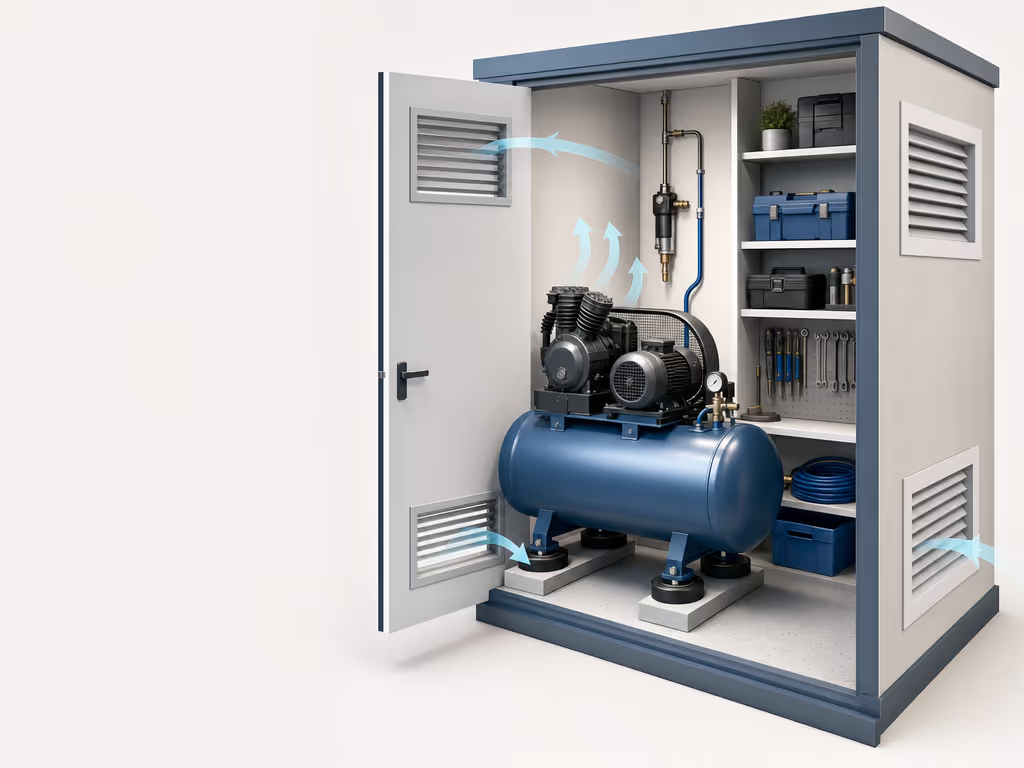
Vibration dampeners can reduce floor-borne vibration, and locating the compressor farther from occupants can help control the effect of structure-borne noise. Keep any enclosure compatible with the compressor's airflow and service-clearance instructions.
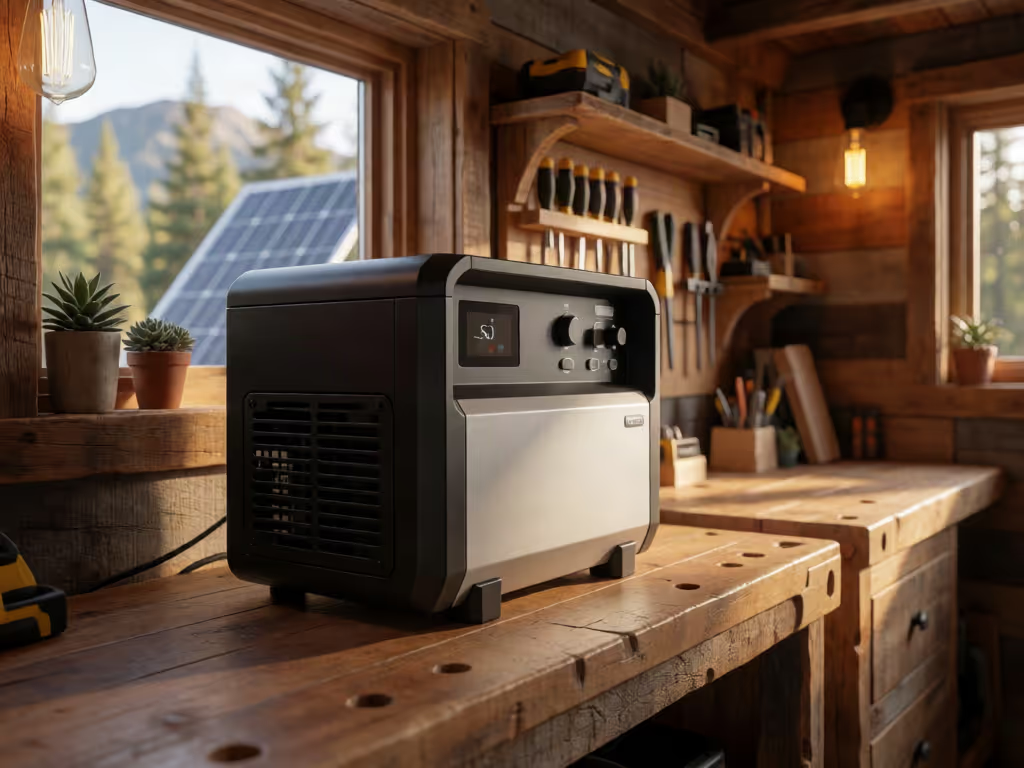
A solar-ready air compressor is not established by a solar panel nearby or by a compressor's running amp draw. It is a system-level verification involving the compressor motor, inverter, battery/BMS, cable size, voltage drop, state of charge, and other loads.
For the 8010, the manufacturer states a minimum 2,500 running watts for generator use. That figure does not establish the inverter surge capability or battery requirements needed for a solar-and-battery installation.
Use this preflight sequence:
Why such caution? A single forum report described a 3,000 W inverter filling a MAC2400 tank from empty but failing when the compressor tried to restart at cut-in pressure. That is one unverified setup, not a verdict on the compressor or all 3,000 W inverters. It does show why restart behavior, wiring, and battery condition cannot be assumed from a label.
Do not bury it beneath a bed platform, behind stored gear, or in an airtight cabinet. Cooling air and service access are functional requirements, not finishing details. Our air compressor installation guide covers the broader placement, ventilation, electrical, and piping decisions that support reliable operation. For the 2010A specifically, keep at least 2 feet clear around and above the compressor and place it on a flat surface with no more than a 15-degree incline. Its manual also recommends a dedicated circuit for best results.
For a portable install, establish a simple route: compressor to regulator, then to the point of use, with the hose placed where it will not be pinched or become a trip hazard. The available documentation does not quantify hose pressure loss or prescribe hose diameter for a given tool, so treat hose selection and routing as items to validate against the actual tool and hose documentation rather than assumptions.
If the compressor is near a wall, listen during a test cycle from the other side of that wall and at the intended work position. Floor and building structure can transfer vibration; dampeners and a location farther from occupants are sensible controls. Do not block openings to gain a few more decibels of apparent quietness.
Moisture management is especially easy to postpone in a small space, and that is exactly why it should be part of shutdown. The 2010A manual's conservative instruction is to drain the tank daily or after each use to prevent moisture buildup. Follow the current manual for your specific model and conditions. For a broader maintenance framework by compressor type and service interval, use this air compressor maintenance schedule.
Also keep these boundaries clear:
Before committing to a tiny house tools air supply, make a one-page worksheet listing the tool model, its documented air and pressure requirements, compressor CFM at published pressures, tank size, physical dimensions, noise information with its stated test context, electrical nameplate, inverter surge window, battery/BMS limits, and proposed airflow clearance.
That sheet turns a vague "off-grid compressor system" into a checkable installation. It also exposes the honest answer when the data is missing: test the integrated system, preserve ventilation, isolate vibration, and leave capacity for the way you actually work (not just the way the compressor looks on a spec card).