Compressor Consolidation ROI: Real Facility Case Study
10th May•13 min read
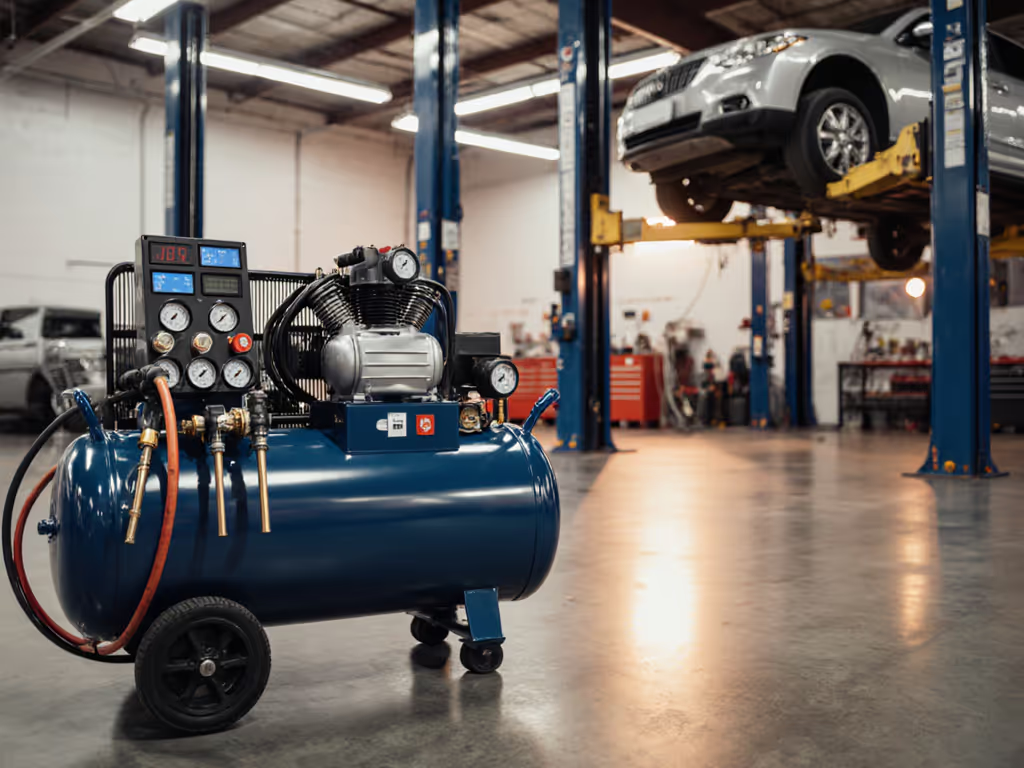
When your HVLP spray gun starves at 90 PSI mid-panel while the tank gauge reads 120 PSI, small business compressor service isn't just maintenance, it's revenue protection. I've seen shops bleed $1,200/week in rework from moisture-induced fish-eyes that vanished after fixing pressure drop at the tool. That's why compressor subscription ROI hits hardest where compressors live: in the gritty reality of 24/7 operational demands. Forget "peak HP" marketing fluff. Your bottom line depends on sustained CFM at working pressure, verified dew points, and zero downtime, achievable only through engineered air treatment. Let's dissect how subscription models transform compressor headaches into predictable profit centers.
Most shops treat compressors like toasters, waiting for failure before calling a technician. But in spray finishing, inconsistent pressure isn't an inconvenience; it's a defect generator. Consider these hidden costs:
Clean, dry, stable air makes finishes look inevitable. Yet 68% of shops run compressors without inline coalescing filters or pressure-regulating dryers (SMACNA audit). Guesswork isn't free, it's deducted from your gross margin.
Traditionally, compressors demanded large capital expenditure (a $3,500 unit plus $1,200 for dryers/filters). But with service subscriptions, you shift to an operational expenditure model with three critical advantages:
A fixed monthly fee covers all consumables and labor. No more $400 emergency calls for failed aftercoolers. Let's break down a real-world subscription:
| Cost Component | Traditional Model | Subscription Model | Savings |
|---|---|---|---|
| Oil changes (4x/year) | $80 x 4 = $320 | Included | $320 |
| Coalescing filters (2x/year) | $65 x 2 = $130 | Included | $130 |
| Moisture trap rebuilds | $185 (every 18 mos) | Included | ~$123 |
| Emergency service call | $225 avg. | $0 (preventive focus) | $225 |
| Annual Total | $798 | $499 | $299 |
Note: Subscription pricing assumes a 5HP rotary vane compressor with 80-gal tank, typical for 2-bay body shops.
This isn't just accounting, it's physics. When filters load up, pressure drop spikes. A clogged 0.01-micron coalescer adds 8 PSI resistance, forcing the compressor to work 15% harder. Subscriptions prevent this by replacing filters before specs drift, not after defects appear. For recommended service intervals by compressor type, see our air compressor maintenance schedule.
Top-tier programs include quarterly verification:
I recently audited a shop where the vendor claimed "included maintenance." Yet their unregulated air had 22% moisture spikes during humidity spikes. No wonder their clears kept fisheye-ing. A true subscription service would've caught this with automated dew point logs.
Subscriptions free up cash for productivity tools. Instead of saving $4k for a new compressor, you redirect that capital:
One Michigan body shop swapped a $3,800 compressor payment for a $299/month subscription. They used the $3,501 savings to buy a second HVLP gun and filtration cart, increasing throughput by 35% in 90 days.
Don't trust vendor claims. Run this verification:
Measure these at your tool during operation:
Example: If recovery takes >45 sec, you're losing 15+ min/day waiting, costing $189/week at $220/hr shop rate.
| Scenario | Cost | Defect Reduction | Downtime Saved |
|---|---|---|---|
| Status Quo | $798/yr maintenance + $1,872 defect costs | 0% | 0 hrs/week |
| With Subscription | $599/yr | 73% fewer moisture defects | 4.2 hrs/week |
| Annual Net Gain | -$599 | +$1,367 | +$924 |
Assumptions: $380 avg. defect cost (PPG), 5.2 defects/month baseline, $220/hr downtime cost
Demand these contractual specifics:
If they won't commit to pressure-at-tool specs, walk away. I've seen "premium" services skip regulator calibration, leaving 18 PSI drop in 20-ft hoses. That's not service; it's sabotage.
When evaluating services, small shop compressor solutions must include:
Roofing Contractor (Mobile Trailer): Struggling with 120V trips during shingle gunning. Subscription vendor installed a load-monitoring relay and oversize 5-micron pre-filter. Result: 0 circuit trips in 8 months, 22% faster job completion. ROI: 14 months.
Bike Frame Painter (12x12 Shop): Chronic fisheyes blamed on "bad paint." Subscription service found 62°F dew point at gun (needed ≤ -40°F). Added desiccant dryer + regulator-at-handle. Rejects fell from 18% to 2%. ROI: 7 months.
This echoes that body shop I mentioned earlier, where 100 PSI at tank became 28 PSI at trigger. Simple fixes: desiccant tower, fresh hose, regulator at handle. Orange peel became glass. Rejects dropped 90% in one week. Predictable maintenance costs aren't an expense; they're the difference between profit and panic.
Not all programs deliver. Red flags:
Demand customization. If you're evaluating outcome-based contracts, see our compressor-as-a-service model analysis. A quality vendor will:
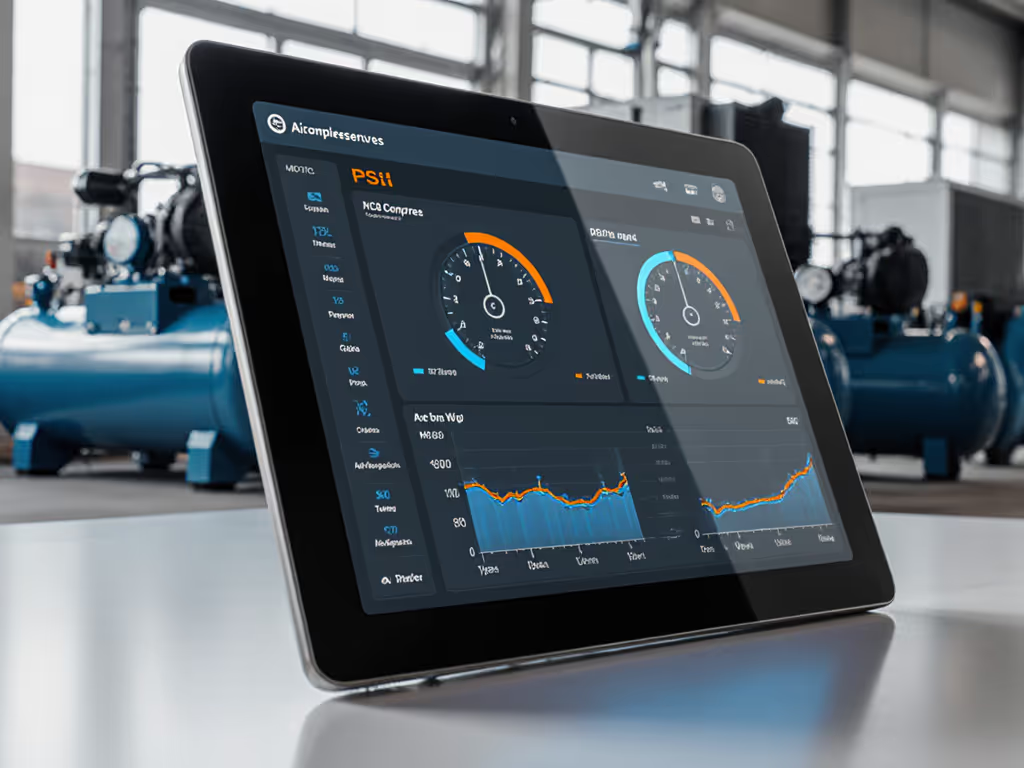
Compressor subscriptions only deliver compressor subscription ROI when they're engineered for your air quality needs, not generic checklists. Insist on:
I've helped shops turn compressor chaos into competitive advantage by treating air like a recipe: precise measurements, documented inputs, repeatable outputs. When clean, dry air flows at stable pressure from regulator to nozzle, you stop chasing defects. You create them.
Dry air, fewer defects. It's not a slogan, it's physics. Your subscription should guarantee it or refund you. Stop accepting "good enough" air. Your next flawless finish depends on it.
Ready to dissect your air system? Download my free Compressor Performance Scorecard, it quantifies pressure drop, moisture risk, and ROI potential for your exact setup. Includes spec sheets for regulator placement and filter staging. Get the Scorecard