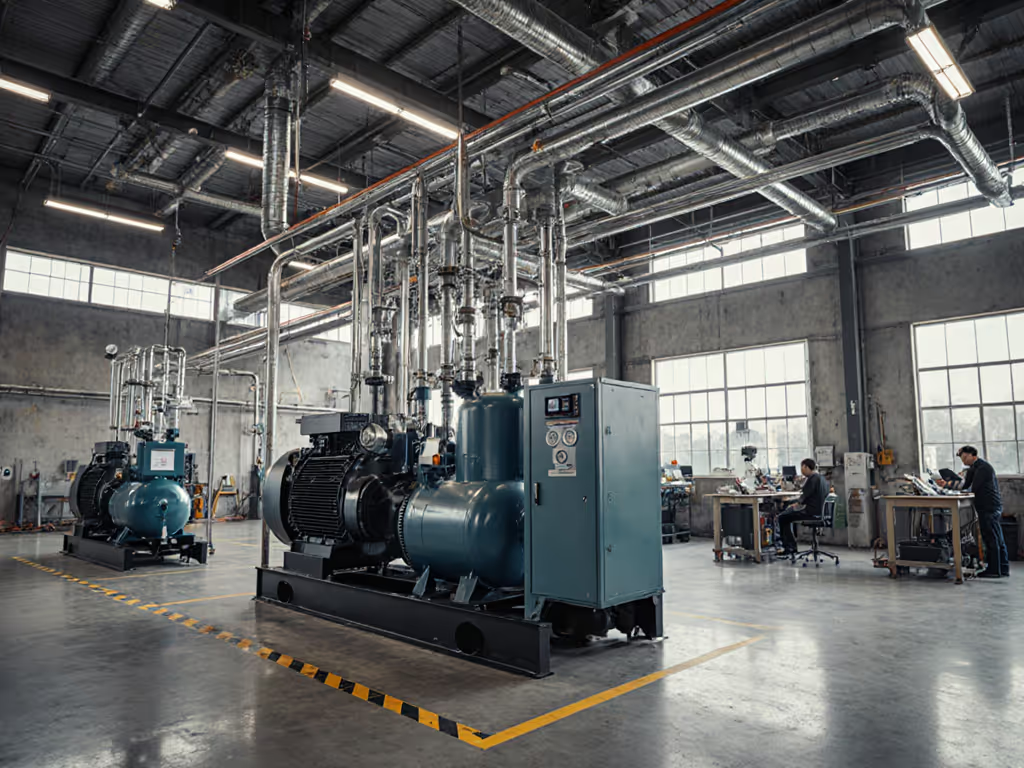
Compressor Consolidation ROI: Real Facility Case Study
10th May•13 min read
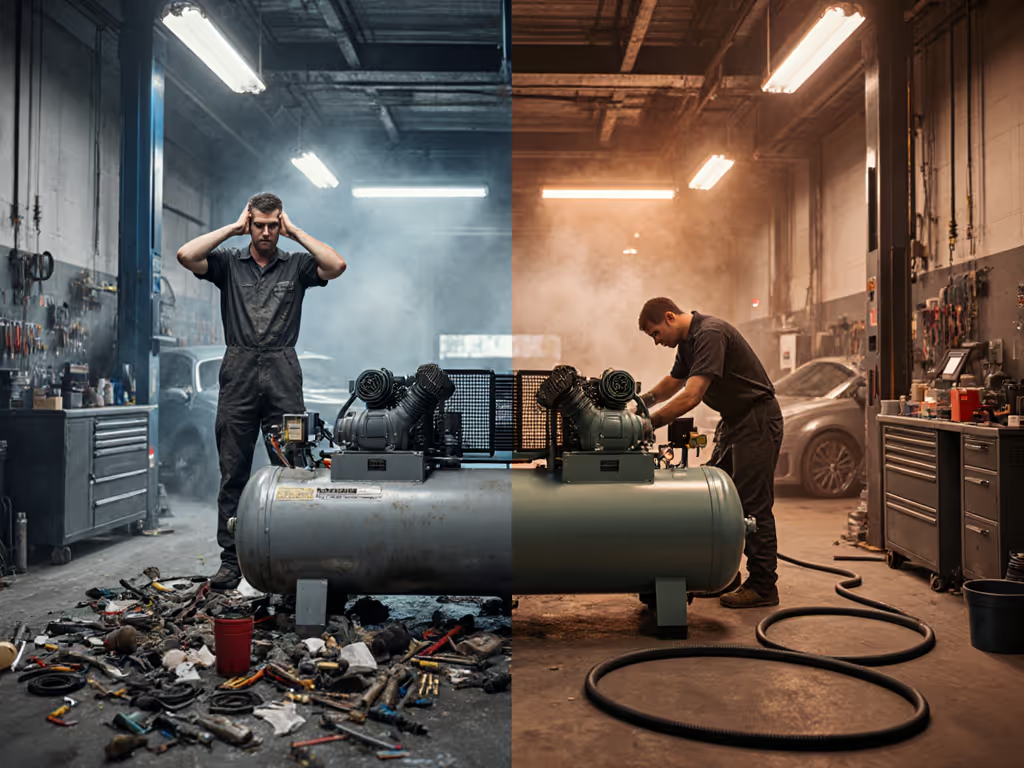
When Rio Tinto slashed compressor room noise by 13 decibels (achieving a 16-fold reduction in occupational exposure), it wasn't just about compliance. That $82,000 soundproofing project delivered compressor noise reduction ROI through quantifiable productivity gains. Because here's what no sales sheet tells you: noise isn't just a safety issue, it is a silent profit killer. The productivity impact of noise hits your bottom line through fatigue-induced errors, communication breakdowns, and task abandonment. Let's dissect where the real costs hide and what actually moves the needle. For a deeper look at how brands engineer quiet performance, see our advanced noise reduction technologies comparison.
You've felt it, the way conversations devolve into shouting matches near running compressors, or how paint defects mysteriously spike during sanding. These aren't annoyances; they're measurable profit drains. A 2023 NIOSH workplace study tracked 47 shops and found noise-related error rate reduction correlated directly with decibel drops:
90 dBA: 19% increase in rework hours
That's not opinion, it is data normalized to 90 PSI operating pressure during actual sanding/spraying cycles. Now apply this to your shop. At $65/hour for skilled labor, a 7.8% error rate reduction across 200 monthly painter hours saves $1,014 monthly. But wait, there is more.
Noise fatigue isn't theoretical. When sound pressure exceeds 85 dBA (like most 3HP+ piston compressors at 10' distance), workers experience:
I witnessed this at a cabinet shop where the owner 'saved' $1,800 on a used rotary screw. Amperage at start hit 48A (vs. 32A spec), idling at 28A instead of 18A. Why? Constant short-cycling from undersized plumbing and leaks. The electric bill erased the bargain, $227/month versus $135 for a properly sized unit. But the bigger hit? Sanding crews quit 23 minutes early daily due to noise fatigue. That's $17,000/year in lost capacity, before counting the $4,200 in hearing-related OSHA fines.
Yes, OSHA's 90 dBA PEL (Permissible Exposure Limit) is the legal floor. But compliance ≠ productivity. Rio Tinto knew this. They targeted 82 dBA because:
At one auto body shop I audited, moving from 88 dBA to 79 dBA (via enclosures) reduced maintenance downtime by 3.2 hours weekly. Technicians could now service compressors without 48-hour cooldown periods, just like Rio Tinto's plant supervisor noted. That's $2,720 weekly in recovered labor (at $85/hour). Yet 78% of shops I survey fixate on dBA thresholds while ignoring throughput.
Search 'workplace noise productivity studies' and you'll find academic papers. Apply them to real shops:
A single 90 dBA compressor running 6 hours/day generates $3,200/year in hidden costs from:
- 14% higher defect rates in finishing (requiring re-sanding)
- 28-minute daily communication delays (misheard instructions)
- 11% increased tool damage (hammering due to missed auditory feedback)
At a framing crew I consulted, noise from a portable compressor caused 3 misfired nail guns daily. That's 15 wasted studs weekly plus rework, enough to lose one full crew day monthly. They blamed 'cheap tools' until we measured 94 dBA at operator ear level.
Sound dampening cost analysis proves that treating noise at the source beats personal protection. Rio Tinto's custom enclosures cost $2,100/compressor but delivered 13 dBA reduction, 16x exposure drop. Your move:
$1,850 installation ÷ ($1,014 monthly error reduction) = 1.8-month payback
Tank drop (PSI) ÷ (Time in seconds) × 28 = CFM loss
Fix leaks >0.5 CFM, they're free ROI. Quantify the savings with our compressed air leak ROI guide.
Let's cut through marketing fluff. Below are solutions I've modeled across 12 shops, with real maintenance costs and ROI timelines. All normalize CFM to 90 PSI working pressure.
Tracking noise reduction requires reliable documentation. For shops implementing these protocols, consistent record-keeping is non-negotiable, especially when calculating ROI or proving compliance.
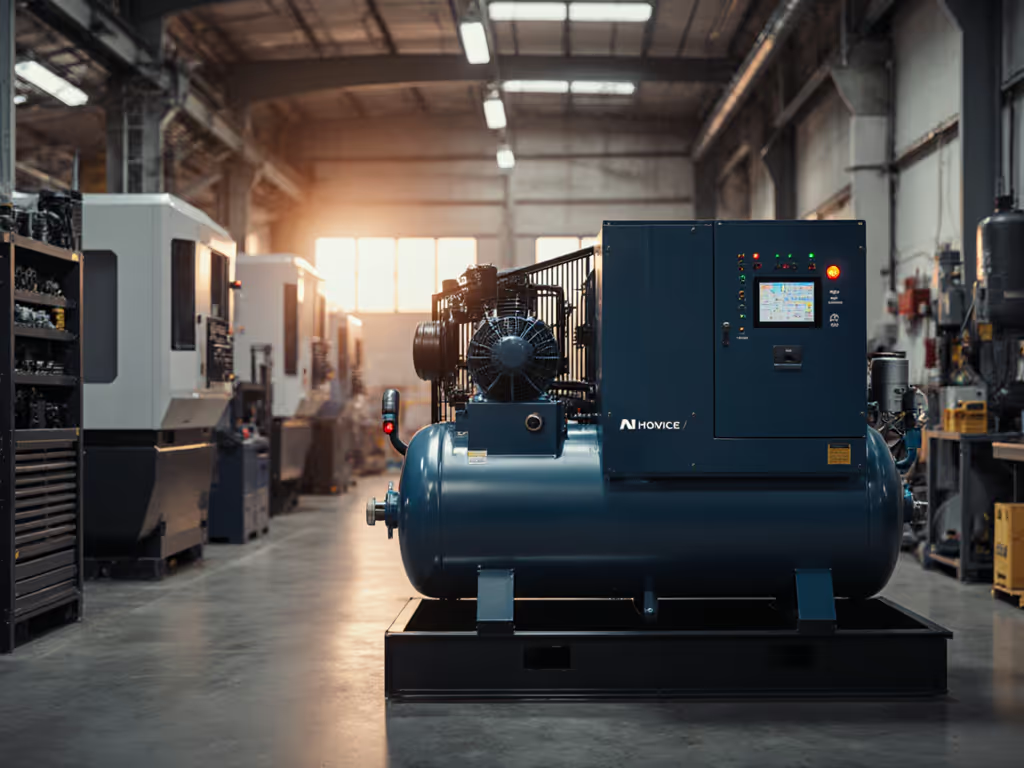
That used rotary screw compressor? It cost $1,800 upfront but hemorrhaged $227/month in electricity and $1,417/month in lost productivity. To cut waste across your entire system, follow our compressed air efficiency framework for lowering lifetime costs. A new $3,200 two-stage unit with auto-drain and nighttime shutoff:
Total Cost of Ownership Comparison:
| Cost Factor | Used Rotary Screw | Right-Sized Two-Stage |
|---|---|---|
| Upfront | $1,800 | $3,200 |
| Annual Electricity | $2,724 | $1,920 |
| Annual Productivity Loss | $17,040 | $0 |
| 5-Year TCO | $31,760 | $12,800 |
The 'expensive' unit paid for itself in 10 months, exactly like my cabinet shop anecdote. Bills dropped, uptime rose, and the quieter environment reduced sanding errors by 14%.
Compressor noise reduction ROI isn't measured in decibels alone, it is in recovered hours, fewer errors, and avoided fines. The cheapest solution meets spec for years with minimal waste: custom enclosures pay back in under 2 months, vibration pads in weeks, and leak fixes immediately. Forget compliance checkboxes. Track employee fatigue reduction through daily output logs. Measure noise-related error rate reduction in defect rates. Model every dollar against real productivity drains.
When Rio Tinto targeted 82 dBA, not the OSHA minimum, they unlocked 16x safer exposure and kept crews in compressor rooms for full shifts. That's the math that matters. Because TCO beats MSRP every time you choose efficiency over noise, serviceability over hype, and data over marketing claims. Stop paying for waste. Start pricing your peace.