Compressed Air System Audit: Quantify Energy Waste & Savings
2nd May•9 min read
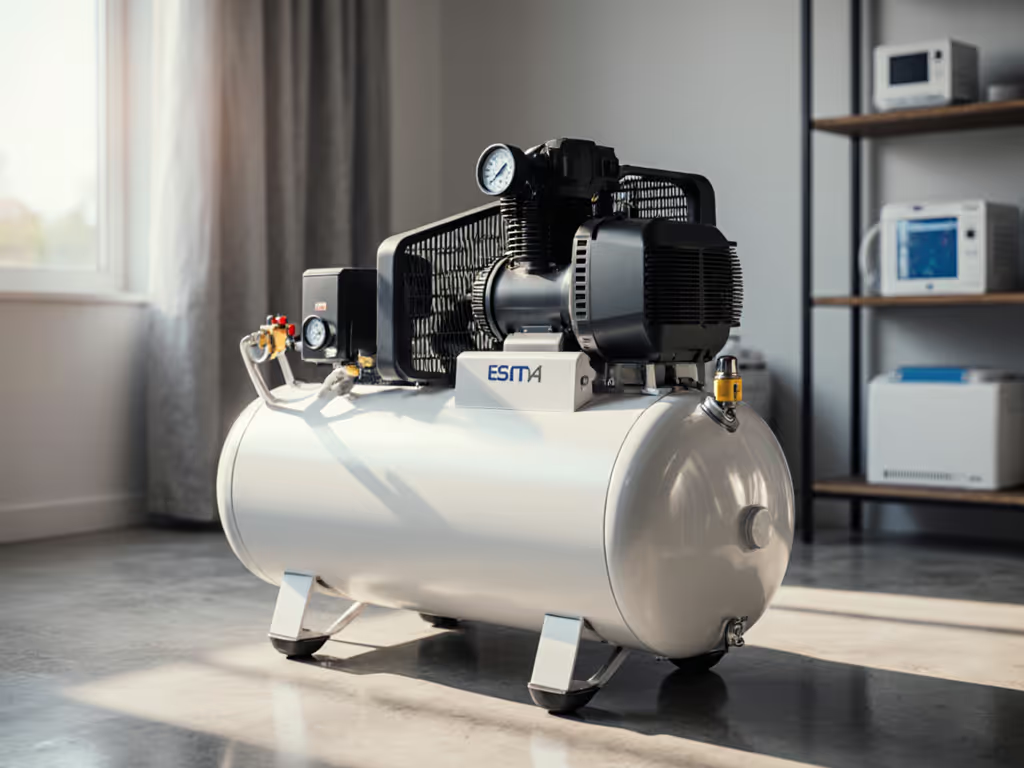
When researching home medical air compressors for respiratory therapy, you'll likely encounter references to NFPA 99 standards. Many manufacturers and resellers casually mention "NFPA 99 compliant" when marketing portable air compressors for home oxygen therapy equipment. But here's what they're not telling you: NFPA 99 doesn't actually apply to home medical air systems. This critical distinction could save you from dangerous misunderstandings, and expensive mistakes that compromise safety without delivering real value.
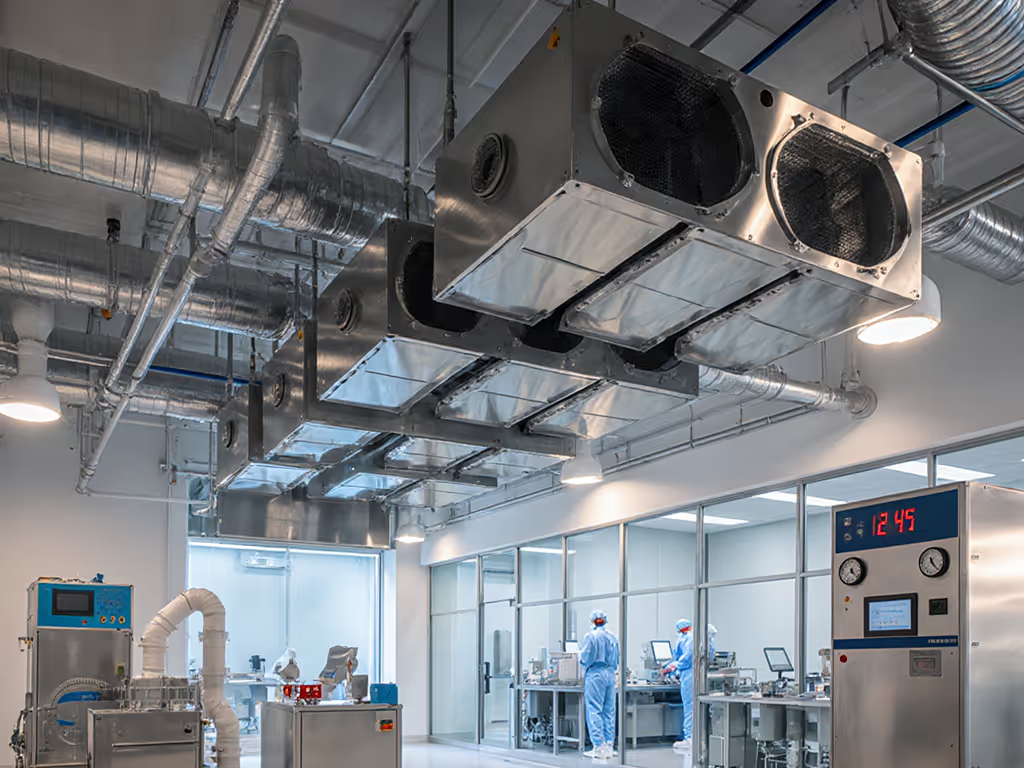
NFPA 99 is the National Fire Protection Association's Health Care Facilities Code, designed specifically for hospitals, surgical centers, and clinics. Its requirements address life-support systems where multiple patients depend on continuous, flawless operation. Key elements include:
These measures make sense in a hospital where compressor failure could impact dozens of patients. For facility requirements, see our hospital air compressors guide. But for home medical air compressors serving a single user? The implementation costs would be astronomical without proportional safety benefits.
I've seen too many home users wasting money on "medical-grade" systems designed for facilities. One client spent $3,200 on a redundant compressor setup marketed as "NFPA 99 compliant" for home use, only to discover it drew 1,850W continuous (more than his entire medical setup required). The electric bill erased any perceived safety benefit, while the complex system created unnecessary maintenance headaches.
Home oxygen therapy equipment falls under FDA medical device regulations, not NFPA 99. The relevant standards for breathing air in home use are:
These focus on air purity requirements:
| Contaminant | Maximum Allowance |
|---|---|
| Particulates | 0.1 micron, 0.1 mg/m³ |
| Water Vapor | Dew point -40°F at operating pressure |
| Carbon Monoxide | <5 ppm |
| Oil Aerosols | <0.01 mg/m³ |
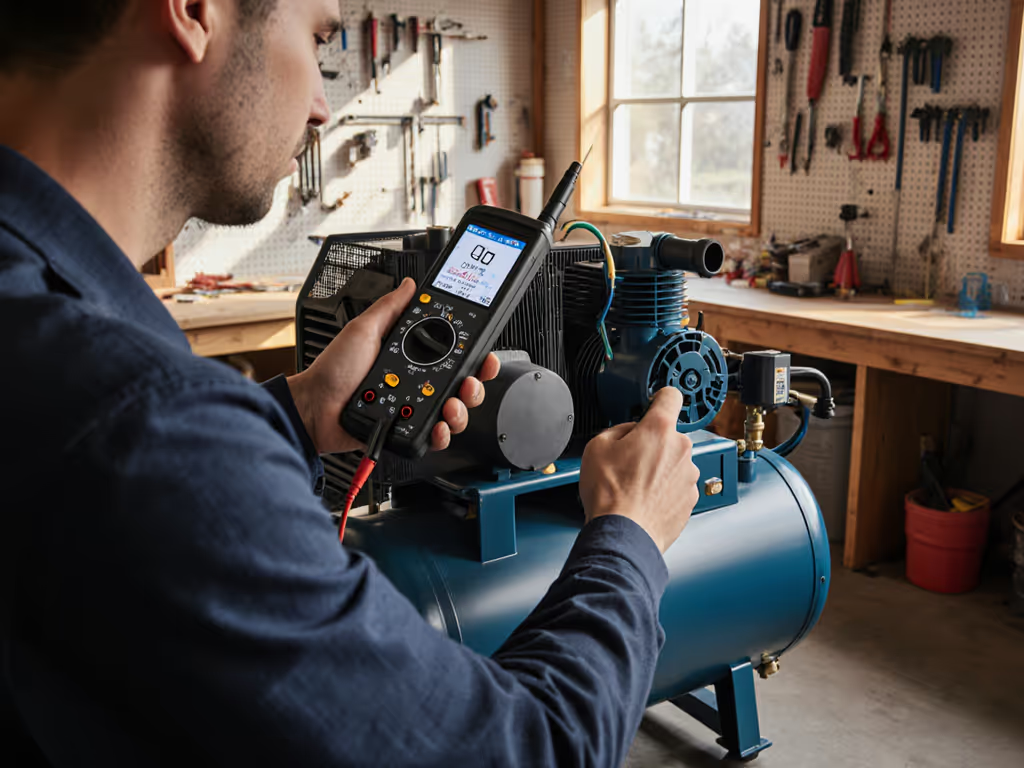
Unlike facility-scale systems, home units don't require redundant compressors or central monitoring. But they do need proper filtration and moisture control. Compare drying technologies and dew point performance in our air dryer comparison. A typical home medical air compressor drawing 5.2A at 120V (624W) under load should deliver 5-10 CFM at 50 PSI with appropriate drying, enough for oxygen concentrators and basic respiratory therapy.
Manufacturers exploit the NFPA 99 confusion to justify premium pricing on home units. I analyzed three popular "NFPA 99 compliant" home medical compressors:
The cheapest system is the one that meets spec for years with minimal waste, a principle I learned when helping a small cabinet shop that "saved" money on a used rotary screw compressor. Their electric bill erased the bargain until we specced a right-sized two-stage with proper controls. Home medical air follows the same economics: oversized systems waste energy without improving safety.
Forget the "NFPA 99" buzzword. Focus on these verifiable criteria for medical-grade compressors:
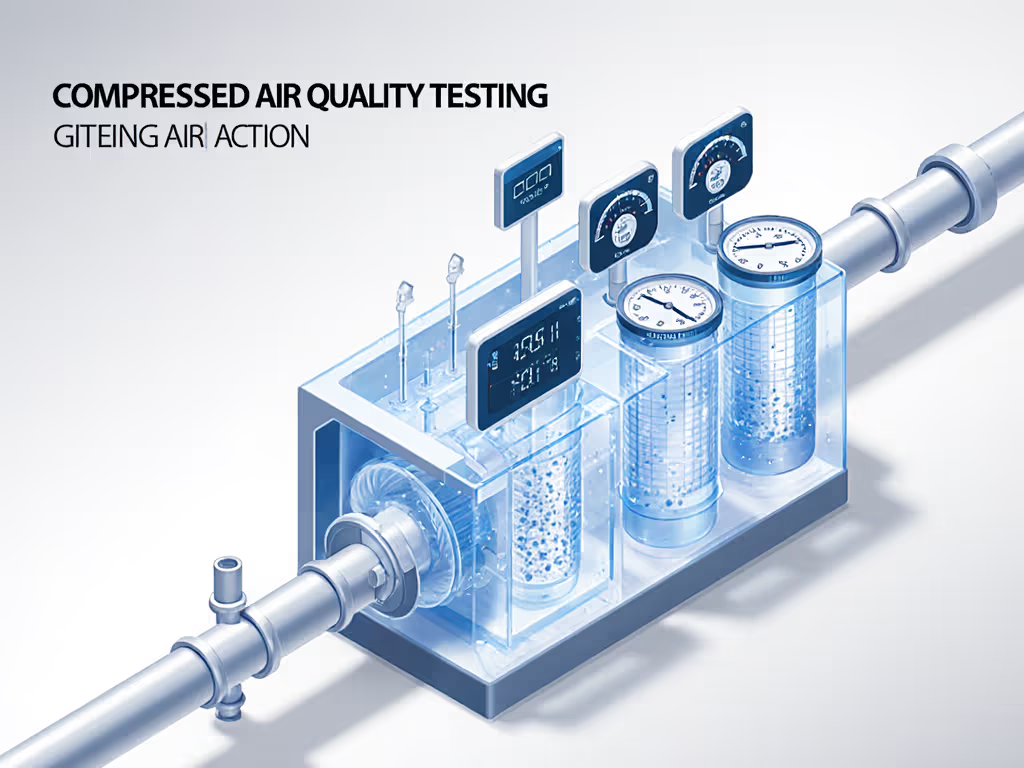
For most home oxygen therapy applications, a properly filtered oil-free piston or scroll compressor delivering 5-10 CFM at 50 PSI meets requirements without unnecessary complexity. Avoid "portable air compressors" marketed for workshops, these often lack medical-grade filtration and moisture control.
Home healthcare regulations require equipment to be safe and effective, but don't mandate facility-level redundancy. CMS (Centers for Medicare & Medicaid Services) requires home oxygen equipment to meet FDA standards, not NFPA 99. Your home system needs:
✓ Basic particle and moisture filtration ✓ Pressure regulation appropriate for therapy devices ✓ Overpressure safety valves ✓ Noise levels under 60 dBA for residential use
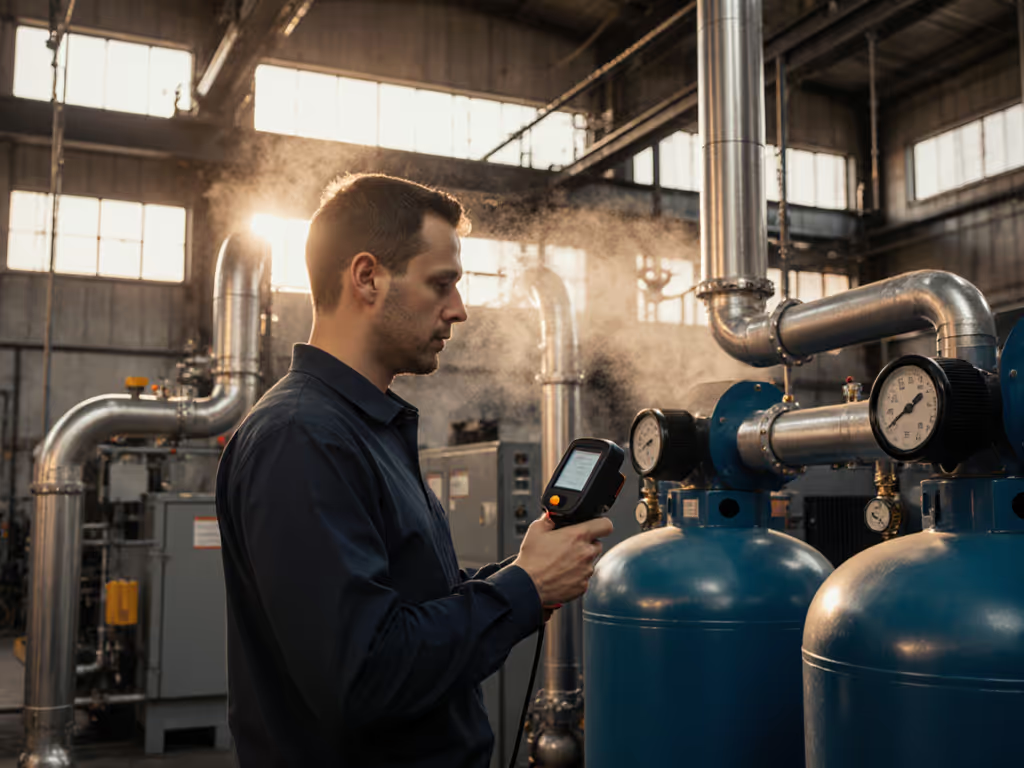
Fix leaks before upgrades. This applies doubly to home medical air. A single 1/16" leak at 100 PSI wastes 3.5 CFM continuously, forcing your compressor to run 25% longer to maintain pressure.
Don't pay for "NFPA 99 compliance" in home medical air compressors, the standards don't apply, and the features create unnecessary costs without proportional safety benefits. Instead:
The right home medical air compressor delivers clean, quiet, reliable performance at actual therapy pressures, not theoretical facility-grade specs. Pay once for proper sizing and filtration, not forever for waste and noise. When providers push "NFPA 99 compliant" home units, ask for the spreadsheet, not the sales pitch.