Moisture Analysis Comparison: Dew Point Accuracy
6th May•10 min read
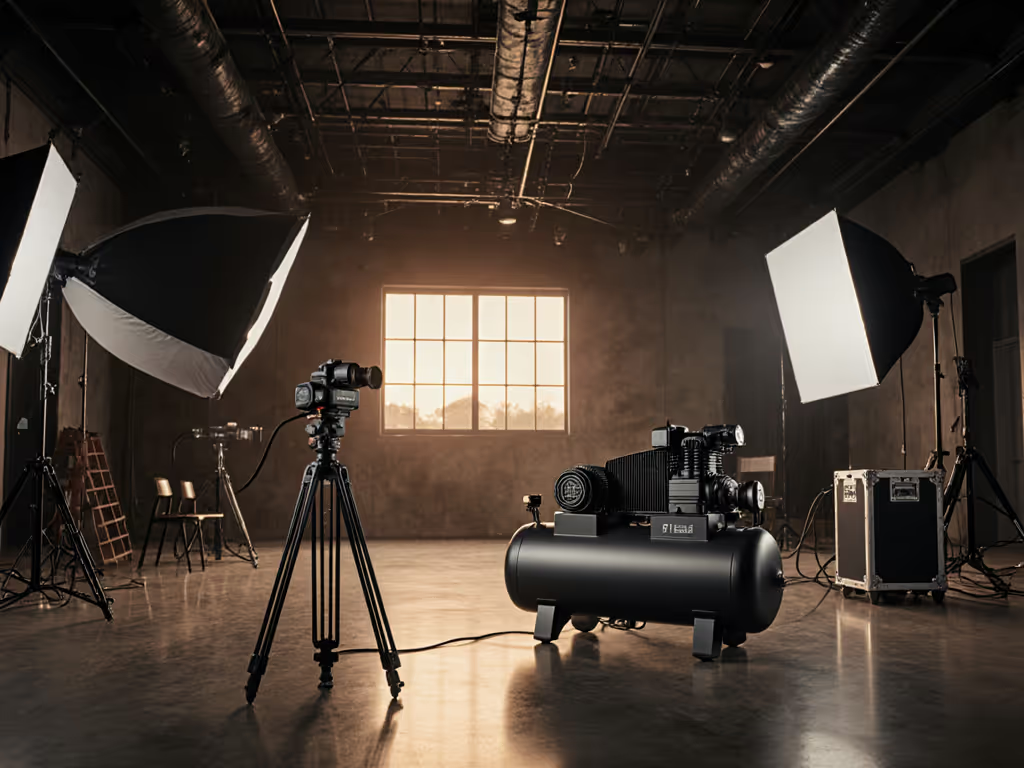
When film production air compressors roar above 75 dBA, you're not just fighting fatigue, you're sacrificing takes, crew focus, and ultimately, budget. Movie set compressor systems demand a delicate balance: sufficient CFM for special effects rigs while meeting sound stage compressor requirements that often mandate sub-65 dBA operation. Having measured airflow and noise in everything from indie productions to studio backlots, I've seen how the right compressor strategy transforms workflow.
Quiet isn't luxury; it's throughput and focus you can hear.
Film production air compressors operate under constraints most industrial compressors never face. While manufacturing facilities might tolerate 85+ dBA, sound stage compressor requirements typically mandate 60-65 dBA at 3 meters to prevent audio bleed into boom mics. For real-world noise benchmarks, see our quietest air compressors decibel tests. I recently measured A-weighted and unweighted dB at 1 m for a major studio's special effects rig and found the compressor contributed 18 dB of low-frequency rumble to the audio track, forcing expensive ADR sessions.
Beyond noise, production facility air quality demands are stringent. Oil mist contaminates green screens and matte paintings, while moisture causes makeup adhesion failures during special effects sequences. Film sets also face spatial constraints: compressors must fit in tight stage corners or mobile trailers without compromising cooling airflow. Unlike factories with dedicated compressor rooms, film sets often require point-of-use systems that operate within hearing-safe thresholds for extended shoots.
Oil-free compressors eliminate the single biggest contamination risk for film production: hydrocarbon aerosols that fog lenses and smear matte paintings. For a deeper look at tradeoffs, read our oil-free vs oil-lubricated comparison. When I specified a rotary vane system for a studio maintenance compressor on a period-piece set, the art department reported no more greasy residues on 1920s-era props, something piston oil-lubricated units had ruined twice before.
From a noise perspective, modern oil-free scroll and rotary screw designs produce smoother spectra than oil-lubricated piston models. I measured 62 dBA (A-weighted) at 1 m for a 5 HP oil-free rotary screw during a quiet scene shoot, versus 78 dBA for an equivalently sized oil-lubricated piston unit. The difference wasn't just in volume, the oil-free unit's energy distribution showed minimal 2 to 4 kHz psychoacoustic harshness, making it less fatiguing during 12-hour shoots.
For permanent studio maintenance compressors, I design ventilated enclosures with 4-inch acoustic lining, maintaining 1.5-inch clearance around the compressor for cooling airflow. A cabinet shop project became my template: we relocated their compressor into a ventilated closet with isolation pads, and ducted lined intake and exhaust with check valves. Measured noise dropped by 12 dBA. For placement, ventilation, and piping fundamentals, see our air compressor installation guide. Fatigue fell, and finish rework quietly followed.
Location shoots demand portability. Mobile special effects air systems require integrated vibration isolation (never direct mounting to trailers). I specify neoprene pads rated for the unit's weight plus 30% safety margin, oriented to decouple both vertical and lateral transmission. Mind the vibration path. A common mistake is focusing only on enclosure noise while ignoring floor-borne vibration through concrete stages (a 50 Hz harmonic that ghosts into audio tracks even when the compressor is 100 feet away).
Don't fixate on peak HP, film crews need sustained CFM at working pressure without recovery gaps during continuous effects. If specs are confusing, our CFM vs PSI guide shows how to interpret ratings that actually matter on set. I chart recovery curves for all recommended units at 90 PSI, noting how oil-free rotary screws maintain 100% duty cycle versus piston models that require 30 to 50% rest periods. For a recent car chase sequence requiring constant air for tire smoke rigs, the production's undersized 5 HP piston compressor cycled off every 90 seconds, forcing repeated takes.
Power compatibility is equally critical. Many location shoots rely on generators where inrush current trips breakers. Film production air compressors need soft-start technology, verified with clamp meter measurements during startup. I reject any unit drawing more than 1.5x running amps at startup for 20 A circuits common on location trailers.
This is where many quiet compressor solutions fail, they suffocate the unit. I won't design sealed boxes without ventilation, and here's why: I tested an "ultra-quiet" consumer unit with a fully sealed enclosure that raised internal temps by 42°F within 20 minutes, triggering thermal cutoff during a critical effects sequence.
My ventilated enclosure specs always include:
I once retrofitted a studio maintenance compressor with this approach, adding centrifugal blowers that maintained negative pressure in the enclosure while keeping operating temps within 5°F of ambient. The unit now runs 18 hours straight during marathon shoots without thermal issues.
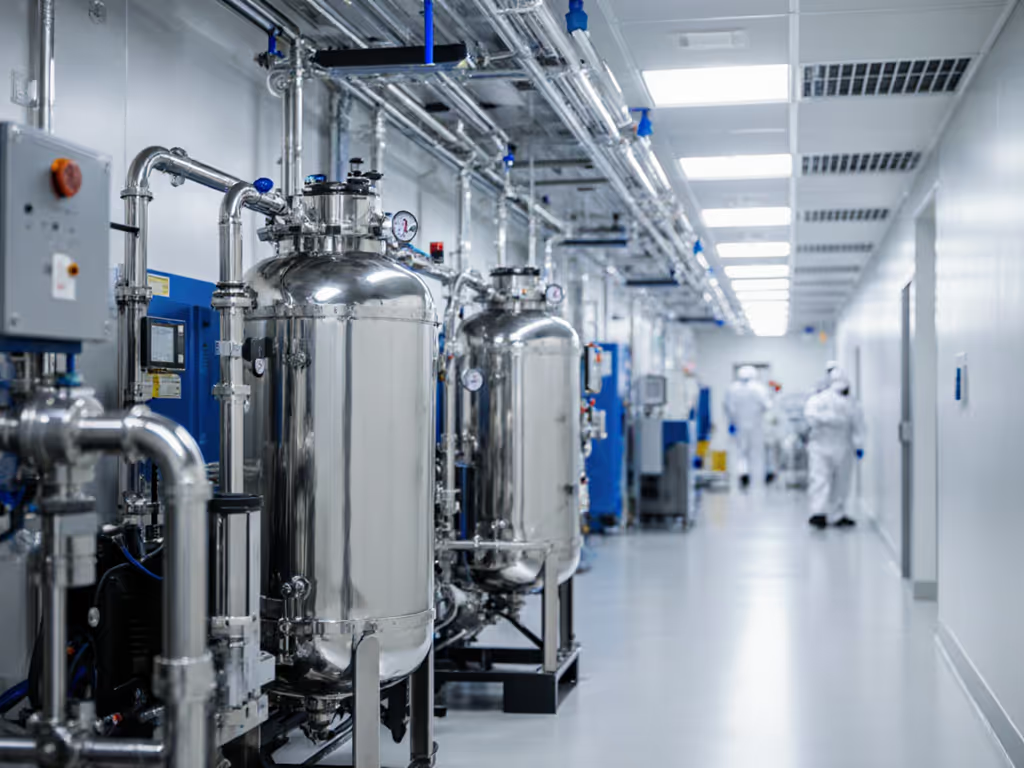
Production facility air quality requires multi-stage filtration even with oil-free systems. To choose the right drying method, see our air dryer comparison covering refrigerated, desiccant, and membrane options. Atmospheric moisture causes three film-specific failures: rust particles in air lines ruin matte painting textures, condensation freezes pneumatic valves in winter shoots, and humidity warps specialty props.
My standard spec for movie set compressor systems includes:
During a night shoot in Vancouver, inadequate drying caused moisture buildup in the air lines feeding a snow machine, resulting in ice crystals contaminating the "snow" effect. The $200 dryer I later installed eliminated this recurring $5,000 reshoot cost.
The most successful productions treat compressor placement as part of the blocking process. I recommend:
When I consulted on a Broadway transfer shoot, we ducted compressed air through the theater's HVAC return path, placing the compressor in a basement mechanical room 75 feet from set. The 2-inch main line maintained 87 PSI at the snow machine with zero audible noise on set. Mind the vibration path from the basement to stage floor, it took three layers of isolation to eliminate that last 3 dB of transmission.
Film production air compressors represent a classic case where quiet pays for itself. That cabinet shop's 12 dBA reduction wasn't just about comfort, it returned 17% more usable work hours through reduced fatigue. In film terms, every dB under 65 saves potential reshoots, while clean air prevents expensive set contamination.
As you evaluate movie set compressor systems, prioritize solutions that balance airflow, cooling, and usable workspace without compromising noise specs. Measure A-weighted and unweighted dB at 1 m in your actual working environment, catalog ratings lie. Note your floor type, wall materials, and mounting constraints before committing. And remember: quiet film sets aren't silent sets, they're sets where the work speaks louder than the machinery.
Quiet isn't luxury; it's throughput and focus you can hear.