Multi-Site Compressor Optimization: Maximize Fleet ROI
28th Apr•14 min read
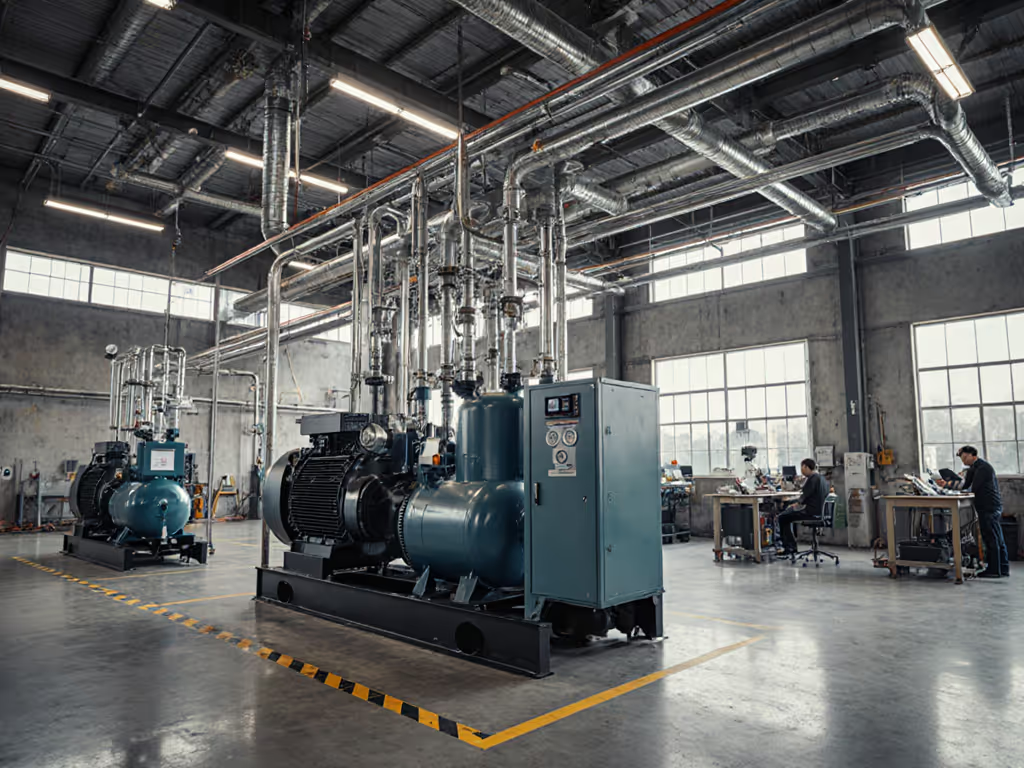
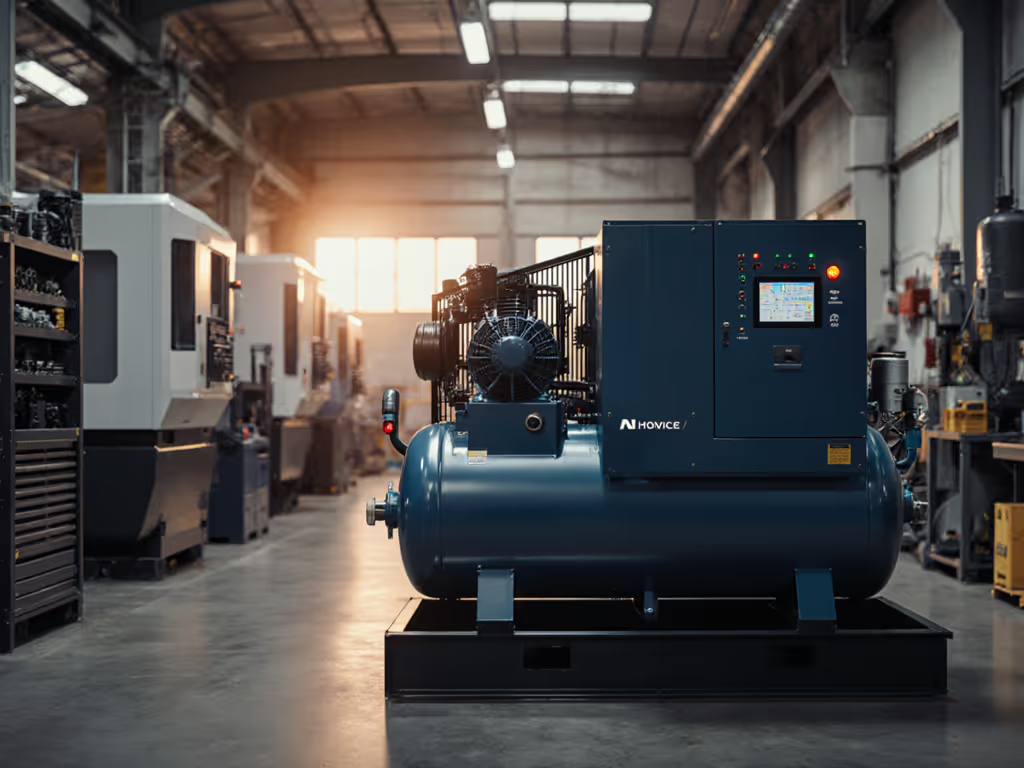
When a mid-sized auto body shop, a cabinet maker, or a multi-bay service garage runs on compressed air, the impulse is often to thread units together organically over time. One compressor for the spray booth. Another for air tools. Maybe a third for the remote wash bay. Before anyone runs the numbers, you're running three separate motors, three separate tanks, three separate supply lines, and three separate electric bills. Compressor consolidation ROI and system consolidation case study approaches offer a measurably different path. Instead of asking "Can we afford to unify the system?" the right question is: "What is the payback period for doing it, and how much efficiency do we recover?"
This article walks through a real consolidation scenario, compares the operational economics of dispersed versus centralized compressor systems, and shows the math behind capital recovery. The goal is not ideology; it's to map the actual dollars, energy, maintenance, downtime, and noise, against the upfront cost of centralized compressor system design and the reliability gains that follow.
I encountered a cabinet shop years ago that had "solved" capacity by purchasing a used, high-displacement rotary screw compressor at auction. The entry price was irresistible. But within six months, the monthly electric bill had erased the bargain, and the team was planning an upgrade anyway because thermal management was spotty and recovery was inconsistent. The root issue wasn't the compressor alone; it was the absence of a system redundancy planning framework. The shop was running multiple legacy reciprocating units alongside the screw, with no coordinated duty cycle or pressure regulation. Leaks in distribution lines were never prioritized because there was always another unit to draw from. Use our compressed air system audit guide to quantify leaks and line losses before you model consolidation ROI. The moral is not "avoid used equipment" - it's that a single efficient compressor on good lines beats multiple mediocre ones running in parallel.
When compressors operate in isolation, several inefficiencies compound:
Fix leaks before upgrades. This is not just maintenance advice - it is the prerequisite for understanding your actual load and the true ROI of consolidation.
Let's model a real facility: a 4,000 sq. ft. multi-purpose shop with three work zones (spray booth, tool bay, and detail/finishing area). Current demand profile: If you need a step-by-step method to right-size capacity, see our air compressor sizing guide.
Total normalized requirement: ~40 CFM @ 90 PSI with 15% margin = 46 CFM @ 90 PSI effective capacity needed.
Annual electricity (at $0.14/kWh average):
Maintenance (labor + parts, annual):
Noise baseline: 82-86 dBA at full load; constant low-level hum from idling units.
Capital cost: $4,200 (used/refurbished baseline, already amortized if in place).
Annual electricity (at $0.14/kWh):
But now we've also eliminated leaks (assumed 5% residual loss vs. 15% previously) and achieved consistent 90 PSI across all branches. Effective usable CFM jumps 20%, reducing energy per task.
Recalculated: 7,600 kWh - (20% efficiency recovery) ≈ 6,080 kWh/yr = $851.20/yr
This is only $42.70 more per year than Scenario A - on paper a wash. The real gain emerges in maintenance and reliability.
Maintenance (annual):
Capital cost: $12,500 (new two-stage unit with tank, dryer, soft-start, and professional installation).
Payback period: ($12,500 - $4,200) initial delta = $8,300 / ($260 annual savings + reduced downtime/repair costs) ≈ 3.5-4 years for maintenance + reliability recovery alone.
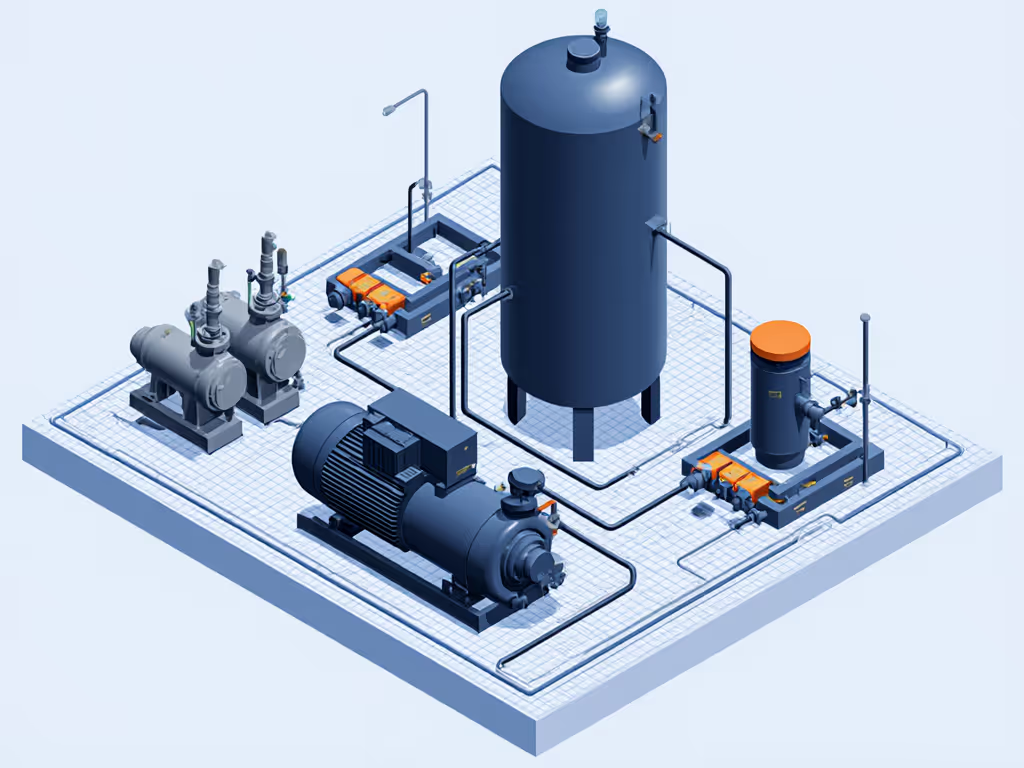
If you add downtime costs - a single reciprocating unit failing mid-shift costs 2 hours of lost labor at billed rates - the breakeven accelerates sharply. One unplanned shutdown at $400 in lost billable time moves the needle significantly.
With three separate compressors, a single failure blocks one zone but the facility continues. With a centralized unit, a single point of failure affects the entire facility. This sounds like a fatal flaw until you layer in actual redundancy.
Scenario B with Redundancy:
This hybrid approach - a "mostly centralized" model - costs ~$17,200 installed but guarantees continuity. The secondary unit runs only 400 hours/year, adding minimal energy cost ($200/yr). The payback becomes:
$13,000 delta / ($260 + $200 redundancy overhead mitigation = net $60 savings + downtime avoidance) ≈ 5-6 years to breakeven, with zero-downtime insurance thereafter.
For a facility billing $60/hour, that insurance is worth every penny.
The spreadsheet-backed truth: compressor efficiency peaks at 60-75% load. Learn where a VSD vs fixed-speed compressor outperforms fixed speed in real facilities. Below 50%, part-load valve losses spike. Above 85%, thermal stress forces more frequent unloading or shutdown.
Let's chart the 10 HP two-stage variable-displacement unit from Scenario B across a realistic day:
| Time Block | Demand (CFM @ 90 PSI) | Motor Load % | kW Draw | Hours | Daily kWh |
|---|---|---|---|---|---|
| 6-8 AM (setup, prep) | 12 | 30 | 2.2 | 2 | 4.4 |
| 8-12 PM (spray + tools) | 38 | 75 | 5.5 | 4 | 22.0 |
| 12-1 PM (lunch, light detail) | 8 | 20 | 1.5 | 1 | 1.5 |
| 1-5 PM (tools + detail) | 30 | 60 | 4.4 | 4 | 17.6 |
| 5-6 PM (cleanup, blowoff) | 15 | 40 | 3.0 | 1 | 3.0 |
| 6 PM-8 AM (idle/shutdown) | 0 | 0 | 0 | 14 | 0 |
| Daily Total | - | - | - | - | 48.5 kWh |
Annual projection: 48.5 × 250 = 12,125 kWh/yr at full operation. Accounting for seasonal variation and planned downtime, a realistic annual draw is ~8,000-9,000 kWh/yr.
With Scenario A's three independent motors cycling unpredictably and all running at part-load inefficiency, the actual consumption could exceed this by 30-40%.
Here's where consolidation compounds returns. A high-quality two-stage variable-displacement screw is engineered for 20,000-30,000 operating hours with planned maintenance.
Two-Stage Rotary Screw Maintenance Schedule:
Reciprocating Oiled Units Maintenance Schedule (baseline three-unit scenario):
Over a 10-year facility lifecycle (20,000 operating hours):
Net maintenance savings: $17,000 over the decade - and that excludes the dollar value of uptime and operational predictability.
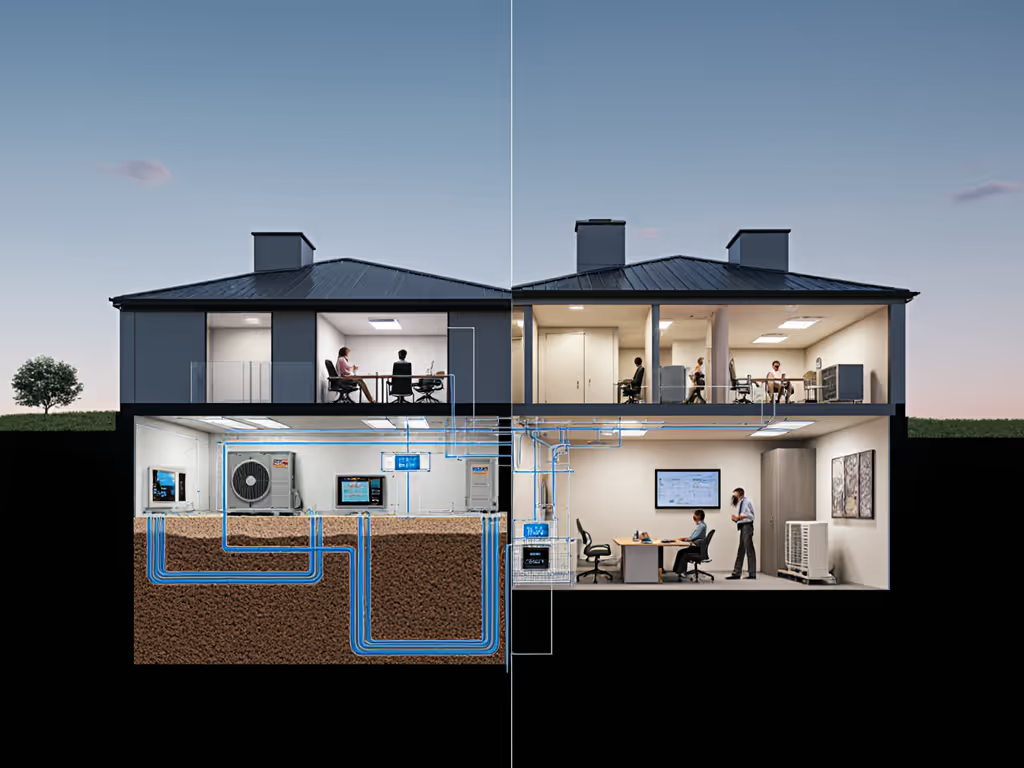
Centralized compressor system design requires investment in distribution and controls that dispersed systems bypass, at a cost.
Key infrastructure elements:
Scenario B total installed cost: $12,500 (compressor and basic ancillary) + $3,500-5,000 (full distribution and controls) = ~$16,000-17,500.
This is 3-4× the baseline "just add a compressor" approach, but the infrastructure is durable, serviceable, and supports multiple compressor optimization far more efficiently than point repairs to legacy systems.
Let's consolidate the economic case over a 10-year facility lifecycle:
| Cost Category | Scenario A (Dispersed) | Scenario B (Centralized) | Net Difference |
|---|---|---|---|
| Initial capital | $4,200 (already in place) | $16,500 | +$12,300 |
| Annual energy (10-year total) | $8,085 | $6,480 | -$1,605 |
| Maintenance (10-year total) | $24,000 | $7,000 | -$17,000 |
| Downtime/emergency (10-year estimated) | $2,000-4,000 | $200 | -$1,800-3,800 |
| Noise abatement (upgraded insulation, staff fatigue cost) | $0-1,500 | Included/minimal | +$1,500 |
| 10-Year Total Cost of Ownership | ~$39,000-41,000 | ~$30,000-31,500 | ~$9,000-11,000 savings |
Effective payback: 3.5-4.5 years, with escalating returns thereafter through reduced downtime and energy drift.
But the real win is philosophical. A dispersed system invites "temporary" additions and tolerance of leaks. Once you've internalized the idea of a centralized compressor system design, your facility operates at design spec year after year. Tools run predictably. Sprayers deliver finish without spitting. Air quality improves. Noise drops. And when something fails (rarely), replacement is a planned event, not a crisis.
Pay once for uptime, not forever for waste and noise.
That is not a slogan - it is the quantified outcome of consolidation.
Compressor consolidation is not inherently cheaper than running dispersed units. But it is more predictable, more maintainable, and more efficient when sized and designed correctly. The ROI argument rests on three pillars:
When to consolidate:
When to stay dispersed:
Most mid-sized operations find consolidation wins when the math is honest and leaks are fixed first. The shop that made the leap from "three compressors" to "one right-sized system" doesn't go back. Neither do their electric bills.
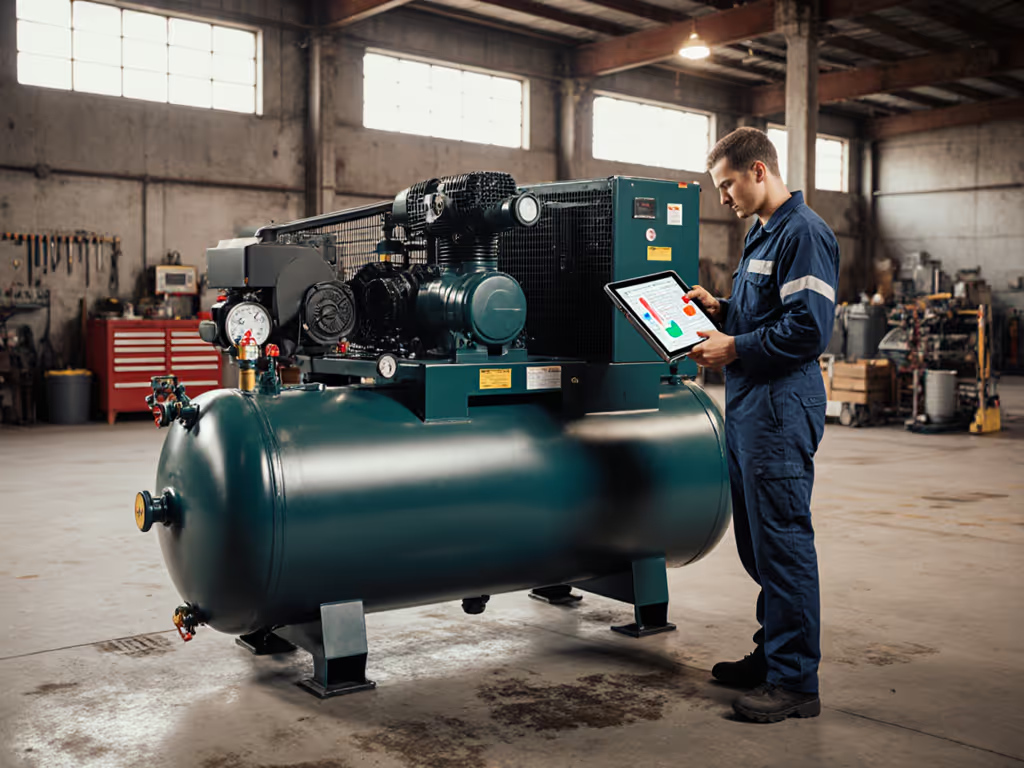
Action step: Audit your current system. Log amperage at each unit at start and under full load. Measure CFM at 90 PSI using a bucket-fill test or flowmeter. Map your leak rate by isolating zones and timing pressure drop. Once you know the truth, the ROI calculation becomes inescapable. For a deeper cost breakdown framework, see our 10-year air compressor TCO analysis. Fix leaks before upgrades - then the consolidation decision will make itself.