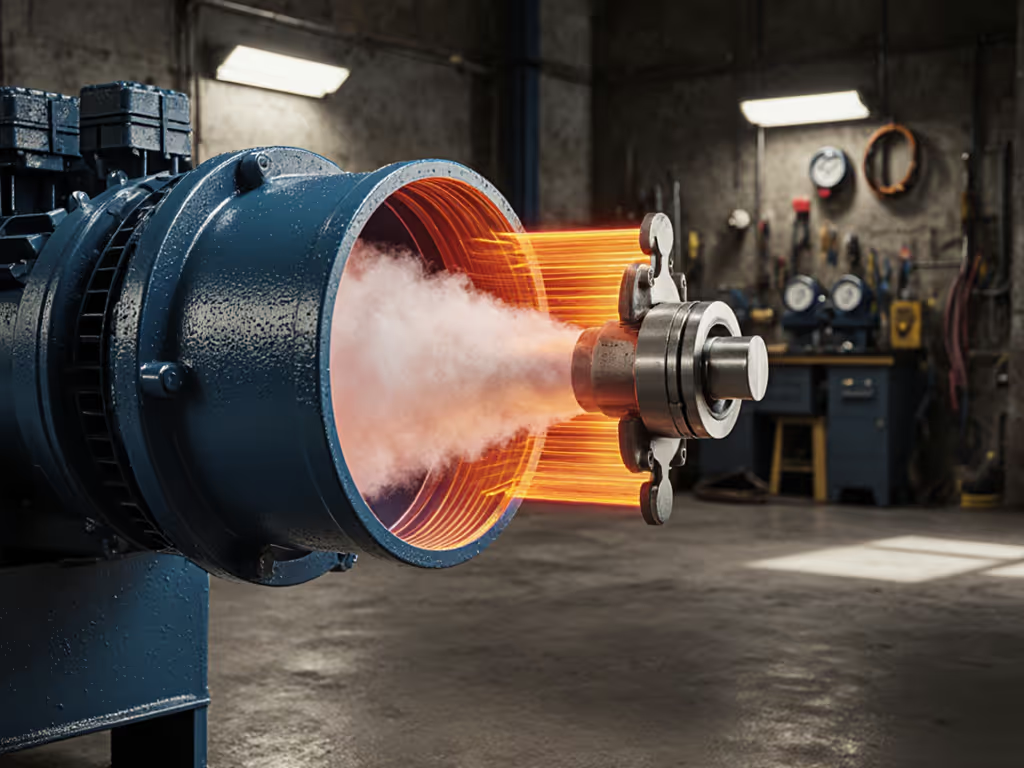
Adiabatic Compression: Temperature and Efficiency Explained
12th Apr•7 min read
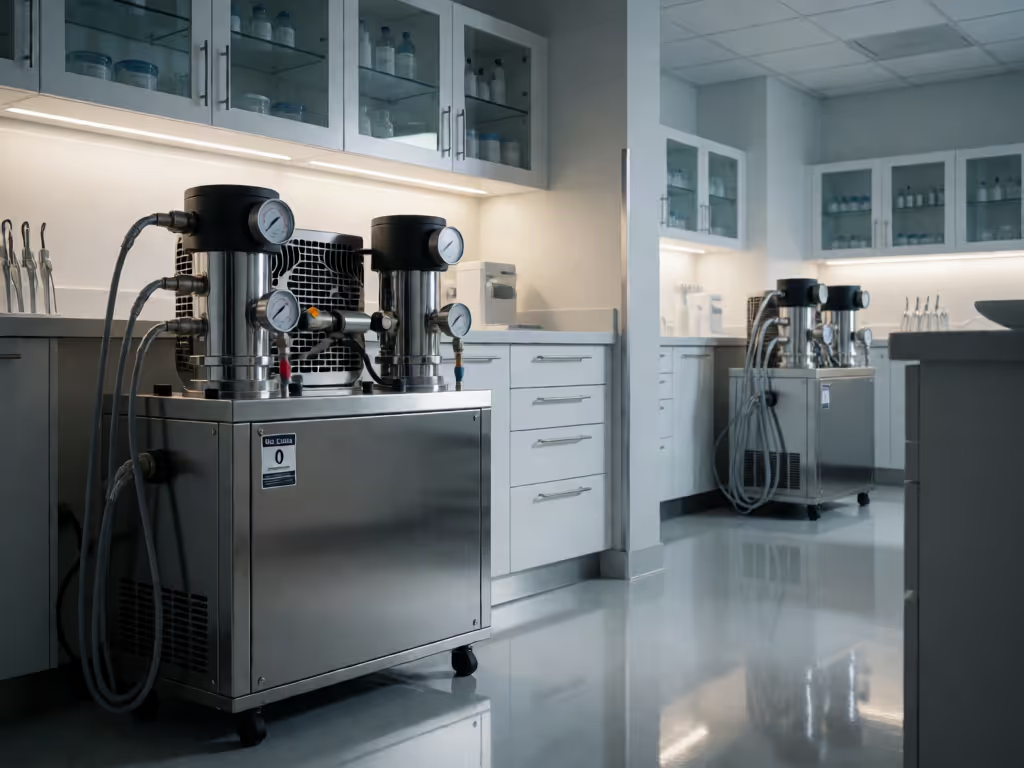
Choose a dental compressor using documented air-quality and capacity requirements, not by tank size or a single CFM claim. Specify separate particle, water, and oil limits, then confirm capacity at the clinic’s actual simultaneous working demand.
Important: The collected information includes no independent, like-for-like comparison of Atlas Copco LFx D, AirStar NEO, and Broomwade products that supports naming one as the best choice, and no universal dental requirement for ISO Class 0 or a particular dew-point target was established.
Dental air compressors are not a tank-size decision. They are a specification and working-demand decision: define the pressure and separate oil, water, and particle limits required by the connected equipment, then assess whether the selected configuration has documented capacity for simultaneous use. For a clinic pursuing dry, hygienic compressed air, the terms oil-free compressors, ISO Class 0 dental air, and dental clinic compressed air hygiene need to be separated before they can be specified correctly.
Show me CFM at 90 psi, not brochures.
That principle applies to dental systems too, although the relevant operating pressure and demand profile must come from the connected equipment. A compressor can look adequate on a headline flow number while the information needed for the intended installed configuration is still missing.
No universal requirement is established by the information available here. Do not treat "Class 0," "oil-free," "dry," and "hygienic" as interchangeable labels, or as proof that one configuration is suitable for every practice.
ISO 8573 air purity is classified across three contaminant categories:
The code order is [particles : water : oil]. That matters because an oil claim alone says nothing about permitted water or particle content. A system described as ISO Class 0 for oil still needs a separately defined particle and water requirement if the clinic needs a complete air-quality specification.
In Atlas Copco's dental-air literature, Class 0 is described as a designation specified by the equipment user or supplier and more stringent than Class 1 for oil. That is an oil-purity designation, not a complete three-part air-quality specification.
Instead of requesting "clean dental air," establish a requirement sheet that asks:
This turns a vague purchase decision into a system acceptance target. Confirm the actual requirements against the instructions for the dental equipment in use and the clinic's applicable local requirements.
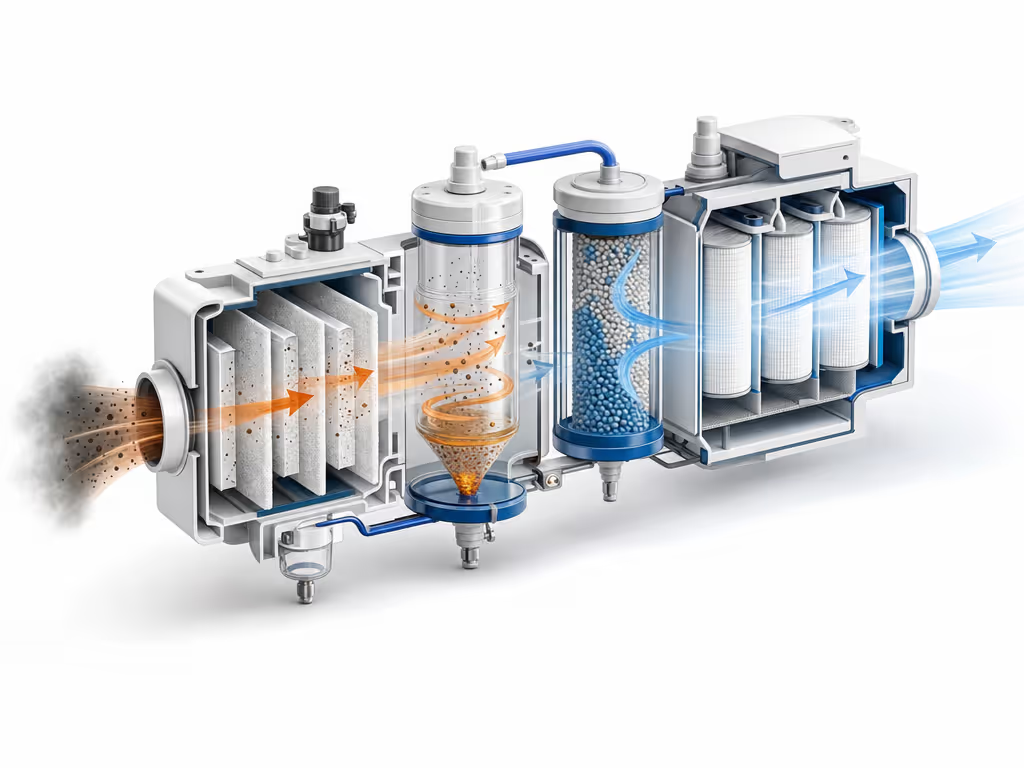
An oil-free vs. oil-lubricated compressor comparison helps clarify how an oil-free or oil-less compressor addresses the oil-contamination side of the air-quality problem. It does not, by itself, establish dryness or particle control at the point of use.
That distinction is practical. Treatment equipment performs different jobs:
Installation details should then be checked against model-specific documentation. For example, an Air Techniques AirStar NEO manual describes a membrane dryer and instructs the installer to fit its supplied drain tube for collected moisture. For that installation, the supplied drain tube provides the specified path for collected moisture.
Ask for a stated, configuration-specific pressure-dew-point result, not a generic assurance that the unit is "dry." Published results can differ within the same product family. For example, Atlas Copco lists pressure-dew-point performance below -35 °C (-31 °F) for its LFx D FF-CD+ configurations specifically. That result should not be carried over to base LFx D or other configurations without their own published values.
Start with simultaneous users, not the total chair count. For the calculation methods behind this approach, see our air compressor sizing guide. Manufacturer guidance for dental utility planning specifically cautions against sizing only by the number of operatories; peak simultaneous demand can pull pressure down and affect instrument performance.
A useful first-pass workflow is:
List each air-handpiece user and identify when those users can realistically run at the same time. Do not use a theoretical "every chair, every second" scenario unless that is how the practice operates, but do not assume one chair at a time just because appointments are staggered.
Air Techniques' published AirStar NEO guide gives these recommended air-handpiece-user ranges:
| Model | Recommended air-handpiece users |
|---|---|
| AS40NEO | 4-6 |
| AS50NEO | 5-8 |
| AS70NEO | 7-12 |
Those are manufacturer sizing ranges, not a substitute for the actual demand of a particular clinic. They are most useful as a sanity check after you map simultaneous activity.
Free-air delivery is useful context, but request working-pressure flow data for the intended configuration. One documented LFx D range, for instance, lists free-air delivery at 60 Hz from 2.86 to 6.53 cfm across its base models, with a maximum working pressure of 10 bar (145 psi). The collected documentation does not provide clinic-specific working-pressure flow data for an installed treatment and distribution setup.
Request flow data at the pressure your system will operate, plus recovery behavior under a representative clinic load. If that evidence is unavailable, arrange a representative-load assessment before making the selection.
If future operatories or additional air-handpiece users are likely, record that now. The right question is not "Will this run today?" but "Will it retain pressure during the busiest plausible overlap after the practice grows?"
The relevant difference is not a universal label; it is the priority placed on controlled air quality, drying, user-based sizing, and installation conditions. In a dental installation, the compressor is typically selected alongside moisture management and distribution requirements rather than treated as an isolated air source.
Distribution is one example. The AirStar NEO manual specifies 1/2-inch Type L or Type K copper piping for its installations. That is model-specific installation guidance, not a general piping rule for every compressor. For broader guidance on electrical requirements, ventilation, placement, and piping, review this air compressor installation guide.
Separate the compressor's published sound figure from the sound experienced in treatment areas. Atlas Copco lists 61-64 dB(A) across certain LFx D base models, measured under ISO 2151/Pneurop/Cagi PN8NTC2 conditions with a stated 2 dB(A) tolerance. That is a unit measurement, not a prediction of room-level sound after walls, vibration paths, and installation details enter the picture.
Commercial installation guidance points to a stable foundation, vibration dampers, vibration isolators, and flexible discharge connections as ways to address movement and structure-borne noise. Treat those as planning considerations, not universal acoustic guarantees.
Heat is equally consequential. The AirStar NEO manual sets a maximum ambient temperature of 40 °C (105 °F) and requires 12 inches of service clearance on all sides. A remote intake is recommended when air quality at the installation location is a concern; the manual also notes that a cooler, drier intake environment benefits performance.
A meaningful commissioning record should state:
This is the difference between "it seems fine" and an auditable baseline for diagnosing a future pressure or moisture complaint.
The collected information does not include an independent comparison of Atlas Copco LFx D, AirStar NEO, and Broomwade products on delivered air quality, duty cycle, acoustic performance, lifecycle cost, reliability, or maintenance burden. It therefore does not support naming a single best choice among them.
Choose the system that can document the requirements your clinic actually has: separate particle, water, and oil targets; capacity for simultaneous use; workable room conditions; and relevant configuration-specific information. Published peak pressure, tank volume, and free-air-delivery figures are relevant product-selection information, but they do not validate installed performance without clinic-specific demand and distribution analysis.
Before discussing models, create a one-page brief for the installer or supplier. Include the simultaneous-user map, required outlet pressure, complete air-quality code or separate limits, preferred pressure-dew-point target where applicable, room temperature, service clearance, intake-air concerns, distribution layout, and expansion plans.
Then ask for configuration-specific evidence for each proposed compressor, dryer, filter, and piping component. That is the shortest path to selecting dental air compressors using the clinic’s documented air-quality targets and simultaneous-use needs.